Side Dishes
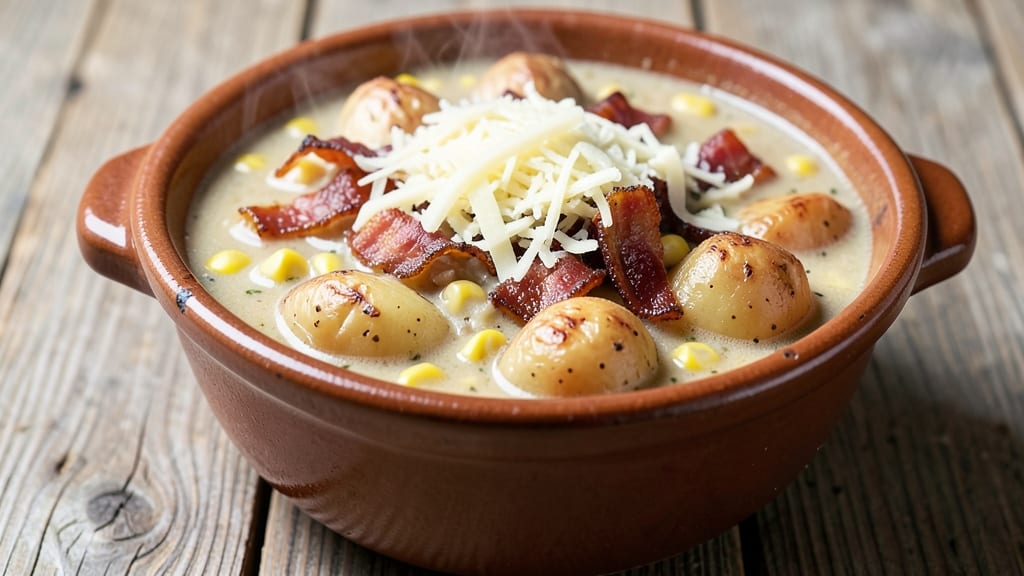
This old-fashioned corn and potato chowder recipe delivers the hearty, smoky depth of classic comfort food in one satisfying pot. The secret lies in slow-simmered potatoes and sweet corn, elevated by crispy bacon and sharp cheddar that create a velvety, flavor-packed base.
I developed this recipe after years of testing—it’s the kind that warms your home as much as it fills your stomach, with every bite packed with tradition and just enough modern convenience.
The beauty of this chowder is its simplicity: just 10 ingredients, a single pot, and about an hour of hands-off simmering time. We start by rendering bacon until it’s crisp and smoky, then build the foundation with sautéed onions and garlic—this step is non-negotiable for that deep, aromatic base.
The potatoes and corn cook low and slow, absorbing all the rich flavors while staying tender, and the final touch of cream or butter transforms it into a luscious, restaurant-quality bowl.
What you’ll end up with is a steaming pot of chowder that’s creamy yet light, with the perfect balance of smoky bacon, sharp cheddar, and sweet corn. The texture is velvety but never heavy, and the aroma alone will have everyone gathering around the table.
This is the kind of dish that feels like a hug in a bowl—warm, comforting, and impossible to resist.
Perfect for chilly evenings, family gatherings, or anytime you crave a taste of home-cooked tradition. The recipe includes optional garnishes like extra bacon bits or green onions, but even without them, it’s a showstopper. Let’s get started on this timeless classic!
Ingredients for old fashioned corn and potato chowder
Ten simple ingredients for a chowder that tastes like home-cooked tradition.
| Ingredient | Amount | Notes |
|---|---|---|
| Thick-Cut Bacon 🥓 | 8 oz | Thick-cut for crispy texture |
| Yellow Onion 🧅 | 1 whole | Diced, medium size |
| Garlic Cloves 🧄 | 3 cloves | Minced, fresh preferred |
| Russet Potatoes 🥔 | 2 lbs | Peeled, cut into 1-inch cubes |
| Sweet Corn Kernels 🌽 | 3 cups | Fresh or frozen, thawed |
| Sharp Cheddar Cheese 🧀 | 1 ½ cups | Shredded, aged preferred |
| Heavy Cream 🥛 | 1 cup | Full-fat for creaminess |
| Chicken Broth 💧 | 4 cups | Low-sodium preferred |
| Salt 🧂 | 1 ½ tsp | Kosher or sea salt |
| Black Pepper 🌶️ | ½ tsp | Freshly ground |
| Bay Leaves 🌿 | 2 whole | Removed before serving |
The bacon is where the magic starts. Thick-cut slices from the meat section (not the pre-cooked stuff) render the best—crispy, smoky, and packed with flavor. I grab mine from Costco or the butcher counter at Whole Foods—anything labeled 'thick-cut' works. For the potatoes, Russets—they hold up to long simmering without turning mushy. If you're using frozen corn, thaw it first but don't drain. The extra moisture keeps the chowder velvety. The cheddar? Sharp, aged cheddar melts beautifully and adds that classic tang—skip the pre-shredded kind (it's coated with anti-caking agents).
No thick-cut bacon? Regular bacon in a 10-inch skillet works, but watch it closely to avoid burning. Fresh corn hard to find? Canned corn (drained) or frozen both work—just add a pinch more salt since canned corn can be salty. Out of heavy cream? Half-and-half or whole milk stretches it, though the texture will be slightly lighter. For the broth, low-sodium is key—you'll add salt later. If you're using a bouillon cube, use half the amount and add extra water. The bay leaves add depth but disappear—don't skip them unless you're sensitive to their flavor.
This chowder tastes even better the next day. Store in an airtight container in the fridge for up to 5 days, or freeze for 3 months. For freezing, portion into containers with a bit of headspace—chowder expands when frozen. Reheat gently on the stove, stirring often, until steaming. Garnish with extra bacon bits or chopped green onions if you're feeling fancy, but honestly, the chowder stands on its own. Double the recipe if you're feeding a crowd—it's worth the extra effort.
Why You'll Love This Recipe
- Bacon First Always: I swear by crisping that thick-cut bacon until it’s almost burnt—those caramelized edges melt right into the chowder, giving it this deep, smoky richness you won’t find anywhere else. The salty crunch lingers in every spoonful, and honestly? It’s the star.
- One-Pot Magic: Peel and chop potatoes in the morning, toss them in a pot with the bacon fat, and walk away. Thirty minutes later—boom—creamy, hearty chowder with zero extra dishes. I’ve made this on nights when I forgot to defrost dinner. It’s my secret weapon.
- Leftovers That Beg for More: This chowder tastes better the next day, especially if you let it sit overnight. The flavors meld into something even richer, and it reheats like a dream. I’ve sent this to work in a thermos, and no one’s ever questioned why I packed it twice.
- Summer Meets Winter: Use fresh corn in July, frozen in January—it works both ways. Serve it at a backyard BBQ with a cold beer or pull it out on a snowy evening with crusty bread. My college kids devour it after soccer practice, and my date nights? Suddenly feel a little fancier.
Step-by-step instructions for old fashioned corn and potato chowder
This hearty chowder comes together in one pot with rich layers of smoky bacon and sharp cheddar.
Cook the Bacon Until Crispy
In a large Dutch oven or heavy pot, cook the 8 oz thick-cut bacon over medium heat for 12-15 minutes, stirring occasionally. You want the bacon to render its fat and become crispy—this is what gives the chowder its deep, smoky flavor. Once the bacon is golden and crisp, use tongs to transfer it to a paper towel-lined plate, leaving the rendered fat in the pot.
Don't drain the fat—it's the foundation for building flavor in your chowder. If you have any leftover crispy bacon bits, save them for garnish later. The fat should coat the bottom of your pot in about 1/4 cup, which is perfect for sautéing the onions and potatoes.
Sauté Onions and Garlic
Reduce the heat to medium-low and add the diced 1 whole yellow onion to the pot with the bacon fat. Cook for 5-6 minutes, stirring occasionally, until the onions become soft and translucent. This step develops their natural sweetness, which balances the smokiness of the bacon.
Add the minced 3 cloves garlic and cook for another 30 seconds until fragrant. Be careful not to let the garlic burn—it should smell wonderful but not bitter. The onions and garlic should be fully softened but not browned. If they start to brown too quickly, reduce the heat slightly.
Add Potatoes and Broth
Increase the heat to medium-high and add the peeled 2 lbs russet potatoes cut into 1-inch cubes. Stir to coat the potatoes in the bacon fat, onions, and garlic. Pour in the 4 cups chicken broth and add the 1.5 tsp salt and 0.5 tsp black pepper. Bring the mixture to a boil, then reduce the heat to medium-low, cover the pot, and let it simmer for 15-20 minutes.
You want the potatoes to become tender but not fall apart. They should be easily pierced with a fork but still hold their shape. Stir occasionally to prevent sticking. If the chowder starts to look too thin, reduce the heat further to maintain a gentle simmer. The bay leaves can be added now—they'll infuse subtle earthy notes into the broth.
Incorporate Corn and Cheese
Once the potatoes are tender, stir in the 3 cups sweet corn kernels and the 1.5 cups sharp cheddar cheese. The cheese should melt into the chowder, creating a creamy texture. If the chowder seems too thick, add a splash of the reserved bacon fat or a little extra broth to loosen it. Let the mixture simmer for another 5 minutes to allow the flavors to meld together.
Here's where the chowder starts to come together—you'll see the cheese dissolve and the corn absorb the rich flavors. The chowder should be creamy but not overly thick. If it's still too thick, stir in a bit more broth until you reach your desired consistency. Taste and adjust the seasoning if needed, adding more salt or pepper as necessary.
Finish with Cream and Serve
Remove the pot from the heat and stir in the 1 cup heavy cream. Let the chowder sit off the heat for 2-3 minutes to allow the cream to warm through and blend smoothly. The cream will add a luxurious finish to the chowder, balancing the smokiness of the bacon and the sharpness of the cheese.
Before serving, remove the 2 whole bay leaves—they've done their job infusing flavor. Ladle the chowder into bowls and garnish with the crispy bacon bits you saved earlier. Serve immediately while warm, with crusty bread on the side to soak up every last drop of that creamy, smoky goodness. The chowder should be rich, comforting, and full of layered flavors—perfect for a cozy meal.
Pro Tips For Making Old Fashioned Corn And Potato Chowder
- CRISP THE BACON FIRST: Cook the thick-cut bacon until it’s deep golden, not just brown—this takes 8-10 minutes at medium-low heat. I used to rush it, but crisping it fully adds fat that keeps the chowder rich without needing extra oil. Save those crispy bits for garnish; they’re the best part.
- CUT POTATOES UNIFORM: Dice the russets into ½-inch cubes, no smaller—this ensures they cook evenly without turning to mush. I learned this the hard way after serving a chowder where some potatoes were soft and others still held their shape. A mandoline makes this faster, but a sharp knife works too.
- SWAP FRESH FOR FROZEN CORN: Use frozen corn kernels instead of fresh—thaw them first in warm water, then drain well. Fresh corn releases too much liquid, thinning the chowder and making it watery. Frozen corn keeps the texture creamy and the flavor concentrated.
- SIMMER LOW AND COVERED: Once everything’s in the pot, reduce heat to low and cover with a lid for the last 10 minutes. This traps steam and lets the potatoes absorb flavor instead of boiling away. Skipping this step means a thinner, less cohesive chowder—trust me, it matters.
Essential equipment for this dish
Dutch Oven Essentials
A 6-quart Dutch oven is my go-to pot for this chowder—it’s heavy enough to distribute heat evenly and large enough to handle the potatoes without overcrowding. I swear by the Le Creuset Signature (it lasts forever) or the Lodge 5.5-Quart Cast Iron for budget-friendly durability.
Both handle the medium-low simmer perfectly and develop that deep, caramelized flavor on the bottom. 🔥
Essential Tools
Start with a wooden spoon (I use OXO Good Grips) to stir without scratching your pot, and a fine-mesh strainer for rinsing corn if using frozen. A kitchen timer is non-negotiable—set it for 15 minutes when simmering potatoes to avoid overcooking.
For crispy bacon, a tongs (like Mercer Culinary) helps transfer bits without breaking them.
Cheese Prep Tips
Shred your own sharp cheddar using a box grater—pre-shredded cheese contains anti-caking agents that prevent smooth melting. I like Kraft Natural for its tangy bite, but Cabot Clothbound melts even better.
A small bowl for mixing shredded cheese with a splash of broth ensures it blends seamlessly into the chowder. 🧀
Temperature Control
Use an instant-read thermometer (I recommend Thermoworks Thermapen) to monitor the chowder’s internal temperature—aim for 180-190°F while simmering. This keeps potatoes tender without breaking down. For the bacon, maintain medium heat (350-375°F) to render fat without burning. A laser thermometer (like Kizen) helps track pot temperatures without touching.
Garnish Tools
Save crispy bacon bits with a slotted spoon—I use OXO’s Good Grips for easy transfer. For fresh garnishes, a sharp chef’s knife (like Wüsthof) and cutting board (I prefer John Boos Maple) help chop green onions or parsley efficiently.
A microplane adds texture if you zest lemon or garlic for brightness. ✨
Nutrition facts
Frequently asked questions
Can I make this chowder without bacon?
For a vegetarian version, substitute the bacon with 2 tablespoons olive oil or 1 tablespoon butter for sautéing onions. Add ½ teaspoon smoked paprika to mimic the smoky depth. The flavor will still be rich and satisfying, just without the crispy bacon bits.
Why does my chowder get watery after adding cheese?
This happens when the cheese melts but the chowder needs more thickening. Stir in 1-2 tablespoons cornstarch mixed with 2 tablespoons cold water and simmer for 2-3 minutes until thickened. Alternatively, let the chowder sit uncovered for 10 minutes to reduce naturally. The cream at the end also helps stabilize the texture.
How can I make this chowder ahead of time?
This chowder tastes even better the next day! Store in an airtight container in the fridge for up to 5 days. Reheat gently on the stove over low heat, stirring frequently, until steaming. For freezing, portion into containers with 1-inch headspace—it expands when frozen. Thaw overnight in the fridge before reheating.
What's the best way to serve this chowder?
Ladle into warm bowls and garnish with crispy bacon bits, chopped green onions, or a sprinkle of fresh parsley. Serve with crusty bread or oyster crackers for dipping. For extra flair, add a squeeze of lemon juice or a dash of hot sauce. The chowder's creamy texture pairs perfectly with hearty sides like cornbread or a simple green salad.
Can I use sweet potatoes instead of russets?
Yes, but expect a slightly different texture. Sweet potatoes will add natural sweetness and a softer, creamier quality to the chowder. Peel and cube 2 lbs sweet potatoes (about 3 medium) and follow the same cooking time. Reduce the corn to 2 cups to balance flavors. The result will be richer and more decadent!