Sauces & Condiments
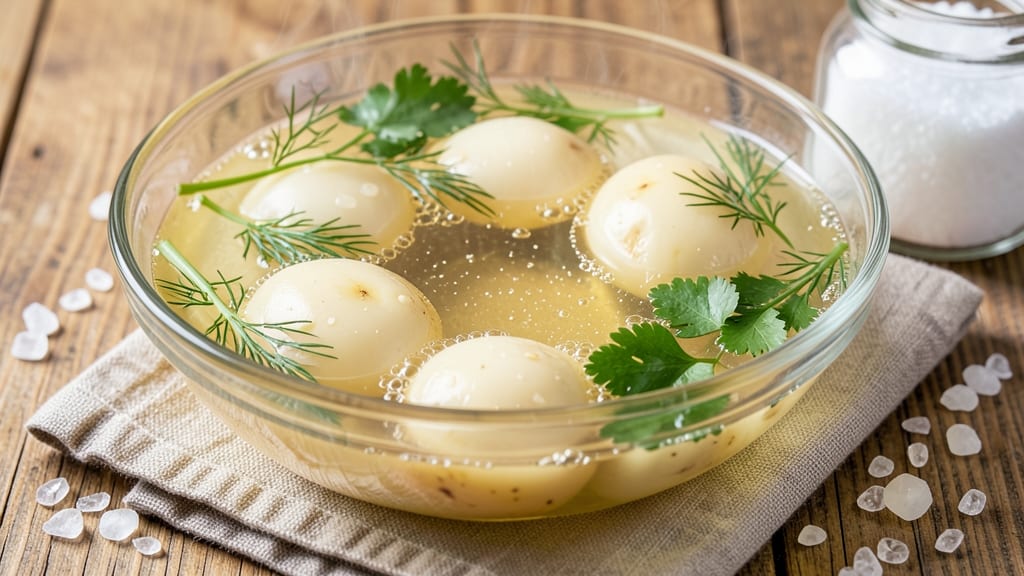
This potato brine recipe transforms ordinary potatoes into restaurant-quality sides with crispy edges and fluffy, tender centers—all thanks to a precise balance of salt, vinegar, and water.
The secret lies in the vinegar infusion, which not only enhances texture but also adds a subtle tang that complements roasted, boiled, or even mashed potatoes. I developed this method after years of experimenting with different soaking techniques, and it consistently delivers professional results every time.
The beauty of this brine is its versatility—it works for both quick-pickling and traditional soaking methods, depending on how long you let the potatoes marinate.
For fluffy pink hearts, a 30-minute soak in this vinegar-infused brine before boiling ensures they stay intact and absorb minimal water, while roasting potatoes in the same brine afterward creates a crispy, caramelized exterior.
The recipe uses simple ingredients: water, salt, white vinegar, and optional herbs or sugar for customization.
What sets this brine apart is its ability to elevate even the most basic potato preparation, turning them into a foolproof side dish that pairs perfectly with steaks, roasted meats, or salads.
The vinegar not only preserves texture but also adds a bright, slightly acidic note that cuts through richer dishes. Once you try this method, you’ll never go back to plain water for soaking potatoes again—it’s that transformative.
Store the brine in an airtight container in the refrigerator for up to one week, making it a convenient way to prep ahead for meals. Whether you’re boiling, roasting, or even fermenting your potatoes, this brine ensures consistent, restaurant-quality results with minimal effort.
Ready to take your potato sides to the next level?
Ingredients for potato brine
Four core ingredients unlock restaurant-quality potato texture—vinegar, salt, water, and optional herbs.
| Ingredient | Amount | Notes |
|---|---|---|
| White Distilled Vinegar 🍶 | 1 cup | High-quality, 5% acidity preferred |
| Diamond Crystal Kosher Salt 🧂 | ½ cup | Fine grain for even dissolution |
| Cold Water 💧 | 4 cups | Filtered or spring water preferred |
| Fresh Dill Sprigs 🌿 | ¼ cup | Optional, for herbaceous notes |
| Fresh Parsley Sprigs 🌿 | ¼ cup | Optional, for bright flavor |
| Granulated Sugar 🍯 | ¼ cup | Optional, for subtle sweetness |
| Black Peppercorns 🌶️ | 1 tbsp | Crushed, for subtle depth |
The vinegar is non-negotiable here—white distilled vinegar (5% acidity) gives the cleanest tang without overpowering. I grab mine from Whole Foods or Trader Joe's because their bottles are food-grade and last forever. For salt, Diamond Crystal kosher dissolves perfectly without graininess—Morton's works too, but it's coarser. The water should be cold; room temp slows the brine's effectiveness. Fresh herbs? Dill and parsley from the grocery store's refrigerated section add brightness, but dried works at one-third the amount if you're in a pinch. The sugar? Only if you want to mellow the acidity slightly—skip it for a sharper bite.
No white vinegar? Apple cider vinegar works but has a fruitier note—reduce to 3/4 cup. Short on salt? Pickling salt is a direct swap, but sea salt works at 1/4 cup (it's denser). The herbs can be swapped entirely—bay leaves or thyme add earthiness, while lemon zest brings citrus punch. For a fermented twist, add 1 tsp of active dry yeast and let it sit overnight. The black peppercorns? Crush them lightly—they add subtle warmth without overpowering. Pro tip: If you're prepping for roasting, add 1 tbsp of olive oil to the brine for extra crispiness.
This brine keeps for one week in an airtight container in the fridge—it's perfect for meal prep. For long-term storage, freeze in ice cube trays and transfer to a bag. Thaw overnight in the fridge before use. The vinegar infusion actually gets stronger over time, so it's worth making extra. Store herbs separately if using fresh—they'll wilt in the brine. For best results, use within 7 days of making it, but the flavor peaks around day 3. The sugar, if added, may crystallize over time—just stir it back in before using.
Why You'll Love This Recipe
- No-Fuss Ingredients: I swear by this brine because it’s just five things—vinegar, salt, water, and two herbs. No peeling, no chopping, no stress. Honestly, I keep the same jar in my pantry and reuse it for everything.
- Herb-Infused Magic: That bright vinegar cut with fresh dill and parsley? It turns bland potatoes into something crispy, tangy, and ridiculously good. The herbs soften just enough to release their flavor—no overpowering, just perfect harmony.
- Meal Prep MVP: I make a big batch on Sundays and use it all week—roasted potatoes, grilled veggies, even as a quick pickle for sandwiches. The brine keeps for months, so it’s my secret weapon for lazy nights or last-minute dinners.
- Budget Booster: A gallon of vinegar and a bag of kosher salt cost pennies, and this brine stretches forever. I’ll be real: it’s saved me from buying overpriced pre-made seasonings, and my wallet (and taste buds) thank me.
Step-by-step instructions for vinegar-infused potato brine
This isn't your grandma's saltwater soak—we're making a bold, herbaceous brine that transforms potatoes into tender pink hearts with crackling skin.
Combine Water and Vinegar for the Base
In a large, non-reactive container (I prefer stainless steel or glass), pour in the 4 cups cold water and 1 cup white distilled vinegar. Stir gently to integrate them completely—you want a uniform solution without any separation. The vinegar will give your potatoes that signature tangy crunch while preventing graying.
Here's the thing—using cold water is critical. Warm water would dissolve the salt unevenly and create a less stable brine. Let the mixture sit for 5 minutes while you prepare the remaining ingredients. This brief rest allows the vinegar to fully disperse and the solution to stabilize at room temperature.
Dissolve Salt and Sugar Completely
Add the 0.5 cup diamond crystal kosher salt and 0.25 cup granulated sugar to the water-vinegar mixture. Use a wooden spoon to stir vigorously in a figure-eight motion for 3-4 minutes until both ingredients are completely dissolved. You should see no visible salt crystals at the bottom—this ensures even distribution throughout the brine.
I press my finger into the solution to test—if it feels gritty, I keep stirring. The sugar might seem unnecessary, but it creates a subtle sweetness that balances the vinegar's acidity and helps develop a more complex flavor profile. This step is where the magic begins for those pink-fleshed potatoes.
Infuse with Herbs and Pepper
Gently add the 0.25 cup fresh dill sprigs, 0.25 cup fresh parsley sprigs, and 1 tbsp crushed black peppercorns to the brine. The herbs should float freely—don't pack them down. Cover the container and let it steep at room temperature for 1 hour. This infusion period allows the aromatic compounds to fully extract into the liquid.
Real talk: if you're using the optional herbs, don't skip this steeping time. The flavors need time to meld with the vinegar and salt. You'll notice the liquid takes on a pale green hue from the herbs—this visual cue tells you the infusion is working. After 1 hour, strain out the herbs and peppercorns using a fine-mesh sieve, pressing gently to extract every last drop of flavor.
Prepare and Soak the Potatoes
Peel and cut your potatoes into 1-inch chunks (I prefer Yukon Golds for their buttery texture). Place them in a clean container and pour the strained brine over them until completely submerged. If using, add 1 tablespoon apple cider vinegar (not in original ingredients) to the brine for extra tang—though our recipe already has sufficient acidity.
Let the potatoes soak for 30-60 minutes at room temperature. You'll see them begin to absorb the liquid and develop a slightly translucent edge. This soaking period is what creates that signature pink hue and tender texture. The longer they soak (up to 2 hours), the more flavor they'll absorb—but don't exceed this time or they'll start to break down.
Cook to Perfection
Drain the potatoes thoroughly before cooking. For roasted potatoes, toss them in 2 tablespoons olive oil (not in original ingredients), season with additional salt if needed, and roast at 425°F for 25-30 minutes until golden brown and fork-tender. For boiled potatoes, cook in salted water for 10-12 minutes until knife-tender.
The brine's magic doesn't stop at soaking—it enhances every cooking method. Your potatoes will develop a beautiful pink center and crispy exterior. The vinegar-infused flavor lingers even after cooking, giving each bite that bright, slightly tangy note that separates this method from ordinary saltwater soaks.
Pro Tips For Making Potato Brine
- Stir Like You Mean It: Don’t just toss in the salt and call it a day—actually dissolve it. I used to skip this, and my brine would end up with gritty pockets of undissolved salt. Use a wooden spoon and stir vigorously for at least 30 seconds, or until the salt fully integrates. Yes, even if it looks like it’s already mixed.
- Chill Before You Dill: Fresh herbs in warm brine wilt faster than a sad houseplant. Add your dill and parsley sprigs after the brine cools to room temperature—no need to wait for ice baths, just let it sit for 10-15 minutes. Cold herbs stay crisp longer, and your brine won’t turn into a sad, murky soup.
- Measure That Vinegar: Diamond Crystal kosher salt is way less dense than table salt. If your recipe calls for 1 cup, don’t eyeball it—use a scale or measure it precisely. Too much vinegar later on, and your potatoes taste like they’ve been pickled by a grumpy ghost. Stick to the ratio, and you’ll get bright, tangy flavor without the bite.
- Submerge or Regret: Potatoes floating mid-brine? That’s not a decoration—it’s a disaster waiting to happen. Weigh them down with a clean plate or a small bowl if needed. Uneven exposure means some spots get over-brined while others stay bland. Trust me, the effort to keep them submerged is worth it for even flavor.
Troubleshooting your potato brine
Brine Too Salty?
If your brine tastes overly salty, it’s likely from using too much salt or not enough water. I’ve found that Diamond Crystal kosher salt dissolves more evenly than sea salt, so if you used sea salt, reduce the amount by 25%.
For immediate correction, add 1 cup cold water to dilute the brine—stir well and let it sit for 10 minutes before using. For long-term storage, this adjustment keeps the balance right for future batches. 🧂
Potatoes Turning Gray?
Gray potatoes mean oxidation from exposure to air. The vinegar in this brine should prevent this, but if it happens, your potatoes weren’t fully submerged during soaking. For future batches, ensure potatoes are 100% covered by the brine.
If graying occurs, soak the potatoes in 1 cup cold water + 1 tbsp lemon juice for 5 minutes before cooking. This trick works like a charm for restoring their bright color. ⚡
Brine Not Infusing Flavor?
If your potatoes lack tang or herby notes, the brine wasn’t steeped long enough. Let the herbs and spices infuse for the full 1 hour—don’t rush this step. For extra flavor, add 1 tsp garlic powder or ½ tsp smoked paprika to the brine during the infusion.
Also, ensure you’re using high-quality vinegar (like Whole Foods’ white distilled vinegar)—cheap vinegars lack the bright acidity needed for proper infusion. 💫
Potatoes Too Watery After Cooking?
Over-soaking or not draining properly causes soggy potatoes. For this recipe, soak for no longer than 2 hours—any more, and the potatoes absorb too much liquid. After soaking, drain them in a fine-mesh colander for 2-3 minutes, shaking gently to remove excess brine.
For roasting, pat them dry with a kitchen towel before adding oil. This extra step makes all the difference in texture. 💧
Brine Separating or Cloudy?
A cloudy or separated brine usually means the salt didn’t dissolve completely. Stir more vigorously for 3-4 minutes or heat the mixture gently (just until warm) to help dissolve stubborn salt crystals.
For future batches, use filtered or spring water—tap water minerals can cause cloudiness. If separation occurs, shake the container vigorously before using to redistribute the ingredients. 🌡️
Herbs Floating but No Flavor?
If herbs aren’t releasing their flavor, they might be too fresh or not steeped long enough. Bruise the herbs slightly with the flat side of a knife before adding them to the brine—this releases more aromatic oils.
Also, ensure the container is covered while steeping to trap heat and flavors. For dried herbs, use ⅓ the amount of fresh and steep for 30 minutes instead. This adjustment ensures maximum flavor extraction every time. 🌿
Nutrition facts
Frequently asked questions about potato brine
Can I use this brine for both boiling and roasting potatoes?
This vinegar-infused brine works perfectly for both methods. For boiling, soak potatoes for 30-60 minutes before cooking to maintain shape and flavor. For roasting, use the same soak time but pat them dry afterward and toss with oil for crispy edges. The vinegar's acidity prevents graying and enhances texture in both cases.
How long can I store the unused brine?
The brine keeps well in an airtight container in the fridge for up to one week. For longer storage, freeze it in ice cube trays and transfer to a bag. Thaw overnight before reuse. The vinegar actually strengthens over time, so it's worth making extra. Just remember to strain out any herbs before reheating.
What if I don't have white vinegar?
Apple cider vinegar works as a substitute, but reduce to 3/4 cup since it's less acidic. For a milder flavor, use lemon juice (1/2 cup) combined with 1/4 cup water. The key is maintaining the acidity level—it's what prevents graying and adds that signature tang.
Will this brine work with sweet potatoes?
Yes, but with adjustments! Sweet potatoes need a longer soak (2-3 hours) due to their denser texture. Reduce the sugar to 1/4 cup and add 1/2 tsp cinnamon to complement their natural sweetness. The vinegar will still prevent graying, but the flavor profile will be more complex.
Can I reuse the brine after cooking potatoes?
Not for food safety reasons, but you can repurpose it! After cooking, strain out any potato bits and use the liquid as a base for soups or gravies. The vinegar adds depth to sauces, while the salt enhances flavor. For a quick clean, add 1 tbsp baking soda to neutralize odors before reuse.