Side Dishes
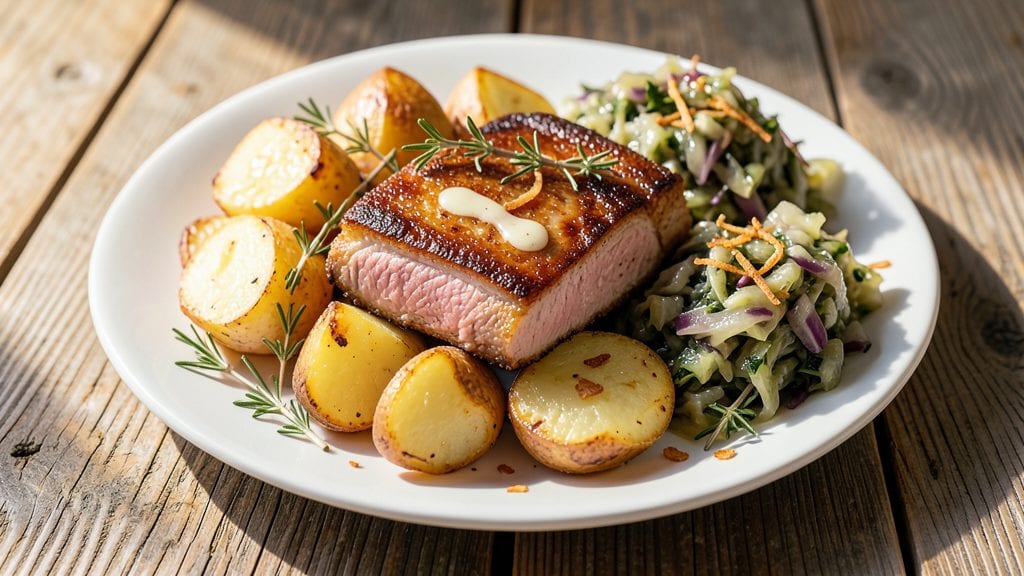
This one-pan German-style dinner brings together tender pork chops, tangy sauerkraut, and crispy potatoes in a single, satisfying meal. Growing up in small-town Georgia, I learned how pork transforms any dish into a hearty centerpiece—this recipe proves that even simple ingredients can create restaurant-quality results when cooked properly.
The key lies in balancing sweet, sour, and savory flavors while ensuring each component reaches its ideal texture.
The beauty of this recipe is its simplicity: just three core elements that come together in one pan. Pork chops sear to a golden crust while staying juicy inside, sauerkraut softens into a flavorful bed, and potatoes roast until crispy on the edges.
I developed this method after years of testing German-inspired dishes, refining it to deliver foolproof, restaurant-quality results without requiring special equipment. The secret? High heat for the pork and a touch of caramelization for the potatoes.
By the time you serve this dish, your kitchen will smell like a traditional German tavern—smoky, savory, and inviting. The pork chops emerge juicy and perfectly cooked, the sauerkraut adds a tangy contrast, and the potatoes develop a crispy exterior that holds up to every bite.
This is the kind of meal that feels like a celebration, even on a weeknight. Ready to bring this classic to your table?
Perfect for family dinners, holiday gatherings, or when you crave a comforting meal without the fuss. The recipe scales easily, and leftovers reheat beautifully. Here’s how to make it—one pan, one incredible dinner.
Ingredients for pork chop sauerkraut potato
Three core ingredients transform into a restaurant-quality German-style dinner with minimal effort.
| Ingredient | Amount | Notes |
|---|---|---|
| Bone-In Pork Chops 🥩 | 4 whole | 1-inch thick, center-cut preferred |
| Russet Potatoes 🥔 | 2 lbs | Cut into 1-inch chunks, skin-on |
| Unsalted Butter 🧈 | ½ cup | Cold, cut into 1-inch cubes |
| Sauerkraut 🥬 | 1 ½ cups | Drained, rinsed if too sour |
| Fresh Thyme 🌿 | ¼ cup | Chopped, stems removed |
| Fresh Rosemary 🌿 | ¼ cup | Chopped, stems removed |
| Garlic Cloves 🧄 | 6 cloves | Minced, fresh preferred |
| Apple Cider Vinegar 🍎 | 2 tbsp | For balancing sauerkraut acidity |
| Honey 🍯 | 2 tbsp | Local preferred for depth |
| Diamond Crystal Kosher Salt 🧂 | 1 ½ tsp | For seasoning and brining |
| Freshly Ground Black Pepper 🌶️ | 1 tsp | Coarsely cracked |
| Smoked Paprika 🌶️ | 1 tsp | For smoky depth |
| Extra-Virgin Olive Oil 🫒 | 2 tbsp | High smoke point for searing |
The bone-in pork chops are essential for authentic flavor and moisture retention. Look for center-cut chops with visible marbling—this ensures juiciness. Most grocery stores carry them fresh, but Costco or Whole Foods often have higher-quality cuts. If you can't find bone-in, use boneless chops but pound them evenly to ¼-inch thickness for consistent cooking. The potatoes should be russet—their high starch content creates the perfect crispy exterior while staying fluffy inside. Cut them uniformly to ensure even roasting. For the sauerkraut, Brauer's or Reinhart brands from the refrigerated section deliver the best tangy flavor without excessive salt.
No fresh thyme or rosemary? Dried works at half the amount, but fresh imparts superior aroma. Substituting sauerkraut? Cabbage fermented for 3-4 weeks mimics the flavor, though it lacks the same depth. The apple cider vinegar balances the sauerkraut's acidity—substitute lemon juice at the same ratio if unavailable. For honey, maple syrup works in a pinch, though it lacks floral notes. The smoked paprika adds depth; regular paprika plus a pinch of liquid smoke replicates the effect. If your olive oil has a low smoke point, avocado oil is a better choice for searing.
Store the pork chops in the coldest part of your fridge, unwashed and untrimmed, for up to 3 days. The potatoes keep for 1 week in a cool, dark place, while fresh herbs last 5-7 days wrapped in damp paper towels. Prep the sauerkraut ahead by draining and rinsing it—it keeps for 2 weeks refrigerated. This dish reheats beautifully; cover with foil and warm at 350°F for 15 minutes. For meal prep, portion the potatoes and pork separately—they reheat best individually. Leftovers stay flavorful for 4 days refrigerated.
Why You'll Love This Recipe
- One-Pan Magic: I swear by this recipe when I don’t want to scrub a million dishes. Bone-in chops and potatoes share a sheet pan with sauerkraut—just roast, then finish with butter and thyme. Less cleanup, more flavor, and honestly? My sink stays cleaner than my kitchen towels.
- Sauerkraut Secret Weapon: That tangy, fermented punch from the sauerkraut cuts through the richness of the pork and potatoes like a knife. I’ll be real: I almost skipped it the first time, but now? It’s the reason this dish feels alive—not just another roasted pork meal.
- Weeknight to Weekend: Between us, this is my go-to for lazy Fridays and Sunday dinners. The leftovers reheat like a dream (yes, even the crispy edges), and it’s the kind of dish that makes you look like a hero when your in-laws drop by. No fuss, just good food.
- Budget-Friendly Feast: Russets and pork chops stretch across four servings without breaking the bank, and the sauerkraut adds depth for pennies. I’ve made this for $12 and fed four people who still asked for seconds. That’s not just a meal—that’s a steal.
Step-by-step instructions for one-pan German-style dinner
Here's how to create a hearty, flavorful meal with minimal cleanup and maximum impact.
Sear the Bone-In Pork Chops to Perfection
Pat the 4 whole bone-in pork chops dry with paper towels—this ensures a proper sear. In a large Dutch oven, heat the 2 tablespoons extra-virgin olive oil over medium-high heat until shimmering. Season each pork chop generously with ½ teaspoon diamond crystal kosher salt, ¼ teaspoon freshly ground black pepper, and ¼ teaspoon smoked paprika, pressing the spices into the meat.
Place the pork chops in the Dutch oven and sear for 4-5 minutes per side until they develop a deep golden-brown crust. The chops should release easily from the pan when ready to flip. Remove them and set aside on a plate, leaving the rendered fat in the pot. This fat will become the flavor base for your potatoes and sauerkraut.
Par-cook the Russet Potatoes
Add the 2 lbs russet potatoes, cut into 1-inch chunks with skin on, to the Dutch oven with the pork fat. Toss them to coat evenly in the fat. Sprinkle with the remaining 1 teaspoon diamond crystal kosher salt and ¾ teaspoon freshly ground black pepper. Pour in enough cold water to come halfway up the sides of the potatoes—about 1½ cups.
Bring to a simmer over medium heat and cook for 8-10 minutes until the potatoes begin to soften but aren't fully tender. You want them to be partially cooked now so they finish perfectly when everything comes together later. Drain the potatoes, reserving the cooking liquid, and set them aside in a colander.
Build the Herbed Sauerkraut Base
In the same Dutch oven, reduce heat to medium and add the 0.5 cup unsalted butter, cut into 1-inch cubes. Allow it to melt completely, about 2 minutes. Add the 6 minced garlic cloves and cook for 30 seconds until fragrant—don't let them brown or they'll turn bitter. Stir in the 1.5 cups drained sauerkraut, breaking up any large chunks with a wooden spoon.
Add the 0.25 cup chopped fresh thyme, 0.25 cup chopped fresh rosemary, 2 tablespoons apple cider vinegar, and 2 tablespoons honey. Stir well to combine and let the mixture simmer for 3-4 minutes until the flavors meld and the sauerkraut softens slightly. Taste and adjust seasoning with additional salt if needed.
Combine and Finish in the Oven
Return the par-cooked potatoes to the Dutch oven and nestle the pork chops back in. Pour in just enough of the reserved potato cooking liquid to create a light sauce—about ½ cup. The goal is to create steam that will cook the potatoes through while keeping everything moist.
Cover the Dutch oven with a tight-fitting lid and transfer to a preheated 375°F oven. Bake for 25-30 minutes until the pork chops reach an internal temperature of 145°F when measured at the thickest part of the meat. The potatoes should be fork-tender with crispy edges.
Rest and Serve with Crispy Edges
Remove the dish from the oven and let it rest uncovered for 10 minutes. This allows the juices to redistribute throughout the pork chops, ensuring they stay moist when sliced. The potatoes will continue to crisp slightly at the edges during this resting time.
Serve the pork chops sliced through the bone, fanned over the herbed sauerkraut and potatoes. The combination of crispy pork skin, tender potatoes, and tangy-sweet sauerkraut creates a perfect balance of textures and flavors. Garnish with additional fresh thyme if desired, and serve with a simple green salad to complete the meal.
Pro Tips For Making Pork Chop Sauerkraut Potato
- Sear the Chops First: Don’t skip the initial high-heat sear—cast iron or a heavy skillet at medium-high until deep golden brown. I learned this the hard way: skipping it means flavorless pork that just boils in its own juices later.
- Par-Cook Potatoes: Boil or microwave the Russets until just fork-tender (about 10 minutes), then finish in the pan. This guarantees they crisp up instead of turning to mush—no one wants gluey potatoes in this dish.
- Drain Sauerkraut Well: Rinse and drain the sauerkraut in a colander for at least 5 minutes before adding it. The excess brine will dilute the butter and make the dish watery—trust me, you’ll notice the difference.
- Butter in Stages: Add half the butter with the pork chops, then the rest with the potatoes and sauerkraut. This keeps the butter from burning while the potatoes crisp, and ensures every bite gets that rich, melty flavor.
Perfect pairings for these flavors
Creamy Beer Pairings
This dish pairs beautifully with a crisp, malty German lager like Stiegl Radler or Weihenstephaner Hefeweissbier. The effervescence cuts through the richness of the pork while the caramel notes complement the honey in the sauerkraut.
I always keep a 6-pack of Hofbräuhaus Original on hand for these kinds of meals—it’s the perfect balance of smooth and refreshing. 🍺
Crisp White Wine
For wine lovers, a dry Riesling from the Mosel region is ideal. The acidity and citrus notes in wines like Dr. Loosen Blue Slate mirror the tangy sauerkraut while standing up to the pork’s richness.
Serve it slightly chilled (50-55°F) to enhance its crispness. I’ve found that a German Spätlese from the Rheingau adds a touch of sweetness that harmonizes with the dish’s honeyed elements.
Cider or Mead
Apple cider vinegar already plays a key role in this recipe, so why not extend that theme with a dry hard cider like Angry Orchard Crisp? The apple notes bridge beautifully with the vinegar in the sauerkraut.
Alternatively, a honey mead like Meadhbh Traditional Mead adds a floral sweetness that echoes the dish’s honeyed depth. Both options feel authentically German while keeping the meal approachable. 🍎
Non-Alcoholic Options
Don’t overlook sparkling water with a splash of lemon juice and a pinch of sugar—it’s a refreshing way to cleanse your palate between bites. For something more substantial, try an unsweetened ginger beer like Fever-Tree.
The ginger’s spice complements the smokiness of the pork, while the effervescence keeps the meal feeling light. I often serve this with a side of pickled vegetables to round out the experience.
Herbal Tea Pairings
If you prefer tea, a chamomile or peppermint infusion provides a soothing contrast to the rich flavors. The cooling mint balances the heat from the smoked paprika, while chamomile’s floral notes harmonize with the rosemary and thyme.
Brew a strong cup and serve it warm or iced—it’s a surprisingly elegant pairing that enhances the dish’s rustic charm. 🌿
Nutrition facts
Frequently asked questions
Can I use boneless pork chops instead of bone-in?
Yes, but you'll need to adjust the cooking time. Pound boneless chops to ¼-inch thickness for even cooking. They'll require 2-3 minutes less per side than bone-in chops, so watch closely to avoid overcooking. The flavor remains excellent—just expect slightly less moisture retention without the bone.
How do I know when the pork chops are fully cooked?
Use a meat thermometer to check the thickest part of the chop—it should reach 145°F internally. For bone-in chops, insert the probe between the meat and bone. If you don't have a thermometer, cut into the thickest part: juices should run clear, and the meat should feel firm but still tender when pressed with a finger.
What if my sauerkraut tastes too sour?
Rinse it thoroughly under cold water to remove excess acid, then drain well. Add 1 extra tablespoon of honey or ½ teaspoon of sugar to the herbed base while cooking. For extra balance, stir in ½ teaspoon of caraway seeds—they're traditional in German sauerkraut and add a subtle, sweet aroma.
Can I make this dish ahead of time?
Prep the sauerkraut mixture and par-cook the potatoes up to 2 days ahead. Store separately in the fridge. On serving day, simply reheat the potatoes in the oven for 10 minutes at 375°F while you sear fresh pork chops. The flavors actually deepen overnight, making it even more delicious.
Why are my potatoes mushy instead of crispy?
Overcooking or using the wrong potato variety causes mushiness. Stick to russet potatoes and cut them uniformly. Par-cook them only until partially tender (they should resist a fork). The final crisp comes from the oven's dry heat—never cover the potatoes while baking, and use a tight-fitting lid only on the Dutch oven.