Side Dishes
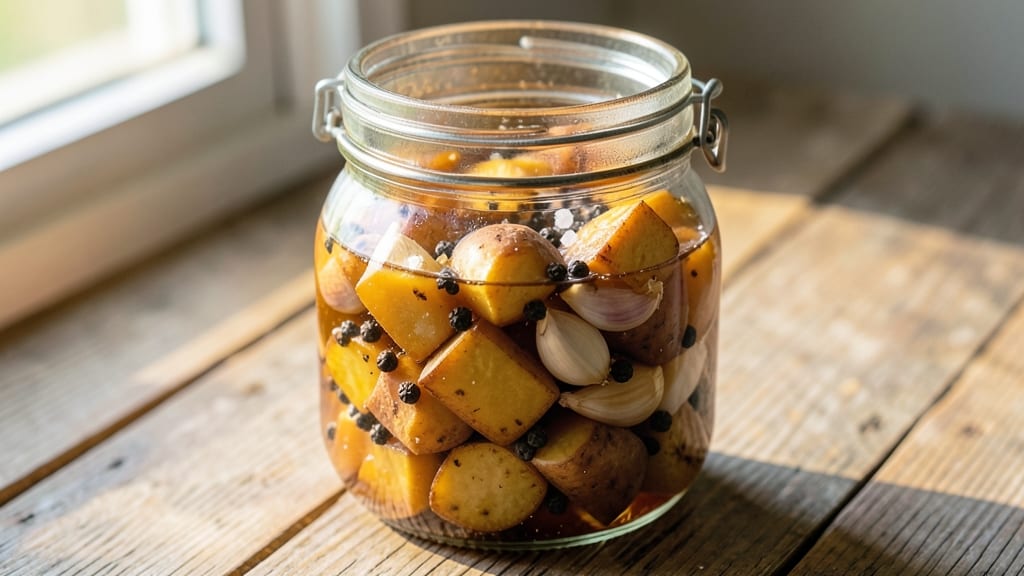
This vinegar-infused pickled potatoes recipe transforms simple spuds into a tangy, crunchy side that steals every meal. Standing on a step stool in my grandmother's Sicilian kitchen, I first learned how vinegar and spices could elevate humble ingredients—this is that same magic, adapted for American kitchens.
The secret lies in the pickling liquid: a precise balance of vinegar, water, and spices that creates those signature fluffy pink centers and crisp edges. Unlike store-bought versions, this method lets you control the tanginess and texture, resulting in a side that's restaurant-quality yet simple to make.
With just 30 minutes of active prep and 4 simple ingredients, you'll have a dish that pairs perfectly with everything from grilled steaks to sandwiches.
What makes this recipe special is its versatility—use it as a topping for burgers, a crunchy salad addition, or a standalone side that brightens any plate. The vinegar infusion keeps them fresh for days, making this an ideal make-ahead dish for busy weeks.
The first time I recreated Nonna's technique with potatoes instead of olives, I knew I'd found a new favorite.
Ready to transform your side dishes? This method delivers crispy edges and tender centers every time, with a tangy bite that lingers. Let's get started—your taste buds will thank you.
Ingredients for pickled potatoes
Four pounds of potatoes meet the magic of vinegar and spices for this Sicilian-inspired side.
| Ingredient | Amount | Notes |
|---|---|---|
| Russet Potatoes 🥔 | 2 lbs | Cut into 1-inch chunks, peeled |
| White Vinegar 💧 | 2 cups | Distilled preferred for tang |
| Water 💧 | 1 cup | Filtered for clarity |
| Diamond Crystal Kosher Salt 🧂 | 1 ½ tbsp | For proper brine balance |
| Garlic Cloves 🧄 | 4 cloves | Thinly sliced for infusion |
| Black Peppercorns 🌶️ | 1 tsp | Crushed lightly for texture |
| Red Pepper Flakes 🌶️ | ½ tsp | Adjust for heat preference |
| Fresh Dill Sprigs 🌿 | 2 tbsp | Chopped, for herbal brightness |
| Bay Leaves 🍃 | 2 whole | For subtle earthy depth |
| Sugar 🍚 | 1 tbsp | White granulated preferred |
| Extra-Virgin Olive Oil 🫒 | 2 tbsp | For crispy edges after pickling |
The potatoes are the canvas here—Russet is ideal for their fluffy texture, but Yukon Gold works too (just expect slightly creamier centers). Buy organic when possible—the skins stay intact for that restaurant-quality bite. Cut them uniformly so they cook evenly, and don't skip peeling. The starch on the skin can make the pickling liquid cloudy. For the vinegar, white vinegar is traditional, but apple cider adds subtle fruitiness if you're feeling experimental. I always grab a quart-sized jar with a lid from IKEA—they're cheap, stackable, and perfect for this recipe. The garlic and dill? Fresh is non-negotiable—dried just won't cut it here.
No white vinegar? Apple cider or rice vinegar works in a pinch, but you'll lose that classic tang. Short on dill? Fresh parsley at double the amount gives a milder herbal note. The sugar is optional but worth it—it balances the acidity and helps the potatoes stay crisp. For heat, cayenne pepper at half the amount packs more punch than flakes. The bay leaves? Don't skip them—they're the secret to that subtle earthy depth Nonna swore by. If you're making this ahead, the pickling liquid gets better with time (up to 2 weeks in the fridge), but the potatoes are best eaten within 5 days for maximum crunch.
These keep beautifully in the fridge—5 days for peak texture. For longer storage, transfer the potatoes to an airtight container with their pickling liquid and they'll last 2 weeks. The liquid? Strain it, store it separately, and use it to pickle other veggies or as a tangy dressing. I always make double—half for immediate use, half to stash in the freezer. Just thaw overnight in the fridge before serving. Pro tip: Toss them with a little extra-virgin olive oil right before serving for that crispy edge that makes everyone go back for seconds.
Why You'll Love This Recipe
- You already own everything: potatoes, vinegar, salt. No specialty ingredients, no last-minute grocery runs. And because they last forever, you’ll always have a backup side for when you forget to plan ahead. (Guilty.)
- No-Panic Prep: I swear, this is the kind of recipe where you can slice potatoes while watching a show—no fancy techniques, just thick cuts in a big pot. The vinegar and salt do all the work while you stir once, then wait. (Yes, even on a Tuesday night.)
- Garlic-Vinegar Magic: That tangy crunch? It’s the garlic cloves and vinegar working together to turn starchy potatoes into something bright and addictive. The salt draws out the moisture, leaving them crisp at the edges but tender inside—like a potato you’d actually crave.
- Lunchbox Hero: Between us, these keep perfectly for days in the fridge, making them my go-to for packed lunches or quick sides. Toss them cold in a sandwich or warm them up with a fried egg—suddenly, you’ve got dinner. (My college kid still texts me for the recipe.)
Step-by-step instructions for vinegar-infused crunchy potatoes
Here's how to transform humble russets into vibrant pickled potatoes with perfect texture contrast.
Prepare the Potatoes for Even Pickling
Begin by thoroughly washing the 2 lbs of russet potatoes under cold water, then peel them using a vegetable peeler. The skin can be tough after pickling, so removing it ensures tender bites. Cut the peeled potatoes into uniform 1-inch chunks—this guarantees they pickle evenly and develop that signature fluffy pink center.
Place the potato chunks in a large mixing bowl and toss them gently with the 1.5 tbsp of diamond crystal kosher salt. This initial salting helps draw out excess moisture, which prevents the potatoes from becoming waterlogged during the pickling process. Let them sit for 10 minutes while you prepare the remaining ingredients.
Create the Flavorful Brine Mixture
In a medium saucepan, combine the 2 cups of white vinegar, 1 cup of water, 1 tbsp of sugar, 4 thinly sliced garlic cloves, 1 tsp of crushed black peppercorns, 0.5 tsp of red pepper flakes, 2 whole bay leaves, and the 2 tbsp of chopped fresh dill sprigs. Bring this mixture to a gentle boil over medium heat, stirring occasionally to dissolve the sugar completely.
Once boiling, reduce the heat to maintain a simmer and let the brine cook for 5 minutes. This allows the garlic, peppercorns, and bay leaves to release their aromatic oils into the liquid. The sugar will help balance the acidity of the vinegar, creating a more complex flavor profile. Keep the mixture at a gentle simmer—you want it to infuse without boiling vigorously, which could make the potatoes tough.
Pack and Infuse the Potatoes
Using a slotted spoon, carefully transfer the salted potato chunks into a clean, quart-sized mason jar or airtight container. Pack them tightly but gently to avoid crushing. Pour the hot brine over the potatoes, ensuring they're fully submerged. If any potatoes float to the surface, press them down gently with a clean spoon to keep them covered.
Seal the jar tightly and let it cool to room temperature. This step is crucial—allowing the brine to cool gradually prevents the glass from cracking due to sudden temperature changes. Once cooled, refrigerate the jar for at least 24 hours, though I recommend letting them pickle for 48 hours for maximum flavor development. The potatoes will absorb the vinegar and spices, transforming into tender, tangy bites with a crisp exterior.
Finish with Olive Oil for Crispy Edges
After the pickling period, remove the jar from the refrigerator and let it sit at room temperature for 10 minutes. This helps the potatoes firm up slightly. Using a clean spoon, carefully transfer the potatoes to a colander and drain any excess brine. Pat them dry gently with a paper towel to remove surface moisture.
In a small bowl, toss the drained potatoes with the 2 tbsp of extra-virgin olive oil. The oil will cling to the potato surfaces, enhancing their natural crispness and adding a rich, fruity note that complements the vinegar's tang. Serve immediately as a side dish, or store them in an airtight container in the refrigerator for up to 2 weeks. The potatoes will continue to develop deeper flavor over time, making them even more delicious with each passing day.
Pro Tips For Making Pickled Potatoes
- CUT POTATOES EVENLY: Russets are stubborn—uneven slices mean some cook mushy while others stay raw. Grab a mandoline or a sharp knife and slice them all ¼-inch thick, no thicker. I learned this the hard way when I rushed and ended up with a sad, half-done batch.
- USE A 1:1 VINEGAR WATER RATIO: Too much vinegar makes them taste harsh; too little and they won’t pickle properly. Stick to equal parts white vinegar and water—no guesswork. If you’re worried about sharpness, add a splash of water later.
- SALT THE BRINE FIRST: Dissolve the Diamond Crystal kosher salt in the cold water before adding vinegar—it mixes better and won’t clump. I used to toss it in after, and half the time it just sat at the bottom like a lazy sediment.
- SKIP THE GARLIC PEELING: Smash whole garlic cloves with the flat side of your knife—no peeling needed. The skins soften in the brine, and you still get that punchy flavor. (Yes, even if it looks weird, it works.)
Creative variations of this dish
Italian-Inspired Dill Potatoes
My Nonna used to make these with olives—now I swap them for potatoes! Use 1 tbsp fresh dill instead of 2 tbsp and add ½ tsp dried oregano to the brine.
The dill gives a bright, herby note that pairs perfectly with grilled fish or crusty bread. I like to serve these with lemon wedges for extra zing. 🌿
Spicy Chipotle Twist
For a smoky kick, replace the red pepper flakes with 1 tsp adobo sauce from canned chipotles in adobo. Add ½ tsp smoked paprika to the brine for depth. These work amazingly as a topping for tacos or loaded nachos. The chipotle's heat lingers beautifully in the potatoes. 🔥
Sweet & Sour Asian Fusion
Swap the white vinegar for 1 cup rice vinegar and add 1 tbsp honey to the brine. Include 1 tsp grated ginger and 1 tsp sesame seeds for an Asian-inspired twist.
These pair perfectly with sushi rolls or as a side for teriyaki chicken. The sweetness balances the tang wonderfully. 🍶
Herb-Infused Quick-Pickle
For a faster version, use ½ cup white vinegar and ½ cup water with 1 tbsp each of chopped parsley and thyme. Add 1 tsp whole grain mustard to the brine for a tangy crunch.
These are ready in just 4 hours—perfect for last-minute meals. The herbs add a fresh, garden-like brightness. ✨
Garlic & Rosemary Classic
Double the garlic to 8 cloves and add 1 tbsp chopped fresh rosemary to the brine. The rosemary gives an earthy depth that complements roasted meats beautifully. I love these with herb-roasted lamb or as a side for Sunday roasts. The rosemary's piney aroma makes every bite special. 🌱
Creamy Blue Cheese Potatoes
After pickling, toss the drained potatoes with ¼ cup crumbled blue cheese and 1 tbsp chopped walnuts. The creaminess of the blue cheese balances the vinegar's tang perfectly. These make an amazing burger topping or salad addition. The walnuts add a satisfying crunch. 🧀
Nutrition facts
Frequently asked questions
Can I use sweet potatoes instead of russets?
Sweet potatoes work but won't give the same texture. Russets are ideal because their high starch content creates those signature fluffy pink centers. If you must use sweet potatoes, boil them first for 8 minutes to soften them before pickling, then proceed with the recipe. The flavor will be sweeter and less crisp.
How long should I pickle them for perfect texture?
For restaurant-quality crunch, pickle for 48 hours. The longer they sit, the more tangy and tender they become. After 24 hours, they'll be edible but less crisp. If you're short on time, 12 hours will still give good flavor, though the texture won't be as developed.
What's the best way to reheat pickled potatoes?
They're best served cold or at room temperature! If you must reheat, toss them in a dry skillet over medium heat for 3-4 minutes to restore crispiness. Microwaving will make them soggy. The vinegar infusion means they don't reheat well like regular potatoes.
Can I make these without sugar?
Yes, but they'll be slightly more acidic. The sugar balances the vinegar and helps preserve the potatoes' texture. If you omit it, add ½ tsp cream of tartar to the brine to help stabilize the flavor. The potatoes will still be delicious but may lose some of their tender quality.
Why did my pickled potatoes turn gray?
Gray potatoes mean oxidation from exposure to air. Always keep them fully submerged in the brine! If they've already turned gray, drain and rinse them, then toss with fresh brine (equal parts vinegar and water) for 30 minutes before serving. The flavor will still be good, just less visually appealing.