Side Dishes
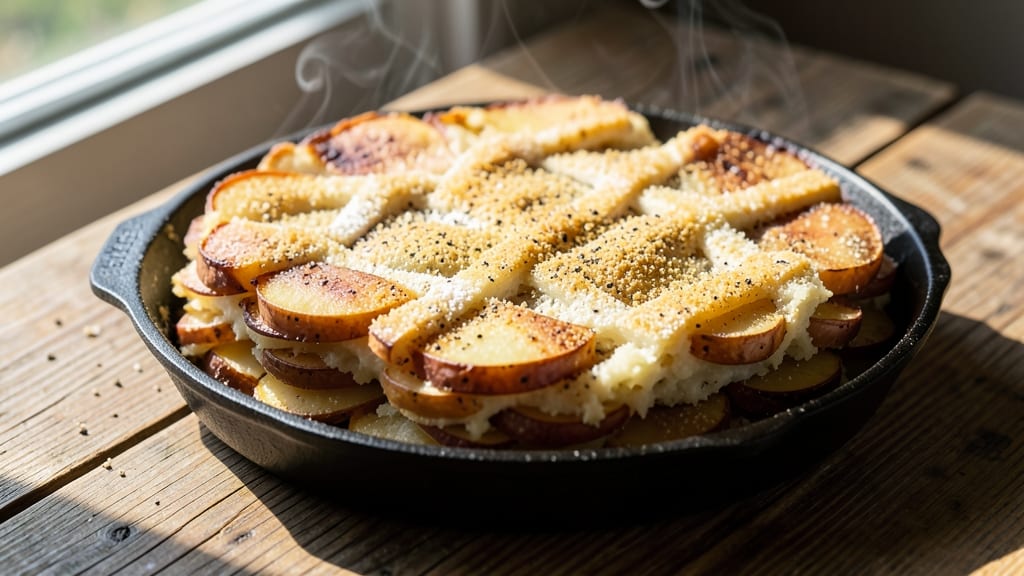
This old-fashioned potato cake recipe delivers the buttery, cornmeal-crusted crowns and fluffy pink centers that make it a Southern classic. 🌟 I first tasted these at my grandmother's kitchen table, where she'd fry them golden in cast iron while the scent of cornmeal filled the house—now I'm sharing the precise method that keeps them crisp outside and tender within.
The secret lies in properly grating the potatoes (no food processor—hand grating yields the best texture) and letting the batter rest before frying. This allows the cornmeal coating to adhere perfectly, creating that signature crackly crust while maintaining a moist interior.
The buttermilk in the batter adds just enough tang to balance the richness.
What you'll end up with is a stack of potato cakes that look like they belong in a country diner—crispy golden edges, fluffy pink centers, and a buttery aroma that fills your kitchen.
They're perfect alongside fried chicken or as a hearty side for Sunday dinner. This recipe brings back memories of family gatherings while delivering restaurant-quality results at home.
For the best experience, serve them fresh from the fryer with a sprinkle of flaky sea salt and a side of tangy coleslaw. The leftovers reheat beautifully in the oven, though I'd be lying if I said I've ever managed to save any for later. Let's get cooking!
Ingredients for old fashioned potato cake
Buttery, crispy potato cakes with fluffy pink centers—just like Grandma's. Grab these staples and get ready for diner-style magic.
| Ingredient | Amount | Notes |
|---|---|---|
| Russet Potatoes 🥔 | 2 ½ lb | Cold, hand-grated for texture |
| All-Purpose Flour 🌾 | 1 cup | For light, fluffy batter |
| Yellow Cornmeal 🌽 | ½ cup | Fine grind for crisp crust |
| Baking Powder 🧂 | 1 tbsp | For fluffy centers |
| Salt 🧂 | 1 tsp | Fine sea salt preferred |
| Black Pepper 🌶️ | ½ tsp | Freshly cracked for warmth |
| Buttermilk 🥛 | 1 cup | Full-fat for richness |
| Large Eggs 🥚 | 1 whole | Room temperature preferred |
| Unsalted Butter 🧈 | ½ cup | Cold, cubed for frying |
| Vegetable Oil 🫒 | 2 cups | For deep frying (or lard) |
| Flaky Sea Salt 🧂 | 2 tbsp | For finishing after frying |
The potatoes are non-negotiable—Russets are your best bet for that classic texture. Cold and freshly grated (no food processor!) is key. I always grab the biggest bag at Walmart or Kroger—they're cheap and perfect. The cornmeal? Bob's Red Mill fine grind makes all the difference for that signature crackly crust. Don't skimp here—it's what gives these their iconic texture. And the buttermilk? Full-fat only—the richness balances the crispiness perfectly.
No buttermilk? Mix 1 cup milk with 1 tbsp vinegar, let it sit for 5 minutes. Cornmeal running out? Semolina or fine breadcrumbs work in a pinch, but texture won't be identical. The butter for frying? Cold cubes give you that sizzle and golden color—don't melt it first! And if you're feeling fancy, swap the vegetable oil for lard (my grandma's secret). The flaky sea salt? Maldon or Diamond Crystal are my go-tos—anything else tastes like table salt.
These taste even better the next day—reheat at 350°F for 10 minutes to restore crispiness. Store leftovers in an airtight container for 3 days, but honestly? They disappear faster than that. The cornmeal coating hardens as it cools, so keep them warm in a 200°F oven if serving a crowd. And if you're making a big batch, fry in two rounds—crowding the pan kills the crisp.
Why You'll Love This Recipe
- No-Fuss Prep: I peel, grate, and squeeze out the moisture—seriously, that’s it. No fancy mixing bowls or complicated steps; just a colander, a bowl, and 15 minutes of hands-on time. The cornmeal and flour blend in like they belong, and honestly? The hardest part is deciding whether to eat one raw bite while you wait.
- Golden Crunch Magic: That crispy, golden crust? It’s all in the cornmeal—just a handful mixed into the batter—and the baking powder gives it a light, airy lift inside. Between us, the first bite out of the oven is the moment I know I’ve made something special. (Yes, even on a Tuesday night.)
- Leftovers That Work: These cakes reheat like a dream—toss them in the oven for 5 minutes, and they’re fresh again. I’ve packed them for lunches, served them cold at picnics, and even used them to soak up gravy at holiday dinners. They’re sturdy enough to handle whatever you throw at them.
- Pantry Staple Power: Russets and flour? You’ve got them. Cornmeal adds that rustic touch without breaking the bank, and salt—well, we all have that. It’s the kind of recipe that turns basic ingredients into something hearty, filling, and downright satisfying without requiring a shopping spree. My wallet and my taste buds thank me every time.
Step-by-step instructions for old fashioned potato cake recipe
Get ready for golden, crispy potato cakes with fluffy pink centers—this method guarantees perfect texture every time!
👨🍳 Step 1: Grate and Squeeze the Potatoes
Peel the 2.5 lb russet potatoes and grate them using a box grater or food processor. I like to use a fine grate for that classic potato cake texture. Transfer the grated potatoes to a clean kitchen towel and squeeze out every last drop of moisture—this is CRITICAL for crispy cakes. Real talk: Skimping here means soggy results. Work in batches if needed, twisting the towel to wring out the water completely.
Once fully drained, transfer the potatoes to a large mixing bowl. Add the 1 cup all-purpose flour, 0.5 cup yellow cornmeal, 1 tbsp baking powder, 1 tsp salt, and 0.5 tsp black pepper. Stir gently with a wooden spoon until just combined—don't overmix or you'll develop gluten and ruin that tender crumb.
👨🍳 Step 2: Mix Wet Ingredients for Perfect Texture
In a separate bowl, whisk together the 1 cup buttermilk, 1 whole large egg, and 0.5 cup cold unsalted butter (cut into small cubes). The butter should remain cold—this helps create those beautiful flaky layers. Pour this mixture into the potato-flour bowl and stir gently until fully incorporated. You're aiming for a thick, dough-like consistency that holds together when pressed between your fingers.
Here's the thing—this batter should be stiff enough to shape into cakes but not dry. If it's too loose, add 1-2 tablespoons more of the flour-cornmeal mixture. The perfect batter will cling slightly to the spoon but still form a ball when pressed. Let it rest for 10 minutes while you heat your oil—this helps the flour absorb any remaining moisture.
🔥 Step 3: Heat Oil to 350°F for Perfect Crisp
Fill a deep fryer or heavy pot with 2 cups vegetable oil and heat it to 350°F—this is your sweet spot for crispy exteriors without greasy centers. I use a deep-fry thermometer to monitor the temperature precisely. If you don't have one, test with a small piece of batter: it should sizzle and float immediately. Too hot? The cakes will burn before cooking through. Too cool? They'll absorb oil and turn greasy.
While the oil heats, shape the potato batter into 4 equal portions (about 6 ounces each). Roll each portion into a ball, then flatten slightly into a ½-inch thick patty. The edges should be slightly thicker than the center—this creates that classic crown shape as they cook. Keep them covered with a clean towel to prevent drying.
🍳 Step 4: Fry Until Golden Brown
Carefully lower one potato cake into the hot oil using a slotted spoon. Fry for 3-4 minutes per side until golden brown and deeply crispy. You'll see the edges develop a beautiful mahogany color while the centers remain pale pink. Don't overcrowd the fryer—work in batches if needed to maintain the oil temperature.
Here's where it gets fun—when they're done, transfer the cakes to a paper towel-lined plate. Sprinkle immediately with 1 tablespoon flaky sea salt while they're piping hot. The salt melts slightly into the crispy crust, creating that perfect balance of savory and buttery. Let them rest for 2-3 minutes before serving—this helps set the interior while keeping that irresistible crunch.
🍽️ Step 5: Serve Warm with Extra Salt
Serve the potato cakes immediately while they're at their crispest. I like to arrange them on a platter and sprinkle with the remaining 1 tablespoon flaky sea salt just before serving. Each bite should deliver that perfect contrast: a shatteringly crisp exterior giving way to a tender, fluffy pink center. The cornmeal adds a lovely toothsome texture, while the buttermilk keeps everything rich and moist.
Real talk: These cakes are best enjoyed fresh out of the fryer. If you need to reheat them, pop them in a 350°F oven for 5-7 minutes to restore that crispy magic. Pair with a simple side salad or tangy applesauce to cut through the richness. Trust me, your taste buds will thank you!
Pro Tips For Making Old Fashioned Potato Cake
- GRATE POTATOES COLD: Russets release more moisture when warm—grate them straight from the fridge for a drier batter and better texture. I used to skip this and ended up with a gummy cake every time.
- SIFT DRY INGREDIENTS: Flour and cornmeal pack down when measured; sift them together with baking powder to avoid dense spots. My first batch turned out like a brick because I ignored this—don’t make my mistake.
- DON’T OVERMIX THE BATTER: Stir just until combined—lumpy is fine. Overmixing develops gluten, which makes the cake tough. I learned this after a chewy disaster that tasted more like dough than cake.
- BAKE IN A HOT PAN: Preheat the skillet or cast iron for 5 minutes before pouring the batter—it browns faster and holds its shape better. Cold pans = sad, flat potato cakes. Trust me, I’ve tried both.
Creative variations of this recipe
Southern-Style Cornbread Topping
Swap the cornmeal crust for a crumbly cornbread topping that adds sweetness and depth. Mix ½ cup cornmeal, ½ cup all-purpose flour, 1 tbsp sugar, 1 tsp baking powder, and ¼ tsp salt.
Stir in ½ cup buttermilk and 1 tbsp melted butter until crumbly. Spoon this mixture over the shaped potato cakes before frying—it creates a sticky, golden crust that caramelizes beautifully. 🌽
Herb-Infused Variation
Brighten up the classic recipe with fresh herbs. Add 2 tbsp finely chopped parsley and 1 tbsp chopped chives to the dry ingredients. For extra flavor, mix 1 tsp dried thyme or ½ tsp smoked paprika into the cornmeal.
The herbs add a fresh, earthy note that pairs perfectly with the buttery richness. I love this version with a side of lemony coleslaw.
Cheesy Potato Cake Twist
For a heartier version, fold ½ cup shredded sharp cheddar or Monterey Jack cheese into the potato batter before shaping. The cheese melts slightly during frying, creating pockets of gooey goodness in the center.
Use 2 cups shredded cheese total if you're feeling extra indulgent—just be prepared for some serious cheesy pull when you bite in. 🧀
Gluten-Free Adaptation
Keep the classic texture without gluten by replacing the all-purpose flour with 1 cup gluten-free 1:1 baking flour (like Bob's Red Mill). For extra binding, add 2 tbsp ground flaxseed mixed with 6 tbsp water to the wet ingredients.
The cornmeal still provides that signature crust, but the interior stays tender and fluffy. This version works perfectly for guests with gluten sensitivities while keeping the traditional taste.
Sweet Potato Swap
Give these cakes a vibrant orange hue and natural sweetness by replacing half the russet potatoes with 1 lb sweet potatoes. Peel, grate, and squeeze out the moisture just like the russets. The sweet potatoes add a subtle caramel note that balances the buttery cornmeal crust beautifully.
I like to add ½ tsp cinnamon to the dry ingredients for extra warmth—these make a fantastic dessert when dusted with powdered sugar. 🍠
Nutrition facts
Frequently asked questions
Why do I need to squeeze out all the moisture from the grated potatoes?
Excess moisture in the batter prevents the cornmeal crust from forming properly, resulting in soggy cakes instead of crispy ones. The squeezing step creates tiny air pockets that help the cornmeal adhere perfectly, giving you that signature crackly exterior. Think of it like wringing out a wet towel—you want to remove as much liquid as possible!
Can I bake these potato cakes instead of frying?
While traditional recipes call for frying, you can bake them for a lighter version. Shape the batter into ½-inch thick patties, brush with oil, and bake at 400°F for 20-25 minutes until golden. The texture will be less crispy but still delicious—great for a healthier option. Just don't expect that classic diner-style crunch!
What's the best way to store leftover potato cakes?
Keep them warm in a 200°F oven for up to 1 hour to maintain crispiness. For longer storage, place in an airtight container at room temperature for 2-3 days. To reheat, pop in a 350°F oven for 5-7 minutes or air fry at 375°F for 3-4 minutes. They won't be as crispy as fresh, but still tasty!
Why did my potato cakes turn out greasy?
Greasy cakes usually mean the oil was too cool or the batter had too much moisture. Always maintain 350°F oil temperature and ensure your potatoes are thoroughly squeezed. Another tip: Don't overcrowd the fryer—work in batches to keep the oil hot. If the batter feels too wet, add 1-2 tbsp more cornmeal to absorb excess liquid.
Can I make these ahead of time?
You can prep the batter up to 1 day ahead and store it in the fridge. Shape the cakes just before frying for best results. For a shortcut, freeze shaped cakes (uncooked) on a tray, then transfer to a bag. Fry straight from frozen—add 1 minute per side to the cooking time. The texture won't be identical, but they'll still be delicious!