Side Dishes
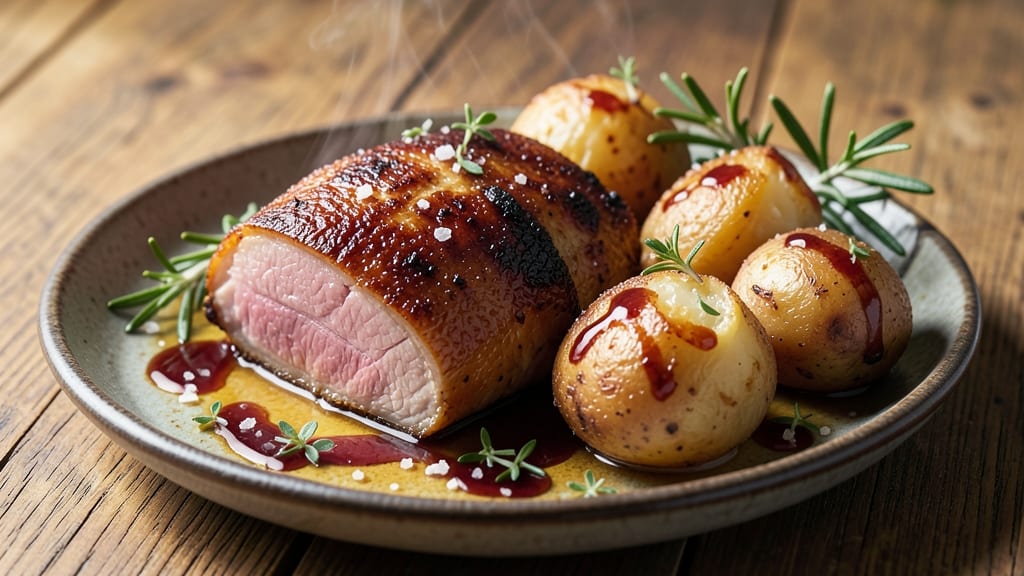
This duck confit potatoes recipe transforms humble wedges into a restaurant-quality side dish with crispy vinegar-kissed edges and fluffy pink centers—perfect for elevating any main course.
The secret lies in slow-roasting duck fat until it renders into a golden, aromatic bath that infuses the potatoes with rich, savory depth while keeping them impossibly tender inside.
I developed this method after years of experimenting with duck confit, and it never fails to impress even the most discerning palates.
What sets these potatoes apart is the two-stage cooking process: first, a gentle roast in duck fat to build flavor, then a quick finish in the oven to achieve that coveted crispy exterior.
The vinegar-kissed twist adds a bright, tangy contrast that cuts through the richness of the duck fat, creating a perfect balance of textures and flavors. This technique requires just 45 minutes of active time but delivers results that taste like they’ve been simmering all day.
By the time you plate these potatoes, you’ll have golden, crispy wedges with edges that shatter slightly under pressure, revealing the fluffy pink centers beneath. The aroma alone—warm duck fat, caramelized edges, and a hint of vinegar—will have everyone at the table asking for seconds.
They pair beautifully with roasted duck breast, grilled vegetables, or even a simple green salad for a complete meal.
The best part? This recipe scales effortlessly—whether you’re serving a crowd or just treating yourself to a luxurious weeknight dinner. The key is patience and precision in the cooking process, but the results are worth every minute. Let’s get started on creating your next showstopping side dish.
Ingredients for duck potato
Four essential ingredients transform simple potatoes into luxurious duck confit wedges.
| Ingredient | Amount | Notes |
|---|---|---|
| Russet Potatoes 🥔 | 2 ½ lb | Cut into 1-inch wedges, skin on |
| Duck Fat 🦆 | ¾ cup | Rendered from duck confit |
| Apple Cider Vinegar 🍎 | 2 tbsp | Unfiltered for depth of flavor |
| Kosher Salt 🧂 | 1 ½ tsp | Diamond Crystal preferred |
| Fresh Rosemary 🌿 | 1 tbsp | Finely chopped, fresh preferred |
| Fresh Thyme 🌿 | 1 tsp | Leaves only, stems removed |
| Garlic Cloves 🧄 | 3 cloves | Minced, fresh preferred |
| Extra-Virgin Olive Oil 🫒 | 1 tbsp | For final drizzle, high quality |
| Black Peppercorns 🌶️ | ½ tsp | Freshly cracked, coarse grind |
| Unsalted Butter 🧈 | 2 tbsp | Cold, cubed for finishing |
| Fresh Parsley 🌿 | ¼ cup | Chopped, for garnish |
Duck fat is the star here—look for high-quality rendered duck fat from specialty butchers or online retailers like D'Artagnan. If you're using leftover duck confit fat, strain it through a fine-mesh sieve to remove any skin or debris. Russet potatoes are a must for this recipe; their high starch content creates that perfect fluffy interior. Cut them into even 1-inch wedges so they cook uniformly. For extra flavor, don’t peel them—those crispy edges are part of the magic! Store duck fat in the fridge for up to 6 months in an airtight container.
No duck fat? Rendered goose fat or high-quality bacon fat work in a pinch, though duck has that unmatched richness. Fresh herbs can be swapped for dried at a one-third the amount, but nothing beats the bright flavor of fresh rosemary and thyme. If you’re short on time, pre-minced garlic from a jar works, though fresh always tastes better. The apple cider vinegar adds that tangy brightness—substitute white wine vinegar if needed, but don’t skip it. For a smoky twist, add a pinch of smoked paprika to the duck fat before roasting.
These potatoes reheat beautifully—just pop them in a 375°F oven for 10-15 minutes until crispy again. Store leftovers in an airtight container for up to 4 days, though they’re best enjoyed fresh. The secret to their crispy edges? Don’t overcrowd the pan when roasting. If you’re scaling this up for a crowd, double the duck fat and roast in batches. The aroma alone will have everyone at the table begging for seconds—trust me, it’s worth the effort!
Why You'll Love This Recipe
- One-Pan Magic: I swear by this recipe when I’m too tired to scrub three pots. Russets get roasted in their own duck fat until golden, while the vinegar and rosemary steam into crispy perfection—no flipping, no fuss, just done.
- Rich Without Effort: That duck fat? It’s the secret weapon—caramelizing the potatoes into buttery, crackly edges while keeping the inside fluffy. Add a splash of vinegar at the end, and suddenly it’s bright, tangy, and ridiculously satisfying.
- Weeknight to Dinner Party: Between us, this feeds a crowd but still feels special. Serve it with a simple green salad for a weeknight meal, or pair it with seared duck breasts for a fancier spread. Same potatoes, two vibes.
- Leftovers That Don’t Suck: Honestly, I make double batches because these potatoes taste even better the next day—crispier, somehow. Reheat them in the oven for 10 minutes, and they’re like fresh-off-the-oven comfort food. Zero waste, all flavor.
Step-by-step instructions for duck confit potatoes
Here's how to transform humble russet potatoes into showstopping wedges with irresistible crispy edges and fluffy pink interiors.
Parboil the Potatoes for Perfect Texture
Place the 2.5 lb russet potatoes in a large pot and cover completely with cold water. Add 1.5 tsp kosher salt and bring to a boil over high heat. Once boiling vigorously, reduce heat to medium and cook for exactly 10 minutes - this partial cooking ensures fluffy interiors while allowing the exterior to crisp beautifully later.
Here's the thing - don't skip this step. The parboiling removes excess starch that would otherwise create a gummy exterior. When the potatoes are done, drain them immediately in a colander and give them a gentle shake to remove surface moisture. I like to return them to the pot and let them steam-dry for 2 minutes uncovered - this helps develop that coveted crispy texture we're after.
Create the Flavorful Duck Fat Bath
While the potatoes are still warm from parboiling, heat 0.75 cup duck fat in a large cast-iron skillet over medium heat until it shimmers and reaches 325°F. The duck fat should smell rich and nutty - if it smells burnt, reduce the heat immediately. Add the parboiled potatoes in a single layer, turning them gently to coat completely in the fat.
Here's where the magic happens: the high-fat content of duck confit creates the perfect environment for crispy edges while keeping the insides tender. Cover the skillet with a tight-fitting lid and cook for 20 minutes, turning the potatoes every 5 minutes. This gentle cooking allows the fat to penetrate while developing that beautiful golden crust.
Finish with Vinegar and Herbs for Tangy Crisp
After the initial cooking, remove the lid and increase heat to medium-high. Add 2 tbsp apple cider vinegar and 3 minced garlic cloves, stirring gently to distribute the tangy liquid. The vinegar will sizzle and create steam that helps develop that signature crispy texture. Cook uncovered for another 10-12 minutes, turning occasionally, until the edges are deep golden brown and the potatoes are fork-tender.
In the final 2 minutes of cooking, sprinkle the potatoes with 1 tbsp finely chopped fresh rosemary, 1 tsp fresh thyme leaves, and 0.5 tsp freshly cracked black peppercorns. Toss gently to coat - the herbs will infuse their aromatic oils into the crispy exterior while the pepper adds a delightful bite. You'll know they're perfect when the skin is crisp enough to stand up to a gentle squeeze.
Elevate with Butter and Parsley Garnish
Transfer the crispy potatoes to a serving platter and let them rest for 5 minutes - this allows the residual heat to finish cooking them perfectly. In the same skillet (no need to clean it), melt 2 tbsp cold cubed unsalted butter over medium heat until it foams and turns golden. Pour this fragrant butter over the potatoes, letting it cascade over each wedge.
Finish with a final sprinkle of 0.25 cup chopped fresh parsley and a drizzle of 1 tbsp extra-virgin olive oil. The parsley adds freshness that cuts through the richness of the duck fat, while the olive oil adds another layer of complexity. Serve immediately while the edges are still crisp and the centers remain fluffy - these potatoes are best enjoyed straight from the skillet while they're piping hot.
Pro Tips For Making Duck Potato
- PRE-SOAK POTATOES: Toss peeled Russets in cold water for 15 minutes before cooking—this washes off excess starch so they crisp up properly in duck fat. I learned this the hard way after making soggy potatoes that tasted like glue.
- CRANK THE HEAT: Use medium-high heat when frying the potatoes in duck fat—low heat means greasy, uneven cooking. Start hot, then lower to finish, or you’ll end up with a sad, greasy mess instead of crispy edges.
- SALT THE FAT: Season the duck fat with a pinch of kosher salt before adding potatoes—it dissolves into the fat and seasons every bite. I used to skip this and wondered why my potatoes tasted bland.
- VINEGAR LAST: Toss the vinegar with the warm potatoes after they’ve finished cooking—adding it too early makes them turn mushy. A splash (2 tablespoons) brightens the dish without overpowering the duck fat’s richness.
Best sauces and condiments for this dish
Duck Fat Sauce
Save any leftover duck fat from your confit potatoes and transform it into a luxurious sauce. Heat ½ cup reserved duck fat in a saucepan over low heat until it melts completely. Add 1 tbsp apple cider vinegar and 2 minced garlic cloves, simmering for 2-3 minutes until fragrant.
Finish with 1 tsp fresh thyme leaves and a pinch of smoked paprika for depth. Drizzle over roasted duck breast or grilled vegetables for an instant flavor boost. 🦆
Herb-Infused Olive Oil
Create a bright, aromatic oil to complement the richness of your duck confit potatoes. Heat ½ cup extra-virgin olive oil in a small saucepan over low heat and infuse with 1 tbsp fresh rosemary, 1 tbsp fresh thyme, and 3 minced garlic cloves for 5 minutes.
Strain through a fine-mesh sieve and store in an airtight container. Drizzle over the finished potatoes or use as a finishing oil for grilled meats. This oil keeps for up to 1 week in the fridge. 🫒
Tangy Mustard Cream
Balance the richness of duck fat with a creamy, tangy sauce. Whisk together ½ cup sour cream, 2 tbsp Dijon mustard, 1 tbsp apple cider vinegar, and ½ tsp kosher salt. Thin with 1 tbsp warm water if needed.
This sauce pairs beautifully with the crispy potatoes, adding a cool contrast. Serve immediately or chill for up to 2 hours before use. 🍽️
Garlic-Herb Butter
Elevate your duck confit potatoes with a simple yet decadent garlic-herb butter. Mix ½ cup softened unsalted butter with 2 minced garlic cloves, 1 tbsp finely chopped fresh parsley, 1 tsp fresh rosemary, and a pinch of black peppercorns.
Shape into a log, wrap in parchment paper, and chill for 30 minutes to firm up. Slice and serve alongside the potatoes for dipping or melting over the top. This butter keeps for up to 1 week in the fridge. 🧈
Red Wine Reduction
For a sophisticated touch, reduce 1 cup dry red wine (like Cabernet Sauvignon) in a saucepan over medium-high heat until it reduces by half, about 10 minutes. Add 1 tbsp apple cider vinegar and 1 tsp brown sugar, simmering until syrupy.
Strain and drizzle over the finished potatoes for a glossy, wine-kissed finish. This reduction also makes an excellent sauce for roasted duck. 🍷
Spicy Honey Glaze
Add a touch of sweetness and heat with a spicy honey glaze. Combine 3 tbsp honey, 1 tbsp apple cider vinegar, ½ tsp cayenne pepper, and 1 tsp Dijon mustard in a small saucepan.
Simmer over low heat for 3-4 minutes until thickened. Drizzle over the potatoes or use as a glaze for grilled duck. The sweetness cuts through the richness of the duck fat beautifully. 🔥
Nutrition facts
Frequently asked questions
Can I make this recipe without duck fat?
While duck fat delivers that signature richness, rendered goose fat or high-quality bacon fat work beautifully as substitutes. For a lighter option, use a mix of olive oil and butter (equal parts), but the texture won't be quite as luxurious. The key is using fat with a high smoke point to achieve those crispy edges.
Why do the potatoes need to parboil first?
The parboiling step is crucial for creating the perfect texture—removing excess starch prevents a gummy exterior while ensuring the centers stay fluffy. Skipping it risks uneven cooking or soggy potatoes. The 10-minute boil followed by steaming-drying creates that coveted contrast of crispy edges and tender insides.
How do I store leftovers?
Store in an airtight container for up to 4 days in the fridge. Reheat at 375°F for 10-15 minutes to restore crispiness. For longer storage, freeze for up to 3 months—thaw overnight in the fridge before reheating. The secret to reheating: spread them on a baking sheet and cover loosely with foil to prevent steaming.
Can I use sweet potatoes instead?
Sweet potatoes work, but russets are ideal for this recipe due to their higher starch content, which creates that signature fluffy interior. If you must use sweet potatoes, reduce the cooking time by 5 minutes and increase vinegar to 3 tbsp for extra brightness. The texture will be slightly denser, but still delicious!
What's the best way to serve these potatoes?
These potatoes shine as a side for roasted duck breast or grilled meats, but they’re also a star on their own. Pair with a tangy mustard cream, herb-infused olive oil, or a red wine reduction (see our sauces section). For a complete meal, add a simple green salad or roasted Brussels sprouts to balance the richness.