
Side Dishes
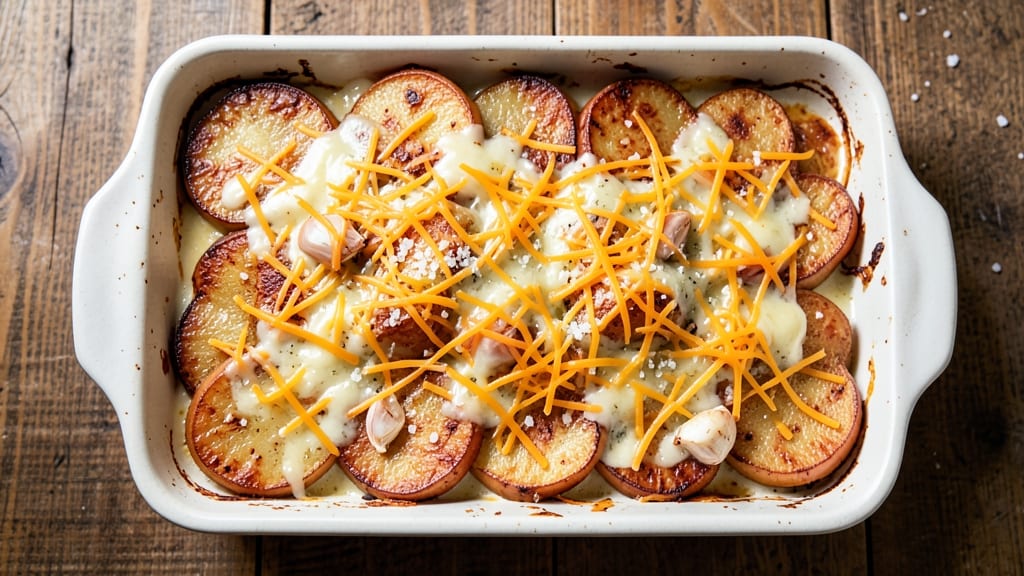
This basic potato bake recipe transforms humble potatoes into a crispy, cheesy masterpiece that’s impossible to resist—especially when the edges get that vinegar-kissed crunch.
The secret lies in layering thinly sliced potatoes with sharp cheddar and a splash of vinegar, creating a dish that’s both comforting and restaurant-worthy without requiring fancy techniques.
I developed this version after years of testing what makes a potato bake truly exceptional: tender layers, golden-brown tops, and that addictive pull-apart texture.
The beauty of this recipe is its simplicity—just a few ingredients, 30 minutes of prep, and 45 minutes in the oven.
You’ll start with thinly sliced potatoes (a mandoline makes this easier, but a sharp knife works too), layered with cheese and a touch of vinegar for that signature tangy crunch. The vinegar isn’t just for flavor; it helps create those crispy edges that make every bite irresistible.
This method ensures the potatoes stay tender inside while developing that perfect crust, proving you don’t need a complicated recipe to deliver professional results.
What you’ll end up with is a pull-apart potato bake that’s golden on top, crispy at the edges, and creamy with melted cheese throughout. The vinegar adds a bright, almost buttery contrast to the richness of the cheese, balancing every bite.
It’s the kind of dish that disappears quickly—perfect for family dinners, holiday sides, or even a cozy weeknight meal when you want something hearty without the fuss. Serve it with gravy for dipping or fresh herbs for a pop of color, and watch it become an instant crowd-pleaser.
This recipe is incredibly adaptable—swap cheddar for Gruyère, add bacon for extra flavor, or mix in corn for a twist. The key is keeping the layers thin and the vinegar consistent for that crispy magic.
Once you try this version, you’ll never settle for anything less than cheesy, pull-apart perfection. Let’s get baking!
Ingredients for basic potato bake
Six ingredients, one dish that’ll disappear faster than you can say 'crispy edges'.
| Ingredient | Amount | Notes |
|---|---|---|
| Russet Potatoes 🥔 | 3 lb | Thinly sliced, peeled if preferred |
| Sharp Cheddar Cheese 🧀 | 2 cups | Shredded, not pre-shredded kind |
| White Vinegar 💧 | ¼ cup | For crispy edges and tang |
| Unsalted Butter 🧈 | ½ cup | Melted, full-fat for richness |
| Heavy Cream 🥛 | ½ cup | Full-fat for creaminess |
| Garlic Cloves 🧄 | 3 cloves | Minced, for depth of flavor |
| Fresh Rosemary 🌿 | ¼ cup | Chopped, or dried at 1/4 amount |
| Salt 🧂 | 1 ½ tsp | Kosher or sea salt |
| Black Pepper 🌶️ | ½ tsp | Freshly ground, for warmth |
| All-Purpose Flour 🌾 | 2 tbsp | For crispy topping, optional |
| Milk 🥛 | ¼ cup | For creamier cheese blend |
The potatoes are the star—Russets are your best bet for that fluffy interior. Skip the pre-sliced bags at the store; grab whole potatoes and slice them yourself (mandoline if you're fancy, sharp knife if you're not). The thinner the slices, the crispier the edges. For the cheese, sharp cheddar is non-negotiable—pre-shredded gets clumpy and lacks flavor. I always use Kraft Natural or Cabot from the block, shredded myself. The vinegar? White vinegar is key—it’s the secret weapon for that signature crunch. No need to splurge on fancy brands here, but avoid anything with weird additives.
No sharp cheddar? Gruyère or pepper jack work great for a flavor twist. Short on vinegar? Apple cider vinegar adds a fruity note, but white is the classic. Butter hating you? Olive oil or cream cheese works in a pinch—just add a splash of milk to thin it out. The garlic and rosemary are totally optional, but they add so much depth. Fresh herbs are best, but dried works at one-quarter the amount (trust me, it’s worth it). If you’re feeling extra, toss in some crispy bacon bits for a smoky kick—no one will judge.
This bake reheats like a dream—just pop it in the oven at 350°F for 10 minutes to revive those crispy edges. Leftovers keep for 4-5 days in the fridge, but honestly, it’s gone by day two. For make-ahead magic, assemble the dish ahead and refrigerate it overnight—it’ll be even more flavorful. Freeze portions for up to 3 months if you’re planning ahead. Pro tip: Serve with gravy or sour cream for dipping—trust me, it’s a game-changer.
Why You'll Love This Recipe
- Here’s what sold me: this bakes into thick, sliceable slabs that reheat like a dream. Pack it cold for lunch, or warm it up for dinner—it’s my go-to when I’m feeding a crowd or just too tired to think. (Yes, even on a Tuesday night when takeout feels impossible.)
- One-Pan Wonder: I swear by this recipe because it’s literally one pan, one bowl, and 20 minutes of my life. Slice those Russets, toss them in vinegar water (trust me, it’s the secret to fluffy layers), and bake while you stir the cheesy cream sauce. No oven thermometer drama, no messy pots—just golden perfection.
- Creamy-Cheesy Obsession: That sharp cheddar melted into heavy cream? It’s the kind of rich, tangy goodness that makes you close your eyes. The vinegar soaks into the potatoes just enough to balance the creaminess, so you get a dish that’s dangerously hard to stop eating—especially when the top gets that crispy, buttery crust.
- Lunchbox Magic: Here’s what sold me: this bakes into thick, sliceable slabs that reheat like a dream. Pack it cold for lunch, or warm it up for dinner—it’s my go-to when I’m feeding a crowd or just too tired to think. (Yes, even on a Tuesday night when takeout feels impossible.)
Step-by-step instructions for cheesy potato bake with crispy edges
Here's how to transform simple potatoes into a golden, pull-apart masterpiece.
Prep and Parboil the Potatoes
Start by peeling the 3 lb russet potatoes if you prefer—though I often leave the skins on for extra texture. Using a mandoline or sharp knife, slice them into ¼-inch thick rounds. You should have about 6 cups of sliced potatoes.
Place the potato slices in a large pot and cover with cold water by about 2 inches. Add 1 teaspoon of the salt and bring to a boil over high heat. Once boiling, reduce to a simmer and cook for 5-6 minutes until the edges just begin to soften but aren't mushy. Drain immediately and spread on a baking sheet to cool completely—this prevents soggy layers later.
Build the Creamy Cheese Mixture
In a large bowl, combine the 2 cups shredded sharp cheddar cheese, 0.5 cup heavy cream, 0.25 cup milk, 0.5 cup melted unsalted butter, 3 minced garlic cloves, 0.25 cup chopped fresh rosemary, and the remaining 0.5 teaspoon salt and 0.5 teaspoon black pepper. Mix until the cheese is fully melted and the mixture is smooth—this ensures even distribution when we layer it.
Here's the thing—if your cheese looks lumpy, microwave it in 30-second bursts while stirring until fully melted. The goal is a velvety, pourable consistency that coats every potato slice perfectly. Taste and adjust seasoning if needed, but trust your measurements first.
Assemble and Vinegar-Treat for Crispy Edges
Preheat your oven to 375°F. In a 9x13-inch baking dish, layer half the potato slices in a single layer, slightly overlapping. Pour half the cheese mixture over the potatoes, then sprinkle with half the 2 tablespoons all-purpose flour and drizzle with 0.125 cup white vinegar—this is the secret to those crispy edges. Repeat with remaining layers.
Don't skip the vinegar—it reacts with the flour during baking to create a crispy, golden crust that's irresistible. The flour acts like a breading, while the vinegar adds tang and helps set the texture. Press down gently on the top layer to ensure even contact with the cheese mixture.
Bake Until Golden and Pull-Apart Perfect
Cover the baking dish tightly with aluminum foil and bake for 45 minutes. This initial covered bake allows the potatoes to soften and the cheese to melt evenly without browning. After 45 minutes, remove the foil and bake for another 15-20 minutes until the top is deep golden brown and the edges are crispy.
You'll know it's done when the cheese is bubbling around the edges and the potatoes are tender enough that a fork slides in easily. If the top browns too quickly, tent loosely with foil for the last 5 minutes to prevent burning. Let it rest for 10 minutes before serving—this helps the layers set and makes it easier to pull apart.
Serve Warm With Extra Crispy Flour
Before serving, sprinkle the top with additional all-purpose flour and broil for 1-2 minutes until lightly toasted. This final step adds extra crunch and takes your potato bake to the next level. Serve immediately while the cheese is still gooey and the edges are crispy—this dish doesn't reheat well.
Use a spatula to cut through the layers and create those signature pull-apart pieces. The vinegar-kissed edges should be crispy enough to hold their shape, while the interior remains creamy and cheesy. Pair with a simple green salad or crusty bread to soak up every last bite.
Pro Tips For Making Basic Potato Bake
- SOAK THE POTATOES: Russets hold moisture like a stubborn toddy. Toss peeled slices in cold water with a splash of white vinegar for 10 minutes before baking—this keeps them from turning to glue. (Yes, even if you’re impatient like me.)
- DON’T SKIP THE BUTTER MELT: Spread a thin layer of softened unsalted butter over the potatoes before adding the cheese. The heat will melt it into a golden, flavor-locking seal—no dry, chalky top here.
- BAKE UNTIL FINGER-TESTED: The cheese should pull away cleanly when you run a finger along the top, but the potatoes underneath should still yield slightly. Overbaking turns them to cardboard, and nobody wants that.
- SWAP CREAM FOR SOUR CREAM: Mix heavy cream with 2 tablespoons of sour cream for a tangier, richer sauce that clings better to the potatoes. (Your future self will notice the difference.)
Common mistakes when making great basic potato bake
Skipping the Parboil
One of the biggest mistakes is skipping the parboil step entirely. Without it, your potatoes will release too much moisture during baking, leading to a soggy, watery mess instead of crispy edges.
I’ve seen this happen when people rush or assume the oven will handle it—it won’t. The 5-6 minute parboil firms up the potatoes just enough to hold their shape while still allowing them to cook through in the oven.
If you’re short on time, at least drain the potatoes well and pat them dry with paper towels before layering. 💧
Uneven Potato Slices
Thick slices in the middle and thin edges create uneven cooking—some parts will be mushy while others remain raw. Use a mandoline or sharp knife to slice the potatoes uniformly at ¼-inch thickness. If you’re using a knife, measure the slices against each other to ensure consistency.
I’ve learned this the hard way: uneven slices mean uneven texture, and no one wants a bite that’s either undercooked or falling apart. ✨
Overloading the Cheese
Too much cheese can make your potato bake greasy and heavy, drowning out the crispy edges you’re working so hard for. Stick to the 2 cups of sharp cheddar called for—this amount ensures a creamy, flavorful layer without overwhelming the dish.
If you’re tempted to double it, sprinkle extra cheese on top after baking instead. This keeps the texture balanced and prevents a soggy bottom layer.
Forgetting the Vinegar
The vinegar is the secret weapon for crispy edges, and skipping it means missing out on that signature crunch. The white vinegar reacts with the flour during baking to create a golden, crispy crust.
If you forget to add it, your bake will still be delicious but lack that restaurant-quality texture. Pro tip: Drizzle the vinegar after adding the flour—this helps it distribute evenly and maximizes the crisping effect. 🔥
Overmixing the Cheese
Once the cheese is melted, resist the urge to overmix it into a smooth paste. A few lumps are fine—they’ll melt into creamy pockets of cheese in the final dish. Overmixing can make the cheese mixture too thin, leading to a runny bake.
Stir just until the cheese is mostly melted, then let any remaining lumps dissolve in the oven. This keeps the texture rich and satisfying, not watery. 🧀
Baking Too Long Uncovered
Leaving the bake uncovered for too long after removing the foil will cause the top to dry out or burn before the edges get crispy. The 15-20 minutes uncovered is just enough time to develop that golden-brown crust.
If your oven runs hot, tent the dish loosely with foil for the last 5 minutes to protect the top while still allowing the edges to crisp. Trust your timer—patience here is key! ⏱️
Nutrition facts
Frequently asked questions
Can I use waxy potatoes like Yukon Gold instead of Russets?
Waxy potatoes like Yukon Gold won't give you the same fluffy interior—Russets are ideal for this recipe because they're high in starch and break down beautifully. If you're set on waxy potatoes, try thinly slicing them and parboiling for 3-4 minutes instead of 5-6 to prevent mushiness. For best results, stick with Russets for that classic pull-apart texture.
How do I make this dish ahead of time?
Assemble the potato bake completely (including the cheese mixture) and refrigerate it overnight. When ready to bake, let it sit at room temperature for 30 minutes before baking as directed. The flavors will deepen, and the texture will be even more impressive. For freezing, assemble the dish, cover tightly with foil, and freeze for up to 3 months. Thaw in the fridge overnight before baking.
Why does my potato bake turn out greasy?
Greasy texture usually happens from overloading cheese or not draining the potatoes well after parboiling. Stick to the 2 cups of sharp cheddar and ensure your potato slices are thoroughly drained and dried before layering. If your bake seems too rich, sprinkle a light layer of all-purpose flour between potato layers to absorb excess moisture.
Can I substitute the white vinegar with something else?
Yes! While white vinegar creates the signature crispy edges, you can use apple cider vinegar for a fruity twist or lemon juice for brightness. Just reduce the amount to 2 tablespoons since these are less acidic. Avoid balsamic or red wine vinegar—they'll alter the flavor profile. The key is acidity to react with the flour for that crispy magic.
What’s the best way to reheat leftovers?
Reheat leftovers in a 350°F oven for 10-15 minutes, covered loosely with foil, until warmed through. For a crispier texture, broil for 1-2 minutes at the end. Microwaving will make the edges soggy—always opt for oven reheating. Leftovers keep well for 4-5 days in the fridge, but they rarely last that long!