
Side Dishes
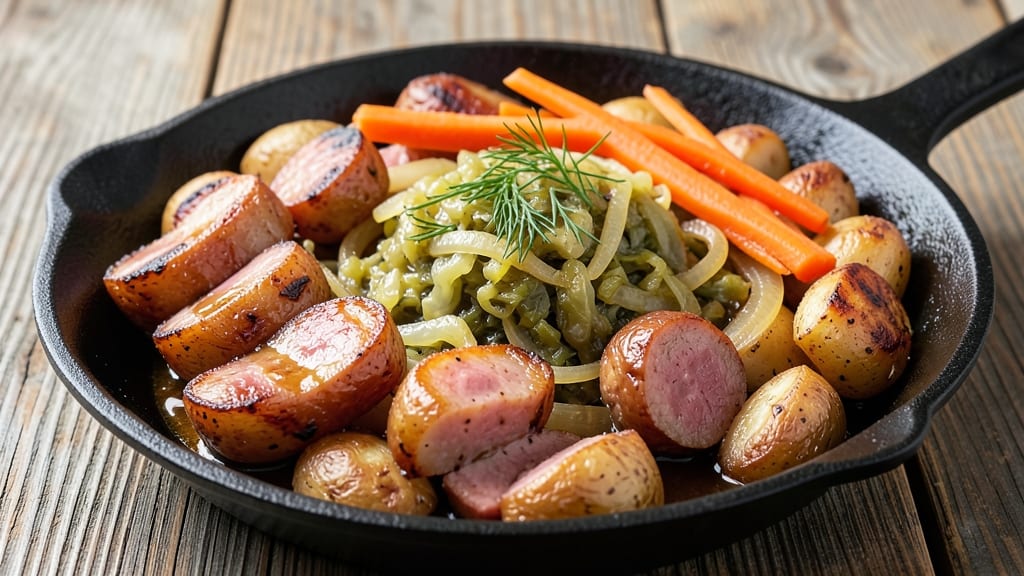
This sauerkraut potatoes and sausage recipe transforms humble ingredients into a one-pan masterpiece that tastes like a German beer garden. After years of testing variations, I’ve perfected a method where tender potatoes soak up the tangy, caramelized flavors of sauerkraut and crispy sausage—no fancy techniques required.
The secret lies in balancing the acidity of the sauerkraut with the richness of the sausage, creating a dish that’s hearty enough for a weeknight but impressive enough for company.
What makes this recipe work is the simplicity: just three core components—sausage, potatoes, and sauerkraut—cooked together in one pan. You’ll start by browning the sausage to render its fat, which becomes the flavor base for the potatoes and sauerkraut.
The potatoes get fork-tender while absorbing the smoky, savory notes, and the sauerkraut softens just enough to release its signature tang without overpowering the dish. It’s the kind of meal that feels indulgent but doesn’t require hours in the kitchen.
By the time you’re done, you’ll have a dish that’s crispy in spots, tender in others, and packed with layers of flavor—golden potatoes, caramelized sausage, and sauerkraut that’s just warm enough to soften without losing its bite.
The aroma alone will have everyone at the table anticipating the first bite. This is comfort food at its finest, with minimal cleanup and maximum satisfaction. Let’s get cooking.
Whether you’re serving it as a side to roasted meats or a main dish on its own, this recipe adapts effortlessly. Add a dollop of mustard or a sprinkle of fresh parsley for extra brightness, or serve it alongside a crisp green salad for balance.
The beauty of this dish is in its versatility—it’s hearty enough for a cold evening but simple enough for a busy weeknight. Here’s how to make it.
Ingredients for sauerkraut potatoes sausage
Three core ingredients—sausage, potatoes, and sauerkraut—transformed into a one-pan German-style masterpiece.
| Ingredient | Amount | Notes |
|---|---|---|
| Smoked Sausage 🥓 | 1 ½ lb | Kielbasa or bratwurst preferred |
| Russet Potatoes 🥔 | 2 lb | Cut into 1-inch chunks |
| Sauerkraut 🥬 | 1 ½ cups | Drained, rinsed if too sour |
| Yellow Onion 🧅 | 1 whole | Sliced into thin wedges |
| Carrots 🥕 | 3 medium | Cut into matchsticks |
| Carrots 🥕 | 1 cup | Shredded for garnish (optional) |
| Extra-Virgin Olive Oil 🫒 | 2 tbsp | For crisping sausage |
| Dijon Mustard 🍯 | 1 tbsp | For tangy depth |
| Fresh Parsley 🌿 | ¼ cup | Chopped for garnish |
| Bay Leaf 🌿 | 1 whole | For subtle aroma |
| Salt 🧂 | 1 tsp | Kosher salt preferred |
| Black Pepper 🌶️ | ½ tsp | Freshly cracked |
| Beer 🍺 | ½ cup | Dark lager or ale |
The sausage choice matters. Kielbasa or bratwurst from the deli section at Whole Foods or Trader Joe's delivers the best smoky flavor. Look for thick slices if using bratwurst—they hold up better during cooking. The potatoes should be firm and unblemished; Russets are ideal for their fluffy texture. Sauerkraut from a glass jar (not canned) has better texture and flavor. If your jarred sauerkraut is too sour, rinse it briefly under cold water to mellow the acidity—this is especially important if you're sensitive to tanginess. For the beer, dark lagers like Samuel Adams Boston Lager or ales like Guinness add depth without overpowering the dish.
No smoked sausage? Substitute with Italian sausage for a different flavor profile, but increase the amount to 1.6 lbs to compensate for its milder taste. Swapping out the beer? Chicken or vegetable broth works in a pinch, though it lacks the maltiness. Fresh parsley wilting? Dried parsley at one-third the amount will suffice, though it won’t have the same bright pop of color. The carrots can be baby carrots if that’s what’s on hand—just slice them into matchsticks for even cooking. If you’re feeling adventurous, add 1 tbsp of caraway seeds to the pot for an authentic German touch, but omit them if you prefer a more approachable flavor.
This dish reheats beautifully—3-4 minutes in a skillet over medium heat is all it takes to restore its crispy edges. Store leftovers in an airtight container in the fridge for up to 5 days, though it’s best enjoyed within 2-3 days for optimal texture. For longer storage, freeze portions for up to 3 months. I like to portion mine into individual containers so I can grab a serving straight from the freezer when I need a quick meal. Garnish with extra shredded carrots and parsley before serving to brighten the dish and add a touch of freshness.
Why You'll Love This Recipe
- One-Pan Magic: I swear by this recipe when I’m too tired to scrub pots—just slice, toss, and roast. The sausage renders its own fat, the potatoes crisp up perfectly, and the sauerkraut softens into that tangy, caramelized blanket. One sheet pan, one spatula, and zero stress.
- Tangy Crunch Factor: Honestly, the combo of smoky sausage, sweet carrots, and that sharp sauerkraut punch is ridiculously good. The onions add this sweet depth when they caramelize, and the potatoes? They get this golden, buttery edge that makes you want to eat them straight off the tray.
- Weeknight Workhorse: Between us, this feeds a crowd without feeling like a chore. Double the recipe for game day, potlucks, or even a lazy Sunday—it reheats like a dream. My roommates always ask for leftovers, and I never say no.
- Budget-Friendly Feast: Smoked sausage and potatoes stretch far, and sauerkraut adds that gourmet twist without breaking the bank. I’ve made this for under $10 for four servings, and it’s the kind of meal that makes you feel like you splurged. Plus, the flavors get better the next day.
Step-by-step instructions for sauerkraut potatoes and sausage
This German-inspired one-pan dish delivers bold flavors with minimal effort.
Prep and Sear the Sausage
Preheat your oven to 375°F. In a large oven-safe skillet, heat the 2 tablespoons extra-virgin olive oil over medium-high heat until shimmering. Add the 1.5 pounds smoked sausage, turning occasionally, until all sides develop a deep golden-brown crust—about 8-10 minutes. The sausage should release easily from the pan when ready.
Remove the sausage and set aside on a plate. This initial searing builds flavor and prevents the sausage from becoming rubbery during baking. If the oil starts smoking excessively, reduce the heat slightly—you want a gentle sizzle, not a fire.
Build the Potato-Carrot Base
In the same skillet, add the 2 pounds russet potatoes (cut into 1-inch chunks), 3 medium carrots (cut into matchsticks), and 1 whole yellow onion (sliced into thin wedges). Toss everything together with the 1 teaspoon salt, 0.5 teaspoon black pepper, and 1 whole bay leaf.
Pour in the 0.5 cup beer and scrape up any browned bits from the bottom of the pan. These bits, called fond, pack intense flavor. Stir once to distribute the liquid, then let the vegetables cook undisturbed for 5 minutes to develop a light crust on the bottom.
Layer and Bake the Potatoes
Return the sausage to the skillet and nestle it among the potatoes. Spread the 1.5 cups sauerkraut (drained and rinsed if too sour) evenly over the top. Drizzle with the 1 tablespoon Dijon mustard and toss gently to coat the potatoes and sausage.
Transfer the skillet to the preheated oven and bake uncovered for 45-50 minutes, stirring once halfway through, until the potatoes are tender when pierced with a fork and the edges are golden. The sauerkraut should soften slightly but retain its texture. If the top looks too dry, tent loosely with foil for the last 10 minutes of baking.
Finish and Garnish
Remove the skillet from the oven and let it rest for 5 minutes. The residual heat will finish cooking the potatoes while allowing flavors to meld. Discard the bay leaf and stir the entire dish gently to combine.
Sprinkle with the 0.25 cup chopped fresh parsley and serve immediately, dividing the potatoes, sausage, and sauerkraut among plates. The potatoes should be tender with crispy edges, the sausage juicy and caramelized, and the sauerkraut adding a tangy contrast. Serve with crusty bread to soak up the flavorful juices.
Pro Tips For Making Sauerkraut Potatoes Sausage
- PRE-COOK THE SAUSAGE: Slice it first, then brown in a cold pan—no, really, start cold. Smoked sausage releases fat like a drunk at last call, and cold pans prevent splattering that’ll have you cursing while scrubbing the hood. Five minutes on medium-low, then turn it up to crisp.
- CUT POTATOES UNIFORM: Russets turn mushy when they’re not the same size. Aim for 1.5-inch chunks—big enough to hold shape but small enough to cook through without drying out. I learned this after serving a side of sad, gluey potatoes that tasted like regret.
- DRAIN SAUERKRAUT WELL: Skip the lazy rinse—drain it in a colander for 10 minutes first. That brine is salty enough to make your dish taste like a pickle factory explosion. Pat it dry with a towel if you’re feeling extra, but even just draining makes a real difference in flavor balance.
- CARAMELIZE ONIONS FIRST: Cook the onions until they’re golden-brown and sticky before adding anything else. This isn’t just for flavor—it builds a base that keeps the sauerkraut from making the whole dish taste like vinegar. Ten minutes on medium heat, no rushing. (Yes, even if you’re impatient like me.)
Pro cooking tips for sauerkraut potatoes sausage
Sear Sausage Perfectly
Don’t skip browning the sausage—this step builds deep, smoky flavor that infuses the entire dish. I use a 12-inch cast-iron skillet from Lodge because it retains heat beautifully. Heat 2 tablespoons extra-virgin olive oil over medium-high heat until it shimmers, then add the 1.5 pounds smoked sausage.
Cook for 8-10 minutes, turning occasionally, until the sausage develops a deep golden crust. The key is patience—rushing this step makes the sausage greasy instead of flavorful. 🔥
Potato Texture Secrets
Cutting potatoes into 1-inch chunks ensures even cooking, but don’t skip the 5-minute undisturbed sear after adding them to the pan. This creates a flavorful crust on the bottom, called fond, that dissolves into the dish.
I like to use Russet potatoes because their high starch content makes them fluffy inside with crispy edges. Add the 0.5 cup beer (or broth) right after the potatoes to deglaze the pan and infuse the dish with maltiness.
Sauerkraut Balance
The tangy kick of sauerkraut can overpower if not handled right. Drain and rinse it if it’s too sour—just 1 minute under cold water does the trick. Spread the 1.5 cups sauerkraut evenly over the potatoes and sausage in the final step.
The Dijon mustard (just 1 tablespoon) cuts through the acidity while adding a subtle depth. Taste the sauerkraut before adding—if it’s still too sharp, mix in 1 teaspoon sugar to mellow it out.
Oven Timing Tricks
Bake at 375°F for 45-50 minutes, stirring once halfway through. The potatoes are done when they’re tender but still hold their shape—pierce with a fork to check. If the top looks dry, tent loosely with foil for the last 10 minutes to prevent over-browning.
I’ve learned the hard way that skipping the rest time makes the potatoes gummy. Let the dish sit for 5 minutes after baking so the juices redistribute—this makes all the difference. ⏰
Equipment Must-Haves
You don’t need fancy tools, but a few basics make this dish foolproof. A 12-inch cast-iron skillet (like Lodge) is ideal because it conducts heat evenly and goes straight from stovetop to oven. A meat thermometer ensures the sausage reaches 160°F—critical for food safety.
For stirring, I use a wooden spoon to avoid scratching the skillet. If you don’t have cast iron, a heavy stainless steel skillet works too, but monitor the heat closely to prevent burning.
Flavor Boosters
Want to take this dish to the next level? Add 1 teaspoon caraway seeds with the potatoes for an authentic German touch. A splash of apple cider vinegar (just 1 tablespoon) brightens the sauerkraut’s tang.
For extra richness, stir in 2 tablespoons sour cream at the end. I also love garnishing with extra shredded carrots and fresh parsley—it adds color and freshness that balances the hearty flavors. 💡
Nutrition facts
Frequently asked questions
Can I use canned sauerkraut instead of jarred?
Jarred sauerkraut is ideal for this recipe because it has better texture and flavor. Canned versions often contain added vinegar or preservatives that can make the dish too acidic. If you must use canned, drain it thoroughly and rinse briefly to reduce excess liquid. For the best results, opt for glass-jarred sauerkraut from specialty stores or the refrigerated section of your grocery store.
How do I adjust this recipe for a slow cooker?
Transfer all ingredients to a slow cooker after searing the sausage on the stovetop. Cook on low for 6-7 hours or high for 3-4 hours, stirring occasionally. The potatoes may need extra time—check for tenderness with a fork. Add 2-3 tablespoons broth if the mixture looks dry during cooking. The slow cooker method yields softer potatoes but still delivers great flavor.
What's the best way to reheat leftovers?
Reheat in a skillet over medium heat for 3-4 minutes, stirring occasionally, until everything is hot through. Avoid microwaving as it can make the potatoes soggy. For extra crispiness, add 1 teaspoon olive oil to the pan before reheating. Store leftovers in an airtight container for up to 5 days. Freeze portions for up to 3 months—just thaw overnight in the fridge before reheating.
Can I make this dish vegetarian?
Yes! Replace the sausage with 1.5 pounds of smoked tofu or vegetarian sausage (like Beyond Meat or Field Roast). For extra protein, add 1 cup cooked lentils or chickpeas with the potatoes. The dish will still be hearty and flavorful, though the smoky depth from sausage will be missing. Consider adding 1 teaspoon liquid smoke to compensate.
Why did my sauerkraut turn mushy?
Overcooking is the most common cause. Sauerkraut should soften but retain some texture—it shouldn't turn to liquid. Bake for 45-50 minutes max and avoid stirring too much during baking. If using very sour sauerkraut, rinse it first to reduce acidity, which can break down the texture faster. For extra insurance, spread the sauerkraut on top of the potatoes in the final 15 minutes of baking.