
Side Dishes
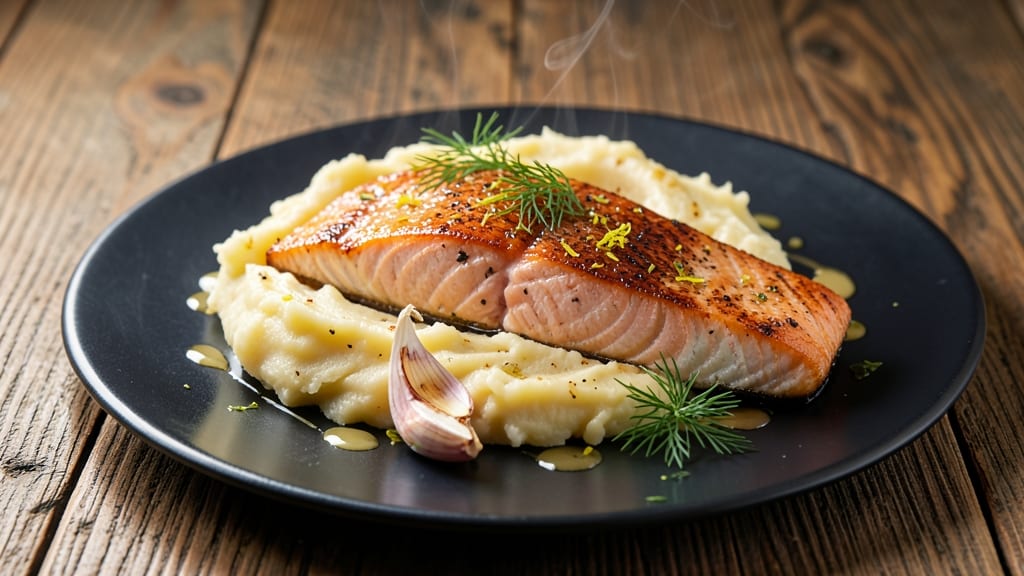
This salmon with mashed potatoes recipe delivers restaurant-quality results with pan-seared salmon and velvety garlic potatoes that complement each other perfectly. The key lies in precise timing—crispy salmon skin and tender flesh paired with creamy, buttery potatoes that hold their shape without turning gluey.
I’ve perfected this combination over years of testing, ensuring every element comes together seamlessly for a meal that feels both elegant and approachable.
The salmon’s secret is a simple seasoning blend—just salt, pepper, and a touch of lemon zest—followed by high-heat searing to lock in moisture and create a golden crust.
Meanwhile, the mashed potatoes rely on a foolproof method: boiling Yukon Gold potatoes until fork-tender, then blending with warm milk, butter, and roasted garlic for depth. The result is a smooth, creamy texture with just enough body to hold its shape on the plate.
What you’ll end up with is a harmonious dish where each component elevates the other: flaky, buttery salmon resting atop a bed of rich, aromatic potatoes. The contrast of textures—crispy salmon skin against the silky potatoes—makes every bite satisfying.
This recipe is designed to impress without stress, whether you’re cooking for a weeknight dinner or a special occasion.
For added flair, finish with a squeeze of fresh lemon and a sprinkle of chopped parsley, and serve immediately. The timing is coordinated so both dishes are ready at the same time, minimizing cleanup and maximizing flavor.
Let’s get cooking—this meal is simpler than it looks, but the results are anything but basic.
Ingredients for salmon and mashed potatoes
Restaurant-quality salmon and mashed potatoes start with these 12 simple, high-impact ingredients.
| Ingredient | Amount | Notes |
|---|---|---|
| Salmon Fillets 🐟 | 4 whole | Skin-on, 6-8 oz each |
| Yukon Gold Potatoes 🥔 | 2 lb | Russet or red potatoes work |
| Unsalted Butter 🧈 | ½ cup | Cold, cut into pieces |
| Whole Milk 🥛 | ½ cup | Warm before using |
| Garlic Cloves 🧄 | 4 cloves | Roasted for potatoes |
| Lemon Zest 🍋 | 1 tbsp | From 1 fresh lemon |
| Kosher Salt 🧂 | 1 ½ tsp | For salmon and potatoes |
| Freshly Ground Black Pepper 🌶️ | ½ tsp | For salmon seasoning |
| Fresh Parsley 🌿 | ¼ cup | Chopped for garnish |
| Vegetable Oil 🫒 | 2 tbsp | High smoke point |
| Extra-Virgin Olive Oil 🫒 | 1 tbsp | For roasting garlic |
| Heavy Cream 🥛 | ¼ cup | Optional for extra creaminess |
The salmon fillets are the star—look for skin-on, center-cut pieces from the seafood counter for the best texture. Whole Foods and Trader Joe's carry excellent options, but any reputable fishmonger will have quality fillets. If you can't find skin-on, don't stress—just pat the fillets dry before seasoning for better crisp. The Yukon Gold potatoes are non-negotiable here; their waxy texture holds up perfectly to mashing while still delivering that buttery creaminess. Organic potatoes from the store work fine, but if you're feeling fancy, grab a few extra for roasting on the side.
No lemon zest on hand? Fresh lemon juice at double the amount works in a pinch, though zest adds that bright, aromatic punch that pairs perfectly with the salmon. Substituting butter for margarine in the mashed potatoes? Use full-fat margarine—low-fat versions will make the potatoes gummy. For the garlic, if you forget to roast it, sauté minced garlic in olive oil for 1-2 minutes until fragrant. The heavy cream is optional but worth it for that ultra-luxurious texture—skip it if you're watching calories, but trust me, it makes all the difference. And if you're out of whole milk, half-and-half or light cream works just as well.
Salmon and potatoes reheat beautifully—just warm gently in the microwave with a splash of milk to keep them moist. Store leftovers in airtight containers for up to 3 days in the fridge, or freeze for 2 months (though I'd recommend eating this fresh). The roasted garlic keeps in the fridge for 1 week if stored properly—just wrap it tightly in plastic. For extra prep ahead, you can make the mashed potatoes a day in advance, reheating them with a bit of butter and milk to restore creaminess. The salmon is best served fresh, though—nothing beats that crispy skin straight from the pan.
Why You'll Love This Recipe
- I’ll be real: salmon can feel fancy, but this recipe stretches it. A single fillet feeds two easily, and the potatoes fill you up for next to nothing. Plus, butter and milk are pantry staples—no weird ingredients or last-minute grocery runs.
- One-Pan Magic: I swear by this—just toss the salmon and potatoes on a sheet pan, roast them together, and boom. No chopping, no fussing, no extra pots. The garlic roasts right into the salmon while the potatoes get that buttery, golden crust I can’t resist.
- Rich Without Effort: Honestly, the secret’s in the Yukon Golds—creamy, fluffy, and soaking up that warm milk and butter like a dream. Add a squeeze of lemon over the salmon, and suddenly you’ve got restaurant-quality richness without the pretension.
- Lunchbox Hero: Between us, this is my go-to for meal prep. The salmon stays moist for days, and the mashed potatoes reheat like a dream (just add a splash of milk). Pack it for work, or save it for when you’re too tired to cook—it’s always a win.
Step-by-step instructions for pan-seared salmon over creamy garlic potatoes
Here's how to balance perfectly crisp salmon with velvety mashed potatoes using just 12 ingredients.
Roast the Garlic and Prepare the Potatoes
Preheat your oven to 375°F. Peel the 2 lb Yukon Gold Potatoes and cut them into 1-inch chunks. Place them in a large pot and cover with cold water by 2 inches. Add 1.5 tsp kosher salt and bring to a boil over high heat. Once boiling, reduce to a simmer and cook for 12-15 minutes until fork-tender.
While the potatoes cook, prepare the roasted garlic. Heat 1 tbsp extra-virgin olive oil in a small oven-safe skillet over medium heat. Add the 4 cloves garlic cloves (peeled) and cook for 2-3 minutes until lightly golden. Transfer the skillet to the preheated oven and roast for 10 minutes until deeply caramelized and soft. This concentrated garlic flavor will elevate the mashed potatoes significantly.
Make the Creamy Garlic Mashed Potatoes
Drain the cooked potatoes thoroughly and return them to the pot. Let them steam-dry for 1 minute to remove excess moisture. Add the 0.5 cup unsalted butter (cut into pieces) and the 0.25 cup heavy cream to the potatoes. Mash with a potato masher or ricer until smooth but with some texture remaining.
Using a wooden spoon, fold in the roasted garlic cloves (squeezed from their skins) and 0.5 cup warm whole milk. Season with an additional 0.25 tsp kosher salt and 0.25 tsp freshly ground black pepper if needed. The potatoes should be creamy but not glued together—if too thick, add 1-2 tablespoons warm milk. Cover and keep warm over low heat while you prepare the salmon.
Season and Sear the Salmon Fillets
Pat the 4 whole salmon fillets (skin-on) completely dry with paper towels. Place them skin-side down on a clean work surface. Season both sides generously with 0.75 tsp kosher salt and 0.25 tsp freshly ground black pepper. Rub the 1 tbsp lemon zest evenly over the top of each fillet—this bright citrus note will complement the richness of the salmon.
Heat 2 tbsp vegetable oil in a large skillet over medium-high heat until shimmering. Carefully place the salmon fillets skin-side down in the skillet. Press down gently on the fillets during the first minute to ensure even contact with the pan. Cook for 4-5 minutes until the skin is deep golden brown and crispy, and the fish releases easily from the pan.
Finish the Salmon and Assemble the Dish
Using a fish spatula, carefully flip the salmon fillets and cook for an additional 3-4 minutes until the flesh is opaque throughout and flakes easily with a fork. The internal temperature should reach 145°F when measured with an instant-read thermometer. Remove the salmon from the skillet and let it rest on a plate for 2-3 minutes while you prepare the final touches.
Return the skillet to medium heat and add the 0.25 cup fresh parsley and the remaining 0.5 cup warm whole milk. Stir for 1 minute to infuse the milk with parsley flavor. Spoon this parsley milk mixture over the mashed potatoes and fold gently to combine. Divide the creamy mashed potatoes among four plates, placing one salmon fillet on top of each portion. Garnish with an additional sprinkle of fresh parsley and serve immediately.
Pro Tips For Making Salmon And Mashed Potatoes
- CRISP THE SKIN FIRST: Pat the salmon fillets bone-dry with paper towels, then sear skin-side down in a cold, dry pan over medium-high heat for 6-8 minutes before flipping. The skin will crisp into a golden shield that keeps the flesh from drying out—trust me, I’ve ruined too many batches by skipping this. Use a fish spatula, not a fork, or you’ll tear the delicate skin.
- PEEL POTATOES PART-WAY: Yukon Golds hold their shape better when you peel half the skin off before boiling. Leave a thin layer of flesh intact—this prevents them from falling apart when mashing later. I learned this the hard way after turning a batch into gluey potato paste. A paring knife works best; don’t rush the curves.
- DON’T OVERWORK THE MASH: Once the potatoes are tender, drain them completely and return to the pot. Add just enough warm milk and butter to coat—about ¼ cup each per pound of potatoes—and mash with a potato masher or ricer. Overmixing turns them gummy; I now use a fork only as a last resort.
- GARLIC BUTTER UPGRADE: Sauté 2 minced garlic cloves in 1 tablespoon of the butter until fragrant (about 30 seconds) before adding the salmon to the pan. The aroma clings to the skin, and the butter’s flavor infuses the fish. Skip this, and you’ll miss a subtle but crucial layer of depth—my grandmother’s trick, and it’s foolproof.
Storing and reheating your leftovers
Refrigerator Storage
Store leftovers in an airtight container for up to 3 days—the salmon and potatoes keep beautifully when refrigerated. I use glass Pyrex containers with snap-on lids to maintain freshness. For the salmon, place it on top of the mashed potatoes to prevent the skin from sticking.
The roasted garlic adds extra flavor, so keep it sealed in a small container in the fridge for up to 1 week. 🥬
Freezer Prep
This dish freezes exceptionally well for up to 2 months if you're planning ahead. Portion the mashed potatoes into quart-sized freezer bags, leaving 1-inch headspace for expansion. For the salmon, wrap each fillet individually in plastic wrap before placing them in a separate freezer bag.
Thaw overnight in the fridge before reheating for best texture. 🧊
Reheating Salmon
Salmon reheats best gently to avoid drying it out. Place the fillets in a skillet over low heat with 1 tablespoon water or milk and cover for 3-4 minutes.
Alternatively, microwave on low power for 1-2 minutes until reaching 145°F internal temperature. The crispy skin won’t survive reheating, but the flavor stays intact. 🔥
Reviving Mashed Potatoes
Mashed potatoes often lose moisture when reheated, but I’ve got a trick: Warm them in a pot over low heat with 1-2 tablespoons milk or butter until creamy. For microwave reheating, cover with a damp paper towel and heat in 30-second intervals, stirring between each.
If they look dry, add a splash of warm milk and mash again for a silky texture. ⚡
Make-Ahead Tips
Prep the mashed potatoes a day ahead—they actually taste better after resting! Store them in the fridge, then reheat with extra butter and milk before serving. For the salmon, season it the night before and refrigerate uncovered for deeper flavor.
Just sear it fresh when ready to eat for that perfect crisp. 💡
Garnish Refresh
After reheating, brighten up the dish with fresh garnishes. A squeeze of lemon juice and sprinkle of chopped parsley add freshness. For extra flair, drizzle with extra-virgin olive oil or a pinch of flaky sea salt to enhance the flavors. These finishing touches make reheated meals feel restaurant-quality again. 🌟
Nutrition facts
Frequently asked questions
Can I use skinless salmon fillets instead of skin-on?
Skinless salmon works perfectly—just pat the fillets extra dry before seasoning to prevent sticking. Cook for 3-4 minutes per side over medium-high heat until the center reaches 145°F. The texture will be slightly less crispy, but still delicious. For extra flavor, add a pinch of smoked paprika to the seasoning.
How do I make these mashed potatoes vegan?
Swap the butter for vegan butter or coconut oil, and use unsweetened almond milk or oat milk instead of whole milk. For extra creaminess, add 1/4 cup vegan cream cheese or 2 tablespoons nutritional yeast. Roast the garlic as directed and fold it in as usual—the flavor stays rich and satisfying.
What’s the best way to keep mashed potatoes from turning gluey?
Drain the potatoes thoroughly after boiling and let them steam-dry for 1 minute in the pot. Use warm milk and butter (not hot) when mixing, and mash just until smooth. Over-mashing releases starch—leave some texture for a lighter result. For extra insurance, add 1 tablespoon cornstarch per pound of potatoes.
Can I bake the salmon instead of pan-searing?
Yes! Preheat oven to 400°F, place salmon on a parchment-lined tray, and bake for 12-15 minutes until flaky. For crispy skin, broil for 2-3 minutes at the end. Baked salmon pairs beautifully with the mashed potatoes—just add a pinch of lemon zest before baking. The timing works well since potatoes cook while the salmon bakes.
How do I adjust this recipe for fewer servings?
For 2 servings, use 1 salmon fillet and 1 lb potatoes. Halve all other ingredients (butter, milk, garlic, etc.). The roasted garlic and lemon zest amounts can stay the same—just use 2 cloves garlic and 1 tsp zest for a concentrated flavor. Cooking times remain identical.