
Side Dishes
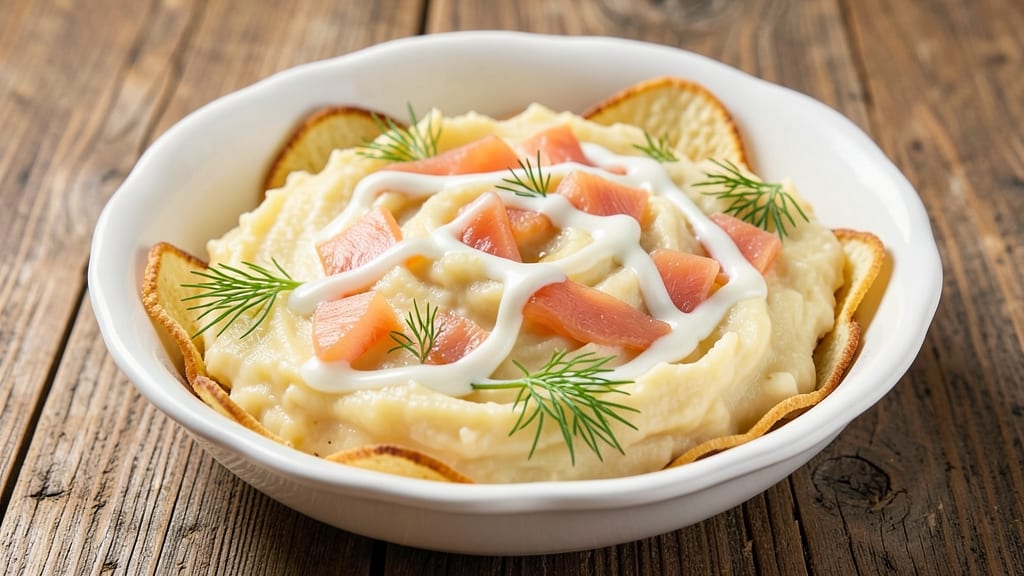
Transforming canned salmon into creamy mashed potatoes creates a pescatarian powerhouse that’s rich, flaky, and packed with omega-3s—no fresh fish required. This recipe takes just 20 minutes to deliver velvety potatoes studded with tender salmon flakes and a hint of smoky depth from the canned fish.
The secret lies in properly heating the salmon to preserve its texture while infusing the potatoes with its natural richness.
Start with classic stovetop mashed potatoes—butter, milk, and salt create the perfect creamy base—then fold in warmed salmon that’s been drained, flaked, and seasoned with a pinch of dill and black pepper.
The salmon’s natural oils elevate the potatoes, turning them into a restaurant-worthy side that’s hearty enough to stand alone or pair beautifully with grilled vegetables or a simple green salad.
What sets this recipe apart is the flaky texture contrast: each bite delivers creamy potato with bursts of tender salmon, while a light drizzle of olive oil and a sprinkle of chives add freshness.
The dish is foolproof, requiring minimal effort but delivering maximum flavor—ideal for weeknight dinners or meal prep when you want a protein-packed side without the hassle of fresh fish.
Serve immediately for the best texture, or reheat gently in the oven to maintain creaminess. This recipe proves canned salmon can be just as impressive as fresh, transforming a pantry staple into a smoky, satisfying centerpiece that’s perfect for any table.
Ingredients for canned salmon mashed potatoes
Pantry staples meet ocean richness—just twelve ingredients transform canned salmon into velvety mashed potatoes with flaky bites.
| Ingredient | Amount | Notes |
|---|---|---|
| Russet Potatoes 🥔 | 2 lbs | Yukon gold works too |
| Canned Salmon 🐟 | 2 cans | High-quality, wild-caught preferred |
| Unsalted Butter 🧈 | ½ cup | Cold, cut into small pieces |
| Heavy Cream 🥛 | ½ cup | Full-fat for richness |
| Whole Milk 🥛 | ½ cup | Warmed for smoother mash |
| Fresh Dill 🌿 | 2 tbsp | Chopped, or 1 tsp dried |
| Black Pepper 🌶️ | ½ tsp | Freshly cracked for best flavor |
| Sea Salt 🧂 | 1 ½ tsp | Diamond Crystal preferred |
| Fresh Chives 🌱 | 2 tbsp | Finely chopped for garnish |
| Extra-Virgin Olive Oil 🫒 | 1 tbsp | For finishing drizzle |
| Garlic Cloves 🧄 | 1 whole | Minced for salmon seasoning |
| Lemon Juice 🍋 | 1 tsp | Brightens salmon flavor |
The salmon is the star, so wild-caught, high-quality cans make all the difference—Vital Choice or Wild Planet are my go-tos. Look for boneless, skinless varieties to avoid any fishy textures. The potatoes should be firm and unblemished—Russets give the fluffiest mash, but Yukon Golds add natural sweetness. Fresh dill and chives elevate the dish, so grab them if you've got them, but dried dill works in a pinch. For the butter, European-style (like Plugrá) adds extra flavor, but unsalted butter works perfectly too.
No fresh dill? Dried dill at one-third the amount keeps the flavor profile intact. Swapping heavy cream for half-and-half cuts richness but still delivers creaminess. The salmon can be warmed in its juice or with a splash of milk to keep it tender—never boil it, or it’ll turn rubbery. For extra depth, add a pinch of smoked paprika to the salmon before flaking. The potatoes can be peeled ahead and stored in cold water in the fridge for up to 24 hours to save time.
Leftovers keep beautifully—3-4 days in the fridge, or freeze for up to 3 months. Reheat gently in the oven with a splash of milk to restore creaminess. For meal prep, portion into containers and drizzle with olive oil before sealing to keep them moist. The salmon’s natural oils make these potatoes richer the next day, so don’t hesitate to make extra. Perfect for lunches or a hearty side dish!
Why You'll Love This Recipe
- No-Peel Hassle: I peel potatoes about as often as I floss—rarely. Russets here get tossed in boiling water whole (yes, skins on), then mashed smooth. The salmon flakes right into the warm cream, so no chopping, no fuss. Twenty minutes from start to finish, and honestly? That’s my kind of magic.
- Ocean-Meets-Creamy Magic: The salmon’s briny punch cuts through the richness of butter and cream, but the real win? How it marries with the potatoes. That first bite—fluffy, protein-packed, with a whisper of salt—tastes like a hug from a coastal grandma. (Between us, I’ve had this for breakfast. Don’t judge.)
- Lunchbox to Dinner Party: Pack these into a thermos for a workday lunch that doesn’t taste like leftovers, or serve them at your next potluck. The cream keeps them creamy even reheated, and the salmon adds a fancy touch without the effort. My book club friends now request this over store-bought casseroles—because it’s actually impressive.
- Budget-Friendly Luxe: Canned salmon turns a basic side into a meal that feels special without the grocery shock. A single can stretches to feed four, and the potatoes? They’re the cheapest carb around. I made this twice last month—once for a date night, once for a hangover recovery—and neither time did I feel like I’d compromised. That’s the kind of recipe that earns repeat visits.
Step-by-step instructions for canned salmon mashed potatoes
Transform humble russet potatoes into velvety mashed potatoes with smoky salmon flakes—rich, creamy, and packed with ocean flavor.
🍳 Step 1: Boil Potatoes Until Fork-Tender
Place the 2 lbs russet potatoes in a large pot and cover with cold water by about 2 inches. Add 1.5 tsp of the sea salt and bring to a rolling boil over high heat. Once boiling, reduce heat to medium-high and cook for 15-20 minutes until a knife slides in easily with minimal resistance.
Here's the thing—don't skip the salted water. It infuses the potatoes with flavor while they cook. I like to test doneness by piercing with a knife; if it meets resistance but the center feels soft, they're ready. Drain immediately in a colander and return to the pot to shake off excess water.
👨🍳 Step 2: Mash Potatoes with Butter and Warm Milk
While the potatoes are still hot, add the 0.5 cup unsalted butter and 0.5 cup warmed whole milk. Using a potato masher or ricer, work the ingredients together until smooth but with some texture—you want light, fluffy mounds, not gluey mash. The residual heat from the potatoes will melt the cold butter perfectly.
Don't rush this step. I press down gently on the potatoes with the masher, then fold in the butter and milk with a wooden spoon. The goal is to create a luxurious, airy texture that will hold its shape when mixed with the salmon later. If the mash looks too thick, add a splash of warm milk to loosen it.
🍳 Step 3: Season and Flake the Salmon
In a separate bowl, drain the 2 cans canned salmon, reserving the liquid. Add the minced 1 whole garlic cloves, 1 tsp lemon juice, 0.5 tsp black pepper, and the remaining 0.5 tsp sea salt. Using a fork, gently flake the salmon into small, bite-sized pieces—you want those delicate flakes to melt into the potatoes without overpowering them.
Real talk: the salmon liquid is flavor gold. I stir it into the salmon mixture and let it sit for 2 minutes to infuse. This adds depth that store-bought salmon often lacks. The lemon juice brightens the richness, while the garlic and pepper create a perfect balance of savory and aromatic notes.
🥘 Step 4: Combine Potatoes and Salmon
Return the mashed potatoes to the pot and stir in the flaked salmon mixture over medium-low heat. Cook for 2-3 minutes, stirring gently, until the salmon is warmed through and the flavors meld together. The potatoes should be hot but not dry—if they look too thick, add a splash of warm milk to restore creaminess.
This is where the magic happens. The salmon flakes should be evenly distributed throughout the mash, with just enough visible to see those beautiful pink flecks. I like to taste at this point to adjust seasoning—sometimes the canned salmon needs a touch more salt or lemon to balance the flavors perfectly.
🍽️ Step 5: Finish with Dill and Chives
Remove the mashed potatoes from heat and stir in the 2 tbsp chopped fresh dill and 2 tbsp finely chopped fresh chives. Drizzle with 1 tbsp extra-virgin olive oil and gently fold everything together. The herbs add freshness that cuts through the richness, while the olive oil gives a silky finish.
Serve immediately while still warm, garnished with additional chives if desired. The contrast of creamy potatoes and flaky salmon makes every bite incredible. For extra flair, I like to serve this with a sprinkle of cracked black pepper and a side of roasted asparagus to complement the oceanic flavors.
Pro Tips For Making Canned Salmon Mashed Potatoes
- Boil Potatoes Whole: Skip peeling and chopping—toss unpeeled Russets in salted boiling water for 20-25 minutes. The skins soften and add texture, and you’ll save 10 minutes of prep (yes, even if you’re impatient like me). Just scrub them well first.
- Drain Salmon Well: Open the can and let the salmon sit in a colander for 5 minutes before flaking. This gets rid of excess brine, which keeps the mash from tasting overly salty. Trust me, you’ll notice the difference when mixing in the butter.
- Warm the Cream: Heat the heavy cream and milk together over low heat until just warm to the touch (about 80°F). Cold dairy makes mashed potatoes gummy—this ensures silky smoothness without curdling. No thermometer? Dip your finger in—should feel like bathwater.
- Flake Salmon Coarsely: Use a fork to break the salmon into rough chunks, not a fork-and-knife shred. Big pieces melt into the potatoes as you mash, adding pockets of flavor instead of turning the dish into a uniform gray sludge. (I learned this after one very uniform, flavorless batch.)
Make-ahead tips for canned salmon mashed potatoes
Prep Ahead for Creamy Perfection
Peel and cube the potatoes up to 24 hours ahead, storing them in cold water in the fridge. This saves time and ensures even cooking. I like to use a large bowl of ice water to keep them fresh until boiling.
Drain and pat dry just before cooking to prevent waterlogged mash. 🥔
Salmon Prep Shortcut
Flake the salmon and mix it with seasonings (garlic, lemon, pepper) up to 4 hours ahead. Store in an airtight container in the fridge. When ready to cook, simply reheat the potatoes and fold in the prepped salmon mixture—no last-minute flaking required.
This step cuts active cooking time by 10 minutes.
Make-Ahead Mashed Potatoes
For a fully assembled dish, mash the potatoes and mix with half the salmon (save the other half for fresh flakes). Store in a greased airtight container at room temperature for up to 2 hours or refrigerate for 1 day.
Reheat gently with a splash of warm milk to restore creaminess. I find adding a drizzle of olive oil before sealing helps maintain moisture. ❄️
Freezer-Friendly Version
Portion the fully combined mashed potatoes into freezer-safe containers, leaving ½ inch headspace for expansion. Freeze for up to 3 months. Thaw overnight in the fridge, then reheat in a 350°F oven for 20-25 minutes with a splash of milk.
The salmon stays flaky and the potatoes retain their creamy texture. Perfect for meal prep! 💫
Reheating Like a Pro
For leftovers, reheat in the microwave at 50% power for 1-2 minutes, stirring halfway. Add 1-2 tbsp warm milk to restore creaminess. For oven reheating, cover with foil and bake at 325°F for 15 minutes, then uncover and broil for 2 minutes to crisp the top.
This method prevents drying out the salmon flakes. 🔥
Garnish for Freshness
Store fresh dill and chives separately in the fridge for up to 5 days. Add them just before serving to maintain vibrant color and flavor. For extra flair, keep a small jar of olive oil in your fridge and drizzle it on before serving.
This keeps the dish looking restaurant-fresh even after reheating. ✨
Nutrition facts
Frequently asked questions
Can I use canned salmon with skin or bones?
For the best texture, stick to boneless, skinless canned salmon. The skin can become rubbery when heated, and bones might be unpleasant to eat. Look for labels that specify "boneless, skinless" to ensure smooth, flaky bites in your mashed potatoes.
What's the best way to reheat leftovers?
Gently reheat in the oven at 325°F for 15-20 minutes covered with foil, then broil for 2 minutes uncovered to restore creaminess. Microwave reheating works too—use 50% power for 1-2 minutes and add 1-2 tbsp warm milk to prevent drying. The salmon stays flaky this way!
Can I make this dish vegetarian?
Swap the canned salmon for 1 cup cooked chickpeas or ½ cup crumbled tofu seasoned with garlic, lemon, and dill. For a richer texture, add 2 tbsp nutritional yeast to mimic the umami depth of salmon. The potatoes will still be creamy and satisfying.
Why does my salmon turn rubbery?
Overheating or boiling the salmon causes it to lose its delicate texture. Always warm it gently in its juice or with a splash of milk over low heat for 2-3 minutes—never boil. Drain excess liquid before flaking to prevent sogginess in the potatoes.
How do I store prepped ingredients?
Peel and cube potatoes up to 24 hours ahead in cold water. Flaked salmon with seasonings keeps for 4 hours in the fridge. For fully assembled potatoes, store in a greased container for 2 hours at room temp or 1 day refrigerated. Freeze for up to 3 months with olive oil drizzled on top.