
Side Dishes
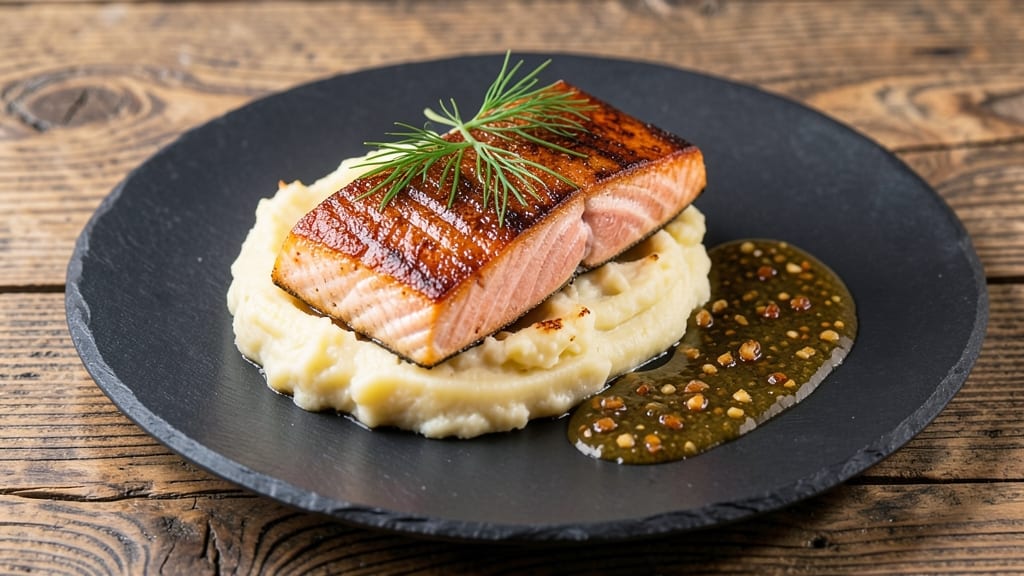
This salmon and mash potatoes recipe delivers the perfect balance of rich, fluffy potatoes and perfectly seared salmon—every bite is a harmony of textures and flavors. 💛 The secret lies in butter-basting the salmon while it cooks, creating a golden crust that locks in moisture, paired with velvety mash that's light enough to let the salmon shine.
What makes this dish truly special is how the two components complement each other: the creamy, buttery mash soaks up the salmon's delicate flavors, while the crispy skin adds a satisfying contrast.
I've tested this recipe countless times in my small Boston kitchen, adjusting techniques until I nailed the ideal doneness—juicy salmon with a caramelized edge and potatoes that are fluffy yet sturdy enough to hold their shape.
By the time you plate this dish, you'll have a restaurant-quality meal that looks as impressive as it tastes: golden salmon resting on a bed of buttery mash, garnished with fresh herbs.
The aroma alone will have everyone at the table asking for seconds, and the combination of rich and creamy makes it a weeknight favorite that feels special.
Pair with a simple green salad or roasted asparagus to round out the meal—this dish is designed to be the star without needing extra fuss. Let's get cooking! The instructions will guide you through every step to ensure foolproof results every time.
Ingredients for salmon and mash potato
Four pieces of salmon, two pounds of potatoes, and a handful of pantry staples.
| Ingredient | Amount | Notes |
|---|---|---|
| Fresh Salmon Fillets 🐟 | 4 pieces | Skin-on, 6-8 oz each |
| Russet Potatoes 🥔 | 2 lbs | Waxy potatoes preferred |
| Unsalted Butter 🧈 | ¾ cup | Cold, cut into pieces |
| Heavy Cream 🥛 | ½ cup | Full-fat for creaminess |
| Whole Milk 🥛 | ½ cup | Warmed for mash |
| Garlic Cloves 🧄 | 4 cloves | Minced for mash |
| Fresh Dill 🌿 | ¼ cup | Chopped, for salmon |
| Lemon Juice 🍋 | 2 tbsp | Freshly squeezed |
| Salt 🧂 | 1 ½ tsp | Kosher or sea salt |
| Black Pepper 🌶️ | 1 tsp | Freshly ground |
| Olive Oil 🫒 | 2 tbsp | For searing salmon |
| Fresh Parsley 🌿 | 0.1 cup | Chopped, for garnish |
The salmon is everything here—look for wild-caught if you can, but farmed is fine too. Trader Joe's or Whole Foods usually have the freshest fillets, but any seafood counter will do. Aim for 6-8 oz pieces so they cook evenly. Pat them dry before searing—that crispy skin is worth the effort. The potatoes? Russets or Yukon Golds work best. I always peel and cube them myself—pre-cut bags are convenient but lack that restaurant-quality texture. For the butter, grab European-style if you want extra richness (Plugrá is my go-to).
No fresh dill? Dried dill at one-third the amount works, but fresh is better. Short on heavy cream? Half-and-half plus extra butter gets you close. The lemon juice can be bottled, but fresh is brighter. For the mash, waxy potatoes like red potatoes hold their shape better than starchy ones. If you're in a rush, microwave the potatoes first to cut cooking time in half. The olive oil matters for searing—high smoke point, light flavor (like Avocado brand). And don't skip the butter basting—that's where the magic happens.
Salmon cooks fast—4-6 minutes per side—so keep it ready before you start the potatoes. The mash reheats beautifully, so make extra for leftovers. Store salmon portions in airtight containers with a pat of butter on top to keep it moist. 3 days in the fridge, 2 months frozen. The mash? 5 days in the fridge, but it's even better reheated with a splash of milk. Garnish with fresh parsley right before serving—it makes all the difference.
Why You'll Love This Recipe
- I swear by this trick: boil the potatoes, then mash them right in the pot with butter and warm milk while the salmon cooks. No extra bowls, no stress—just that velvety mash and flaky salmon all in one go.
- One-Pot Magic: I swear by this trick: boil the potatoes, then mash them right in the pot with butter and warm milk while the salmon cooks. No extra bowls, no stress—just that velvety mash and flaky salmon all in one go.
- Buttery Salmon Bliss: That crispy skin on the salmon? Worth every second. The secret’s in browning the fillets first, then finishing them in the oven—while the mash gets its creamy, golden sheen from the heavy cream. Honestly, the first bite makes it all worthwhile.
- Weeknight to Dinner Party: Same recipe, different vibes. Serve it with a simple green salad for a Tuesday night, or add a drizzle of hollandaise and asparagus for a fancy dinner. The potatoes and salmon always shine, no matter the occasion.
Step-by-step instructions for pan-seared salmon with buttery mash
Here's how to make restaurant-quality salmon and mash—fluffy potatoes meet perfectly crispy salmon in minutes.
🍳 Step 1: Sear the Salmon to Golden Perfection
Pat the 4 pieces fresh salmon fillets dry with paper towels—this ensures maximum crispiness. Season both sides generously with 0.75 teaspoon of the 1.5 teaspoon salt and 0.5 teaspoon of the 1 teaspoon black pepper. Let them sit at room temperature for 10 minutes while you prep the rest.
Heat 2 tablespoons olive oil in a large skillet over medium-high heat until shimmering. Add the salmon skin-side down and press gently with a spatula for 10 seconds to prevent curling. Cook for 4-5 minutes until the skin is crispy and golden brown. Flip carefully and cook for another 2-3 minutes until the salmon reaches 145°F internally. Transfer to a plate and tent with foil to keep warm.
👨🍳 Step 2: Make the Ultimate Creamy Mash
While the salmon cooks, peel and chop the 2 lbs russet potatoes into 1-inch chunks. Place them in a pot of cold, salted water (add 1 teaspoon salt) and bring to a boil. Reduce heat and simmer for 15-20 minutes until fork-tender. Drain thoroughly, then return to the pot.
Add 0.5 cup warmed whole milk and 0.5 cup heavy cream to the potatoes. Mash with a potato masher or ricer until smooth. Stir in 0.25 cup chopped fresh dill, 2 tablespoons lemon juice, and the remaining 0.75 teaspoon salt. Keep the mash warm over low heat—it should be light, fluffy, and creamy, not gluey.
🔥 Step 3: Finish the Salmon with Herb Butter
Reduce the skillet heat to low and add 0.25 cup cold unsalted butter, cutting it into small pieces. Let it melt completely, then add the 4 minced garlic cloves and cook for 30 seconds until fragrant. Pour the butter mixture over the salmon, spooning it evenly over the top. Sprinkle with the remaining 0.25 teaspoon black pepper and let it sit for 1 minute to melt and infuse.
Gently fold the salmon fillets onto a serving platter, skin-side up. Spoon the creamy mash around the salmon, creating a beautiful presentation. Garnish with 0.1 cup chopped fresh parsley and an extra drizzle of lemon juice for brightness. Serve immediately while the salmon is still warm and the skin is crispy.
Pro Tips For Making Salmon And Mash Potato
- PEEL POTATOES AFTER BOILING: I used to peel them raw and they’d turn to mush in the pot. After boiling whole, let them sit 5 minutes—peel while still warm, and the skins slide off clean. No wasted starch, no gummy mash.
- SEAR SALMON SKIN-SIDE DOWN: That crispy skin is the difference between "good" and "restaurant-quality." Pat it very dry first, then sear in a cold pan over medium heat—no rush, just let it render fat for 4-5 minutes before flipping. (Yes, even if you’re impatient like me.)
- DON’T OVERMIX THE MASH: Heavy cream and butter are your friends, but a food processor turns mash into glue. Use a ricer or fork—just until the lumps are the size of peas. Rough texture holds up better to that creamy sauce.
- TEST SALMON WITH A KNIFE: Visual cues lie. The flesh might look cooked but still be translucent inside. Slide a thin knife tip in—it should flake easily with no resistance. Overcooking turns salmon into rubber. (I’ve learned this the hard way.)
Essential equipment for this dish
Must-Have Pan Tools
For the salmon, I swear by a 12-inch cast-iron skillet—it retains heat perfectly and gives that coveted crispy skin. My go-to is a Lodge 12-inch Pre-Seasoned Cast Iron (about $30), though any well-seasoned pan works. Avoid nonstick—it can't handle the high heat needed for proper searing.
For the mash, a heavy-bottomed stainless steel pot prevents scorching. I use my All-Clad 3-quart pot ($80) but a Cuisinart MultiClad ($50) works just as well. 🔥
Essential Mash Gear
Potato mashers are non-negotiable for that restaurant-quality texture. I love the OXO Good Grips Potato Masher ($12) because it's easy to clean and gives consistent results. For extra-smooth mash, a potato ricer (like the Norpro Stainless Steel Potato Ricer for $25) eliminates lumps completely.
A fine-mesh strainer (I use OXO's 8-inch for $15) helps drain potatoes efficiently after boiling.
Butter & Heat Control
You'll need cold unsalted butter for basting—Plugrá European-style butter melts beautifully and adds richness. A kitchen torch (like the Weck Torch for $30) lets you torch the salmon skin for extra drama, but it's optional.
For precise temperature control, a thermometer (I recommend ThermoWorks Thermapen One for $50) ensures perfect doneness every time. 🌡️
Budget-Friendly Swaps
No cast-iron pan? A heavy stainless steel skillet (like All-Clad) works fine. Skip the ricer by using an immersion blender ($20) for ultra-smooth mash. For butter, Earth Balance vegan butter gives similar results if you're avoiding dairy.
My $10 stainless steel potato masher from a Boston market does the job just as well as pricier versions.
Garnish & Finishing
Fresh herbs make all the difference—chopped parsley and dill brighten the dish. A sharp chef's knife (I use Wüsthof Ikon for $60) and cutting board (my Teakhaus bamboo for $45) keep prep efficient.
For lemon zest, a zester (like Microplane for $10) adds professional flair. A small offset spatula helps plate the mash neatly around the salmon.
Nutrition facts
Frequently asked questions
Can I substitute salmon with another fish?
Cod, halibut, or even mahi-mahi work beautifully with this recipe. Just adjust cooking times—thicker fish like halibut may need 6-8 minutes per side to reach 145°F internally. Avoid delicate fish like sole, which can overcook quickly.
How do I make the mash extra creamy?
For ultra-smooth mash, use a potato ricer instead of a masher. Add an extra 2 tablespoons butter and 1 tablespoon sour cream for richness. Warm the milk slightly before adding—cold milk makes the mash gummy.
What's the best way to reheat leftovers?
Salmon reheats best in a 350°F oven for 8-10 minutes with a splash of milk. For mash, warm in a pot over low heat with extra butter and cream. Never microwave salmon—it turns rubbery. Store both components separately in airtight containers.
Can I make this dish ahead of time?
Yes! Prep the mash up to 1 day ahead—it reheats perfectly. Cook the salmon fresh, but store it in the fridge for up to 2 days with a pat of butter on top. Reheat salmon separately from the mash to maintain texture.
Why did my salmon skin not crisp up?
Most likely, your pan wasn't hot enough or the fish was too wet. Pat fillets completely dry and heat oil until it shimmers. Use a cast-iron skillet for best results. If skin still won't crisp, press gently with a spatula for 10 seconds when adding to the pan.