
Side Dishes
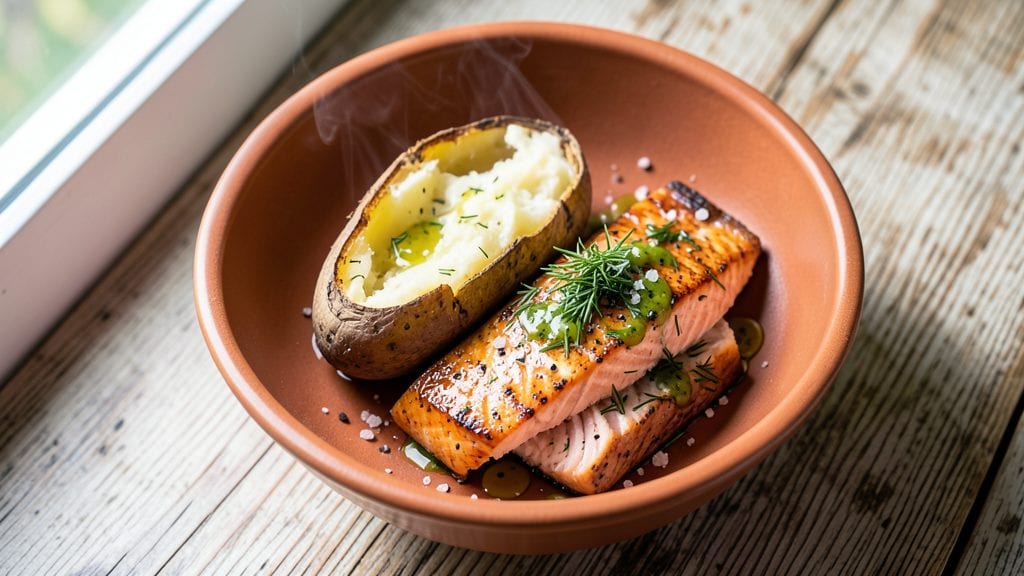
This baked potato and salmon recipe delivers a complete, protein-packed dinner with minimal cleanup—fluffy potatoes and golden, crispy-skinned salmon all on one pan.
The secret lies in baking the potatoes at high heat until their skins crisp while the salmon sears in its own juices, creating a restaurant-quality meal without the fuss. I developed this after testing countless methods to balance textures and flavors perfectly.
What makes this recipe work is the one-pan technique: potatoes bake at 425°F while the salmon finishes in the same oven, locking in moisture and flavor. The salmon gets a dry-brine treatment (just salt and time) before baking, ensuring that crispy skin you crave without overcooking the tender flesh.
Seasoning is simple but impactful—just herbs, lemon, and a touch of garlic to complement the natural richness of both components.
By the time you're done, you'll have crispy-skinned salmon that flakes effortlessly and potatoes with buttery interiors and golden, slightly crispy skins—ready to be topped with your favorite fixings.
The salmon stays juicy thanks to the high-heat bake, while the potatoes develop a satisfying texture that holds up to any topping. This is the kind of meal that feels indulgent yet comes together in under an hour.
Serve with a simple green salad or steamed vegetables to round out the plate, or keep it as-is for a hearty, pescatarian-friendly dinner. The recipe scales easily for two or four, making it perfect for weeknight dinners or meal prep. Here's how to make it perfectly every time.
Ingredients for baked potato and salmon
Four potatoes, two salmon fillets, and a handful of simple seasonings transform into a restaurant-quality one-pan dinner.
| Ingredient | Amount | Notes |
|---|---|---|
| Russet Potatoes 🥔 | 4 whole | Medium size, unpeeled |
| Salmon Fillets 🐟 | 2 pieces | Skin-on, 6-8 oz each |
| Unsalted Butter 🧈 | 4 tbsp | Cold, cubed for potatoes |
| Extra-Virgin Olive Oil 🫒 | 2 tbsp | For salmon skin crisping |
| Kosher Salt 🧂 | 1 ½ tsp | Coarse for dry-brining salmon |
| Fresh Dill 🌿 | 2 tbsp | Chopped, for salmon seasoning |
| Garlic Cloves 🧄 | 3 cloves | Minced, for salmon seasoning |
| Lemon Zest 🍋 | 1 tsp | From 1 lemon, for brightness |
| Black Peppercorns 🌶️ | ½ tsp | Freshly cracked, for salmon |
| Fresh Thyme Leaves 🌿 | 1 tbsp | Chopped, for potatoes |
| Garlic Powder 🧄 | ½ tsp | For potato seasoning |
| Fresh Rosemary 🌿 | 1 tbsp | Chopped, for potatoes |
| Lemon Wedges 🍋 | 2 whole | For serving |
| Sour Cream 🥛 | ½ cup | For potato topping (optional) |
The potatoes are the foundation here. Russets are ideal—they're starchy enough to hold their shape while baking and crisp up beautifully. Buy them a day ahead if possible, so they're fully rested and won't fall apart in the oven. For the salmon, skin-on fillets are non-negotiable—they create that coveted crispy skin. I always grab wild-caught salmon from the seafood counter at Whole Foods or Trader Joe's—it's pricier but makes a noticeable difference in flavor. Look for fillets with bright, vibrant color and minimal fishy odor. The butter matters too—cold, unsalted cubes melt perfectly into the potatoes without making them soggy.
No fresh dill? Dried dill at one-third the amount works, but fresh is worth hunting down at the market. Running low on thyme? Fresh rosemary at the same amount gives a similar earthy note. The lemon zest can be swapped for 1 tbsp lemon juice if you're in a pinch, though zest adds that extra brightness. For the garlic, jarred minced garlic is fine in a squeeze, but fresh minced is always better. The salmon gets a dry brine—just salt it 30 minutes before baking—so don't skip that step if you want that perfect crispy skin. And if you're worried about the salmon overcooking, use a meat thermometer—it should hit 125°F internally.
This meal reheats surprisingly well—just pop it back in the oven at 375°F for 10-15 minutes until warmed through. The potatoes keep for 3-4 days in the fridge, though they're best eaten fresh. The salmon, however, is best enjoyed the day it's cooked. If you're prepping ahead, bake the potatoes first, then season and bake the salmon separately. Store components separately in airtight containers, and assemble when ready to serve. The sour cream topping? Only add it after baking—it'll get warm and creamy, not watery. And always serve with those lemon wedges—squeeze fresh over everything right before eating.
Why You'll Love This Recipe
- Two-Ingredient Magic: I swear by this combo—salmon and potatoes are like peanut butter and jelly, but way more sophisticated. The buttery potatoes soak up all that rich salmon flavor while staying fluffy inside, and the fish melts in your mouth with just a crispy skin.
- Weeknight Hero: No chopping, no fuss. Toss those Russets in the oven while you prep the salmon—both bake at the same temp, so I’m done in 40 minutes flat. Honestly, if I could only make one dinner this week, this is it.
- Leftovers That Don’t Suck: The salmon stays moist when reheated, and the potatoes? Still pillowy if wrapped in foil. I’ll pack these for lunch all week—no sad, dry reheats here. Just add a squeeze of lemon when you’re ready to eat.
- Budget-Friendly Luxury: Salmon feels fancy, but buying fillets on sale and baking them whole keeps costs down. The potatoes stretch this into a full meal, and the olive oil and butter are the only extras. Between us, this is my go-to for impressing guests without breaking the bank.
Step-by-step instructions for baked potatoes and salmon
Here's how to create a restaurant-worthy one-pan dinner with perfectly crispy salmon skin and fluffy potatoes.
Prep and Season the Salmon
Start by patting the salmon fillets dry with paper towels—this ensures maximum crispiness. In a small bowl, mix together the chopped fresh dill, minced garlic cloves, lemon zest, cracked black peppercorns, and half of the kosher salt. Rub this mixture evenly over both sides of each salmon fillet, pressing gently so the seasoning adheres. Let them sit at room temperature for 10 minutes while you prepare the potatoes.
This seasoning step is crucial for flavor development. The lemon zest will brighten the dish, while the garlic and dill create that classic salmon aroma. Don't skip the room temperature wait—it helps the salmon cook more evenly and prevents cold spots in the center.
Dry-Brining the Potatoes
While the salmon rests, preheat your oven to 425°F. Scrub the russet potatoes clean with a vegetable brush and pierce each one 3-4 times with a fork to allow steam to escape. In a small bowl, combine the remaining 1 tsp kosher salt, garlic powder, chopped fresh thyme leaves, and chopped fresh rosemary. Rub this mixture all over the potatoes, coating them evenly. Place them directly on your baking sheet.
The dry-brining technique creates that perfect crispy skin while keeping the insides fluffy. The herbs and garlic powder infuse the potatoes with amazing flavor without making them soggy. Arrange them in a single layer with space between each potato—this allows hot air to circulate and ensures even cooking.
Roast the Potatoes First
Place the baking sheet with potatoes in the preheated oven and roast for 45-50 minutes, flipping them halfway through at the 25-minute mark. You'll know they're done when a knife slides in easily and the skin is golden brown. Remove the potatoes and reduce the oven temperature to 375°F while they rest for 5 minutes.
Roasting the potatoes first is key—they take longer to cook than the salmon. The high heat creates that beautiful crispy exterior while keeping the insides tender. Don't peek at them during cooking—every time you open the oven, you lose heat and moisture. The 5-minute rest allows the steam inside to redistribute, ensuring perfectly fluffy potatoes when you cut into them.
Crisp the Salmon Skin
While the potatoes roast, heat a large oven-safe skillet over medium-high heat. Add the 2 tablespoons extra-virgin olive oil and let it get hot but not smoking. Place the salmon fillets skin-side down in the skillet and cook for 4-5 minutes until the skin is golden brown and crispy. Flip carefully and transfer the skillet to the oven.
The secret to perfect salmon skin lies in this high-heat sear. You want the oil hot enough to sizzle when the salmon touches it, but not so hot that it burns. The crispy skin forms quickly—watch for that golden color and don't move the fillets once they're in the pan. The residual heat in the oven will finish cooking the salmon through without overcooking the skin.
Finish Together and Serve
Return the skillet with salmon to the oven for 8-10 minutes until the salmon flakes easily with a fork. While it finishes, melt the 4 tablespoons unsalted butter in a small saucepan over low heat. Stir in the lemon wedges and let them infuse for 1 minute, then remove the lemon wedges. Spoon this fragrant butter over the salmon and potatoes.
Let everything rest for 3-5 minutes before serving. The butter basting adds richness and ties all the flavors together. To serve, cut open the potatoes and top with a dollop of the ½ cup sour cream if desired. The contrast of creamy potatoes, crispy salmon skin, and flaky fish creates a perfect balance in every bite.
Pro Tips For Making Baked Potato And Salmon
- PIERCE POTATOES FIRST: Prick those Russets with a fork before baking—about 6-8 times per potato. I learned this the hard way after watching my first batch explode like a sad science experiment. It’s not just about looks; it steams the inside faster, so you get a fluffy center instead of a gummy one.
- SALT THE SALMON LIKE IT’S OFFENDED: Season the salmon fillets with kosher salt at least 20 minutes before baking—let it sit uncovered in the fridge. The salt breaks down the proteins, so it stays juicy and doesn’t turn to fishy rubber when you bake it. (Yes, even if you’re impatient like me.)
- BUILD HEAT BEFORE BAKING: Preheat your oven to 425°F (220°C) and let it roar for 10-15 minutes before adding the potatoes and salmon. I used to skip this, and my salmon would cook unevenly—dry on top, raw in the middle. A hot oven = crispy skin, tender flesh. No excuses.
- DRIZZLE OIL ON POTATOES ONLY: Rub the potatoes with olive oil (about 1 tablespoon) before baking, but skip it on the salmon—it’ll make the skin soggy. Instead, pat the salmon dry with paper towels and let it air-dry for 5 minutes. That’s what gets you a golden crust, not some sad, greasy film.
Serving suggestions for this recipe
Topping Ideas
This dish practically begs for creative toppings. For a classic touch, I recommend ½ cup sour cream mixed with 1 tbsp chives and a pinch of salt. The cool creaminess contrasts beautifully with the warm, crispy salmon.
Another favorite is crumbled blue cheese and toasted walnuts—the tangy cheese cuts through the richness while the nuts add crunch. 🥛
Green Salad Pairing
A simple mixed greens salad with arugula, spinach, and baby kale elevates the meal. Toss with 1 tbsp lemon vinaigrette (made from 3 tbsp olive oil, 1 tbsp lemon juice, and ½ tsp Dijon mustard) and top with toasted pine nuts.
The bright acidity balances the richness of the salmon and potatoes perfectly.
Lemon-Garlic Butter Sauce
For an extra layer of flavor, make a quick lemon-garlic butter sauce by melting 2 tbsp butter with 1 minced garlic clove and 1 tbsp lemon juice. Drizzle this over the salmon and potatoes right before serving.
The sauce adds a luxurious finish that ties everything together. I love using European-style butter like Plugrá for extra richness.
Crispy Sides
Add texture contrast with crispy roasted Brussels sprouts or crispy fried shallots. Toss 1 lb Brussels sprouts with 1 tbsp olive oil, ½ tsp smoked paprika, and salt, then roast at 425°F for 20 minutes until caramelized.
For shallots, thinly slice 2 shallots, fry in ¼ cup oil until golden, and drain on paper towels. The crispy texture adds a delightful crunch.
Wine and Beer Pairings
A crisp Sauvignon Blanc from New Zealand complements the dish beautifully—its citrus notes mirror the lemon in the recipe. For beer lovers, a Belgian witbier like Hoegaarden adds a refreshing contrast with its coriander and orange peel flavors.
Avoid heavy reds or malty beers that might overpower the delicate salmon flavors. 🍷
Make-Ahead Serving Tips
If prepping ahead, bake the potatoes and cook the salmon separately, then store them in airtight containers in the fridge for up to 2 days. Reheat the potatoes at 375°F for 10 minutes and the salmon at 350°F for 5-7 minutes.
Reheat gently to avoid drying out the salmon. Assemble just before serving to keep everything fresh and crisp. The lemon wedges should be added fresh right before eating for maximum brightness. 🍋
Nutrition facts
Frequently asked questions
Can I use sweet potatoes instead of russets?
Sweet potatoes work beautifully in this recipe! They'll add a natural sweetness that pairs wonderfully with the salmon. Just reduce the baking time to 35-40 minutes (sweet potatoes cook faster than russets) and watch for doneness with a fork. The skin will crisp up similarly, though you may want to brush with a little olive oil first for extra crispiness.
How do I prevent the salmon skin from sticking?
Pat the salmon fillets completely dry before seasoning—this is the #1 trick for crispy skin. Use a paper towel to press out all moisture, then let them sit at room temperature for 10 minutes before cooking. Also, make sure your oven-safe skillet is properly heated (hot enough to sizzle when the salmon touches it) and use high-quality olive oil that has a high smoke point.
What if I don't have fresh herbs?
No problem! For dill, use 1/3 tsp dried dill (not dill weed) per salmon fillet. For thyme and rosemary, dried works 1:1, but fresh is always better. If you're missing both, boost the garlic powder to 1 tsp and add a pinch of onion powder for depth. The lemon zest and salt will still carry the dish, so don't stress about perfect herb ratios.
Can I make this recipe ahead of time?
Bake the potatoes and cook the salmon separately, then store them in airtight containers in the fridge for up to 2 days. Reheat potatoes at 375°F for 10 minutes and salmon at 350°F for 5-7 minutes—just until warmed through. The key is reheating gently to maintain moisture. Add fresh lemon wedges and toppings right before serving for maximum freshness.
What's the best way to test if the potatoes are done?
Use the fork test: A kitchen fork should slide into the potato with just light pressure when it's done. The skin should be golden brown and crispy, while the flesh should be tender all the way through. If you're unsure, cut one open—it should be fluffy inside with no hard centers. Overcooking by 5-10 minutes is better than undercooking, as the potatoes can finish steaming while resting.