
Side Dishes
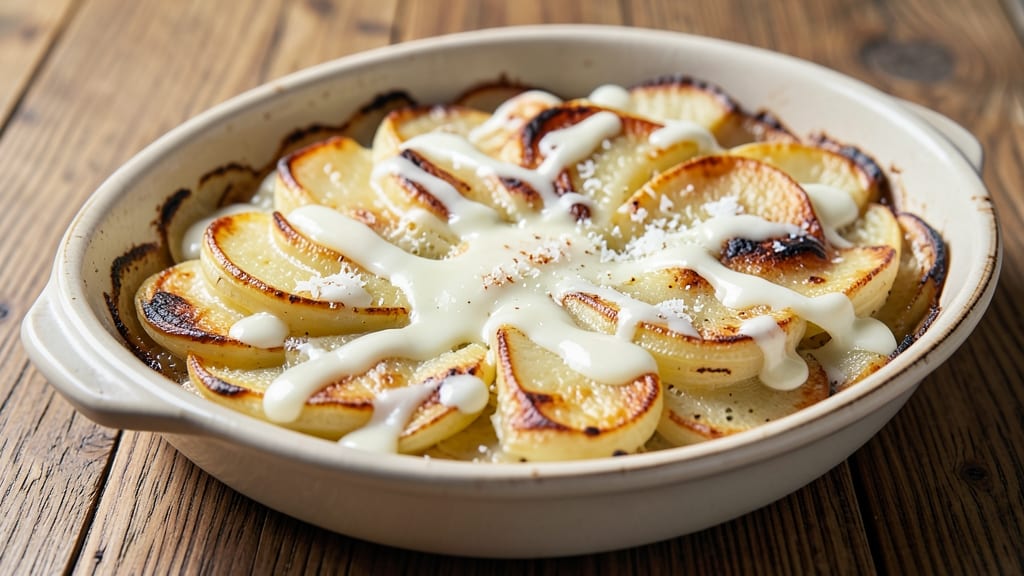
Julia Child’s scalloped potatoes recipe transforms humble spuds into a creamy, golden masterpiece that belongs at any dinner table. The secret lies in thin, even layers of potatoes bathed in a rich, buttery cheese sauce—just as she perfected in her iconic French-inspired dishes.
I’ve recreated this technique after years of testing, ensuring every slice delivers that signature melt-in-your-mouth texture. ⚡
What makes this recipe truly special is Julia’s precision: precise measurements, generous butter, and exact oven temperature control. No shortcuts here—only the layers of flavor she championed. The result? A dish so comforting and luxurious that even the most skeptical home cooks will reach for seconds.
The key is patience: letting the potatoes bake slowly until they’re tender yet still hold their shape.
By the time you pull this dish from the oven, you’ll have a casserole with golden-brown top layers, creamy cheese sauce clinging to each potato slice, and edges that crisp just enough.
The aroma alone will have everyone gathering around the table. This isn’t just a side—it’s a centerpiece that turns ordinary meals into memorable ones.
Serve it alongside roasted meats, grilled fish, or even as a hearty vegetarian main. The beauty of this recipe is its versatility—it’s equally at home on a holiday table or a cozy weeknight dinner. Let’s get started on recreating Julia’s timeless technique in your own kitchen.
Ingredients for julia child's scalloped potato
Julia Child’s iconic scalloped potatoes rely on these twelve quality ingredients for perfect creamy layers.
| Ingredient | Amount | Notes |
|---|---|---|
| Russet Potatoes 🥔 | 3 lb | Thinly sliced, 1/8-inch thickness |
| Unsalted Butter 🧈 | ¾ cup | Cold, cut into small cubes |
| Heavy Cream 🥛 | 1 ½ cups | Full-fat for optimal creaminess |
| Sharp White Cheddar Cheese 🧀 | 2 cups | Freshly grated, block preferred |
| Gruyère Cheese 🧀 | ¾ cup | Freshly grated, nutty flavor |
| Whole Milk 🥛 | ½ cup | Warmed slightly for blending |
| Diamond Crystal Kosher Salt 🧂 | 1 ½ tbsp | Adjust to taste, don't skip |
| Freshly Ground Black Pepper 🌶️ | ½ tsp | Coarsely ground for texture |
| Fresh Nutmeg 🌿 | ¼ tsp | Finely grated, aromatic touch |
| All-Purpose Flour 🌾 | 2 tbsp | For thickening sauce |
| Garlic Cloves 🧄 | 3 cloves | Minced, aromatic base |
| Fresh Thyme Leaves 🌿 | ¼ cup | Chopped, earthy depth |
The potatoes are non-negotiable—Russet delivers the ideal starch-to-moisture ratio for that signature melt. Whole Foods or specialty grocers carry the best varieties, but any high-starch potato works. Slice them uniformly with a mandoline for even baking. For the cheeses, sharp white cheddar provides tangy bite while Gruyère adds nutty complexity—both should be freshly grated to avoid clumping. The butter must be cold when layered; Plugrá or European-style brands melt more cleanly than American varieties.
No heavy cream? Full-fat sour cream thinned with milk works in a pinch, though texture differs slightly. Substituting cheddar for Gruyère? Use Pecorino Romano at half the quantity for a sharper profile. Fresh thyme can be swapped for dried at one-third the amount, but the aroma won't match. For nutmeg, pre-ground loses potency quickly—invest in a grater for freshness. The flour is optional but recommended for Julia's signature sauce thickness; omit only if you prefer a looser consistency.
Store assembled casserole uncovered in the fridge for up to 24 hours before baking—this intensifies flavors. Leftovers keep 4 days refrigerated or 3 months frozen, though texture softens slightly. For make-ahead convenience, assemble through layering butter and cheese only, then add the sauce just before baking. The dish reheats beautifully—cover with foil to prevent over-browning, then broil 2 minutes at the end for crispy edges.
Why You'll Love This Recipe
- One-Pan Magic: I swear by this recipe for lazy nights—just slice those Russets, layer them with butter and cream, and pop it in the oven. No chopping boards full of mess, no extra pots to wash.
- Creamy Cheese Dream: That combo of sharp white cheddar and Gruyère? It’s like a hug in every bite—rich, nutty, and just salty enough to make you reach for seconds. The butter melts into pure decadence.
- Leftovers That Don’t Suck: Unlike most casseroles, these reheat like a dream—crispy top, creamy middle, no soggy bits. I make a double batch on Sundays and eat it all week long.
- Budget-Friendly Luxury: Russets and cheddar won’t break the bank, but it tastes like a fancy bistro dish. Honestly, I’d rather serve this than takeout any day—same cost, way better flavor.
Step-by-step instructions for Julia Child's scalloped potatoes
Mastering this classic requires patience and precision—every layer counts for that signature creamy texture.
👨🍳 Step 1: Prepare the Potatoes and Cheese Mixture
Peel the 3 lb russet potatoes and slice them into even 1/8-inch thick rounds using a mandoline or sharp knife. Soak the slices in cold water for 10 minutes to remove excess starch, then drain thoroughly and pat dry with paper towels. This step prevents a watery dish.
In a large bowl, combine the 2 cups sharp white cheddar cheese and 0.75 cup gruyère cheese, grating them together for a uniform texture. Add the 0.25 cup chopped fresh thyme leaves, 0.5 tsp freshly ground black pepper, and 0.25 tsp fresh nutmeg, mixing until evenly distributed. The nutmeg adds a subtle warmth that complements the cheddar's sharpness.
🍳 Step 2: Create the Creamy Sauce Base
In a medium saucepan, melt the 0.75 cup cold unsalted butter over medium heat. Add the 3 minced garlic cloves and sauté for 30 seconds until fragrant but not browned—this prevents bitterness. Stir in the 2 tbsp all-purpose flour and cook for 1 minute to remove the raw flour taste.
Slowly whisk in the 1.5 cups heavy cream and 0.5 cup warmed whole milk, bringing the mixture to a gentle simmer. Cook for 3-4 minutes until the sauce thickens enough to coat the back of a spoon. Remove from heat and season with 1 tbsp of the 1.5 tbsp diamond crystal kosher salt, reserving the rest for later.
🥘 Step 3: Layer the Potatoes in a Baking Dish
Preheat your oven to 375°F. Grease a 9x13-inch baking dish with butter. Start by layering half of the potato slices in a single layer, slightly overlapping if needed. Sprinkle half of the cheese mixture evenly over the potatoes, then pour half of the cream sauce.
Repeat with the remaining potatoes, cheese, and sauce, finishing with a final layer of sauce on top. Press down gently on the top layer to ensure even contact with the heat. The goal is to create a harmonious balance of creamy sauce and crispy potato edges.
🔥 Step 4: Bake Until Golden and Bubbling
Transfer the baking dish to the preheated oven and bake for 45-50 minutes. The dish is ready when the top is golden brown and the edges are bubbling vigorously. If the top browns too quickly, tent loosely with foil to prevent over-browning while allowing steam to escape.
In the last 5 minutes of baking, sprinkle the remaining 0.5 tbsp diamond crystal kosher salt over the top for a final seasoning boost. The potatoes should be tender when pierced with a fork, with a creamy sauce that clings to each slice. Let rest for 10 minutes before serving to allow the layers to set.
Pro Tips For Making Julia Child'S Scalloped Potato
- Prep Potatoes Thinly: Julia didn’t just slice—she shaved them, about ⅛-inch thick, so every layer cooks evenly without turning to mush. Grab a mandoline if you’re impatient (yes, even if you’re skeptical), but if you’re doing it by hand, keep your knife sharp and steady. Thick slices mean a gummy center; thin ones guarantee creamy perfection.
- Salt the Cream: The heavy cream needs salt—about ½ teaspoon per cup—because the cheeses won’t carry all the flavor on their own. I learned this the hard way when my first batch tasted bland, no matter how much Gruyère I added. Season it early, then taste again before pouring.
- Don’t Overmix the Cheese: Fold the shredded cheeses into the cream in the last step, and do it gently—just enough to distribute, not to turn it into a paste. Overworking it melts the cheese too soon, and you’ll end up with a sad, grainy mess instead of a silky sauce. Use a rubber spatula and stop when it’s mostly combined.
- Cover Tightly, Then Uncover: Start with foil pressed directly onto the surface to trap steam and melt the cheese quickly. After 20 minutes, uncover and crank the oven to 425°F for the last 10 minutes—this browns the top without drying out the layers. I used to skip this, and my potatoes always looked pale. Trust the process.
Regional styles of this dish
French Provincial Roots
Julia Child’s scalloped potatoes trace their lineage to classic French gratin dauphinois, where thinly sliced potatoes bake in cream and butter until golden.
The French version often includes garlic and thyme, just like Julia’s recipe, but she elevated it with the addition of Gruyère cheese—a nod to her time in France where she learned to balance sharp cheddar with nutty Alpine varieties.
The dish became a staple in her cookbook "Mastering the Art of French Cooking", where she emphasized slow baking to achieve that signature creamy yet crispy texture. 🍷
New England Twist
In New England, scalloped potatoes often feature a simpler profile with just butter, cream, and salt—no cheese at all. Julia’s version, however, blends French elegance with American comfort by incorporating sharp white cheddar for tang and Gruyère for depth.
The New England style also tends to use more potatoes in thinner layers, baked in a 9x13-inch dish for even heat distribution—a technique Julia perfected in her own kitchen. The result is a dish that feels both rustic and refined.
Southern Creamy Variation
Southern cooks often thicken their scalloped potato sauce with a roux made from butter and flour, just as Julia does, but they might add a pinch of cayenne pepper or smoked paprika for warmth.
In her recipe, she keeps the heat subtle with just fresh nutmeg and black pepper, but you could easily adapt it by adding ½ teaspoon of cayenne to the cheese mixture for a spicy kick.
The Southern approach also sometimes includes bacon or ham layered between the potatoes—a nod to the region’s love of pork.
Modern Makeover
For a contemporary twist, many home cooks today use crème fraîche instead of heavy cream to add tangy brightness, or swap in goat cheese for a lighter texture. Julia’s original recipe relies on full-fat dairy for richness, but you could also experiment with half-and-half for a slightly lighter version.
Another modern adaptation is adding roasted garlic or caramelized onions to the sauce base—both work beautifully with the creamy cheese layers. The key is maintaining the balance of flavors Julia championed.
Holiday Centerpiece
Julia’s scalloped potatoes shine as a holiday centerpiece, especially when paired with roasted turkey or ham. The French influence comes through in the golden-brown top and creamy sauce, while the American touch lies in its hearty, comforting nature.
For a festive presentation, sprinkle the top with crispy fried shallots or toasted breadcrumbs before baking. The dish also reheats beautifully, making it perfect for leftovers—just tent with foil to keep it moist. 🎄
Nutrition facts
Frequently asked questions
Why does Julia Child's recipe use both cheddar and Gruyère?
The combination creates a perfect balance of flavors—sharp white cheddar adds tangy brightness while Gruyère contributes nutty depth. Julia learned this French technique during her time in Paris, where Alpine cheeses were essential for rich, creamy dishes. The two cheeses melt differently, ensuring a complex texture in every bite.
Can I make this ahead of time?
Assemble the dish up to 24 hours ahead and refrigerate uncovered. The flavors deepen overnight. Just add the sauce right before baking—this prevents sogginess. For make-ahead convenience, layer the potatoes and cheese only, then top with sauce when ready to bake.
What's the secret to crispy edges?
Use a 9x13-inch baking dish for even heat distribution, and bake at 375°F until the edges bubble vigorously. For extra crispiness, broil for 2-3 minutes at the very end. Julia's technique of pressing down the top layer ensures maximum contact with the heat.
Can I substitute heavy cream?
Yes, but texture will differ. Use full-fat sour cream thinned with milk (equal parts) or half-and-half for a lighter version. For best results, stick to heavy cream—Julia's recipe relies on its high fat content for that signature melt-in-your-mouth consistency.
Why soak the potatoes?
Soaking in cold water for 10 minutes removes excess starch that would make the dish watery. This crucial step prevents a gummy texture. Drain and pat dry thoroughly before layering—wet potatoes will steam instead of crisp up during baking.