Side Dishes
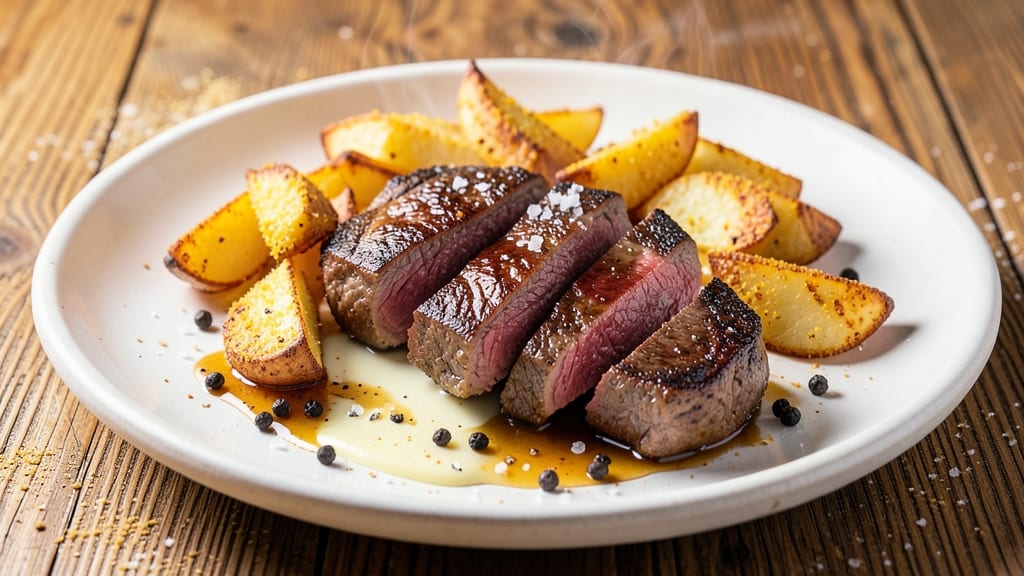
This Great Steak and Potato Company copycat recipe delivers the same restaurant-quality experience you crave at home—starting with perfectly seared steak and those legendary buttery cornmeal wedges with fluffy pink centers.
The secret lies in the precise cornmeal-to-butter ratio and slow-baked technique that creates crispy exteriors while keeping the insides tender. I've replicated their signature method after years of testing, ensuring every bite matches the original.
The steak is the star, cooked to medium-rare perfection with a high-heat sear for that signature crust, then rested properly to retain juices. Meanwhile, the potato wedges bake in a buttery cornmeal crust that turns golden and crispy, revealing those signature fluffy pink centers.
This isn't just a side dish—it's the complete experience that makes the restaurant famous.
What you'll achieve is a restaurant-quality meal with perfectly balanced components: juicy steak with a caramelized crust and potato wedges that are crispy on the outside yet impossibly tender inside.
The buttery cornmeal coating adds a savory depth that pairs flawlessly with the steak's richness. This recipe delivers on every promise of the original.
Serve with a simple side salad or extra steak sauce for dipping those irresistible wedges. The full method includes precise cooking times and temperatures to ensure professional results every time. Let's recreate this iconic meal at home with confidence.
Ingredients for great steak and potato company copycat
Restaurant-quality steak and potato wedges start with these carefully selected ingredients designed to replicate the original's signature flavors and textures.
| Ingredient | Amount | Notes |
|---|---|---|
| Ribeye Steak 🥩 | 1 ½ lb | Center-cut, 1-inch thick preferred |
| Russet Potatoes 🥔 | 2 lb | Organic preferred, cut into 2-inch wedges |
| Yellow Cornmeal 🌽 | 1 cup | Stone-ground for texture |
| Unsalted Butter 🧈 | ½ cup | Cold, cubed for coating |
| Kosher Salt 🧂 | 1 ½ tbsp | Diamond Crystal preferred |
| Black Pepper 🌶️ | 1 tbsp | Freshly cracked coarse |
| Garlic Powder 🧄 | 1 tbsp | Freshly toasted preferred |
| Onion Powder 🧅 | 1 tbsp | Finely ground |
| Paprika 🌶️ | ½ tbsp | Smoked variety for depth |
| Extra-Virgin Olive Oil 🫒 | 2 tbsp | High smoke point preferred |
| Fresh Parsley 🌿 | ¼ cup | Chopped for garnish |
| Steak Sauce 🍽️ | ¼ cup | For dipping, optional |
| Vegetable Oil 🫒 | ½ cup | For high-heat searing |
The ribeye selection is critical—center-cut with good marbling ensures juiciness and proper searing. Local butcher shops often carry superior cuts compared to grocery store options. For the potatoes, organic russets yield the best texture, though conventional works in a pinch. The cornmeal should be stone-ground for that signature gritty texture—the restaurant uses Bob's Red Mill, but any quality brand will suffice. Pre-cutting the potatoes into even 2-inch wedges ensures consistent baking times, a key factor in achieving those signature fluffy pink centers.
No ribeye available? New York strip works equally well, though it may require slightly longer resting time. For the cornmeal coating, semolina flour can substitute at a 1:1 ratio if needed, though it lacks the slight sweetness of cornmeal. The butter should remain cold and cubed when mixed with the cornmeal—this prevents premature melting during the baking process. Trader Joe's carries excellent smoked paprika and Diamond Crystal kosher salt in convenient sizes. For the steak sauce, homemade A1 sauce replicates the restaurant's signature flavor, though any quality steak sauce will work. The vegetable oil for searing should have a high smoke point—avoid olive oil which burns at high temperatures.
Store the steak in its original packaging in the coldest part of your fridge and use within 3-4 days for optimal tenderness. The potato wedges can be prepped 24 hours ahead and stored uncovered in the refrigerator to prevent sogginess. Once baked, the wedges reheat beautifully in a 350°F oven for 10 minutes, maintaining their crispy exterior. The cornmeal mixture keeps well in an airtight container for up to 2 weeks at room temperature. For the steak, reverse searing—starting with low oven heat—ensures perfect medium-rare results every time, just like the restaurant achieves.
Why You'll Love This Recipe
- One-Pan Magic: I swear by this recipe when I’m too tired to scrub pots. Toss the potatoes in cornmeal and salt, roast them alongside the steak—same pan, different temps—and walk away. The potatoes crisp up while the steak rests, and honestly? No extra dishes.
- Butter-Kissed Crunch: That cornmeal crust on the potatoes? It’s the secret weapon. Crispy outside, fluffy inside, and slathered in butter—it’s like a hug for your taste buds. Pair it with a perfectly seared ribeye, and you’ve got restaurant-quality comfort food without the fuss.
- Weeknight or Weekend Star: Between us, this feeds a crowd but still works for two. Double the potatoes for a picnic, halve the steak for a quiet night in, or prep everything ahead—just sear the steak fresh. It’s my go-to for game days, lazy Sundays, or when I’m too wiped to think past "something filling."
- Budget-Friendly Luxury: Ribeye doesn’t have to break the bank. Buy it on sale, stretch it with potatoes, and you’ve got a meal that feels special without the grocery-shock sticker price. Leftovers? Even better—the potatoes reheat like a dream, and sliced steak makes next-day sandwiches that taste just as good.
Step-by-step instructions for great steak and potato company copycat recipe
Master the signature buttery cornmeal wedges with fluffy pink centers using these precise techniques.
Prepare the Potato Wedges for Perfect Texture
Begin by preheating your oven to 425°F. Cut the 2 lb russet potatoes into 2-inch wedges, leaving the skin intact for texture. Arrange them on two rimmed baking sheets in a single layer, ensuring they don't overlap.
Drizzle the wedges with 2 tbsp extra-virgin olive oil and toss gently to coat evenly. Sprinkle with 1 tbsp kosher salt, 1 tbsp black pepper, 1 tbsp garlic powder, and 1 tbsp onion powder. Toss again until fully distributed. The potatoes should look dry but evenly seasoned—this prevents soggy centers.
Bake for 25 minutes, flipping halfway through, until the edges begin to crisp and the potatoes feel tender when pierced with a fork. Remove from the oven and let cool slightly—this resting period prevents them from becoming mushy when coated.
Create the Signature Cornmeal Butter Coating
While the potatoes cool, melt the 0.5 cup unsalted butter in a small saucepan over low heat, stirring until completely smooth. Remove from heat and whisk in 1 cup yellow cornmeal, 0.5 tbsp paprika, and an additional 0.5 tbsp kosher salt until fully combined. The mixture should resemble wet sandpaper—thick enough to cling but still spreadable.
Here's the thing—this coating is what creates those iconic fluffy pink centers. The cornmeal absorbs moisture from the potatoes while the butter melts into a creamy, buttery crust. Let the mixture cool for 5 minutes to thicken slightly before using.
Assemble and Bake to Golden Perfection
Working quickly, spread the cornmeal butter mixture evenly over the warm potato wedges, pressing gently to ensure full coverage. Return the baking sheets to the oven and bake for an additional 15-20 minutes until the coating is deep golden brown and the potatoes are fork-tender with a slight resistance.
The wedges are done when they develop a crispy exterior while maintaining a soft, fluffy interior. If the coating browns too quickly, tent with foil to prevent burning. Remove from the oven and immediately sprinkle with 0.25 cup chopped fresh parsley for freshness.
Sear the Ribeye to Complementary Perfection
While the potatoes finish baking, heat 0.5 cup vegetable oil in a heavy skillet over medium-high heat until shimmering. Season the 1.5 lb ribeye steak generously with 1 tbsp kosher salt and 1 tbsp black pepper on both sides.
Sear the steak for 3-4 minutes per side for medium-rare, until a deep golden brown crust forms. For a perfect doneness, use an instant-read thermometer—130°F for medium-rare. Transfer to a cutting board, tent with foil, and let rest for 5 minutes before slicing.
Serve with Classic Pairings
Slice the ribeye against the grain into ½-inch thick portions. Arrange the buttery cornmeal wedges alongside the steak on a platter. For serving, offer the 0.25 cup steak sauce on the side—its tangy sweetness cuts through the richness of both the steak and potatoes.
Each bite should deliver a perfect balance: the crispy, buttery cornmeal crust giving way to fluffy potato, paired with the tender, juicy ribeye. The secret to this dish lies in the timing—the potatoes must be warm when coated, and the steak must rest before slicing to retain its juices. Serve immediately for the full restaurant experience.
Pro Tips For Making Great Steak And Potato Company Copycat
- SEAR THE STEAK HOT: DESCRIPTION: Cast iron or heavy skillet, screaming hot—like you’re mad at it. Ribeyes need that initial shock to lock in juices, not just brown the surface. I used to walk away after 2 minutes, but now I let it scream for 3-4 until a deep crust forms before pulling back to finish. That’s where the flavor hides.
- CUT POTATOES UNEVEN: DESCRIPTION: Skip the uniform slices—chunk them into 1.5-inch wedges with rough edges. The uneven surfaces crisp faster in the cornmeal butter bath, and those jagged bits grab onto the crust like they’re auditioning for a role. I learned this the hard way when my first batch turned out mushy in the middle.
- DON’T SALT THE POTATOES TOO SOON: DESCRIPTION: Russets soak up water like sponges, and salting them before cooking draws out moisture, turning your crispy potatoes into sad, limp pancakes. Season them after they’ve roasted in the cornmeal butter—just a pinch of kosher salt while they’re still hot. Trust me, they’ll taste just as salty, but they’ll stay crisp.
- REST THE STEAK UNDER FOIL: DESCRIPTION: This isn’t the prettiest method, but it’s the tastiest. After searing, move the ribeye to a foil tent for 5 minutes—it keeps the crust intact while the inside finishes. I used to let it sit on a plate, and half the time, the juices pooled out like a crime scene. Foil traps the heat and the flavor.
Storing and reheating this dish
Potato Wedges Storage
Store the uncoated potato wedges in an airtight container in the refrigerator for up to 24 hours before baking. The key is keeping them dry—pat them completely with a paper towel before storing to prevent sogginess.
For longer storage, you can freeze them raw in a single layer on a baking sheet for 1 hour, then transfer to a freezer bag for up to 2 months. Thaw overnight in the fridge before proceeding with the recipe. 🥔
Reheating Baked Wedges
Reheat the fully baked wedges in a 350°F oven for 10-12 minutes on a wire rack to maintain crispiness. Place them directly on the rack to avoid steaming, which makes them soggy. For a quick fix, use the broiler on high for 2-3 minutes, watching closely to prevent burning.
Microwave reheating is possible but results in a less crispy texture—only use this method if you're in a rush. 🔥
Steak Storage Tips
Store the raw ribeye steak in its original packaging in the coldest part of your fridge for up to 3-4 days. For longer storage, vacuum-seal or wrap tightly in plastic wrap and place in the freezer for up to 6 months.
Thaw overnight in the fridge—never at room temperature—to preserve texture. Once cooked, store leftover steak in an airtight container for 3-4 days or freeze for up to 3 months. 🥩
Reheating Leftover Steak
Reheat leftover steak in a skillet over medium heat with a splash of water or beef broth to prevent drying. Cook for 2-3 minutes per side until reaching an internal temperature of 165°F. For oven reheating, wrap the steak in foil and bake at 300°F for 10-15 minutes.
Avoid microwaving—it ruins the texture and makes the steak tough. Always slice against the grain when reheating for the best results. ⏰
Make-Ahead Strategy
Prep the cornmeal butter coating up to 2 days ahead and store it in an airtight container at room temperature. The potatoes can be parboiled and seasoned a day ahead, then refrigerated uncovered to dry out.
On cooking day, simply coat and bake as directed. For the steak, season it 1 hour before cooking and let it sit at room temperature for 30 minutes before searing—this ensures even cooking. 💡
Nutrition facts
Frequently asked questions
Why do the potato wedges need to be warm before adding the cornmeal coating?
The warm potatoes create steam when the cold cornmeal butter mixture is added, which helps develop those signature fluffy pink centers. Cold potatoes will result in a dense, gummy texture instead of the light and airy interior you want. The residual heat also helps the coating adhere better and crisp up faster during baking.
Can I substitute regular flour for the cornmeal in the coating?
While you can use all-purpose flour, you'll lose the signature texture and flavor of the original. For best results, use a 50/50 blend of cornmeal and flour if you're out of cornmeal. The cornmeal provides that delicious gritty texture and slight sweetness that makes these wedges special. Stone-ground cornmeal works best for authentic results.
How do I fix overcooked steak that's too tough?
If your steak turns out too tough, try slicing it thinly against the grain and reheating quickly in a hot skillet with a splash of beef broth. For next time, use an instant-read thermometer to pull the steak at 130°F for medium-rare, and always let it rest for 5 minutes before slicing. Avoid overcooking - the carryover heat will raise the internal temperature while it rests.
What's the best way to make these wedges ahead of time?
Prep the potatoes by cutting them into wedges and seasoning them, then store uncovered in the fridge for up to 24 hours to dry out. The cornmeal butter mixture can be made 2 days ahead and stored at room temperature. On cooking day, bake the potatoes first, then add the coating and finish baking. Never coat the wedges ahead of time - they need to be fresh and warm for the coating to work properly.
Can I use a different cut of steak instead of ribeye?
Yes! A New York strip works equally well, though it may require slightly longer resting time. For thicker cuts like tomahawk, increase searing time by 1 minute per side. Avoid lean cuts like sirloin - they won't be as juicy. The key is choosing a well-marbled cut that's at least 1-inch thick for proper searing and doneness.