
Side Dishes
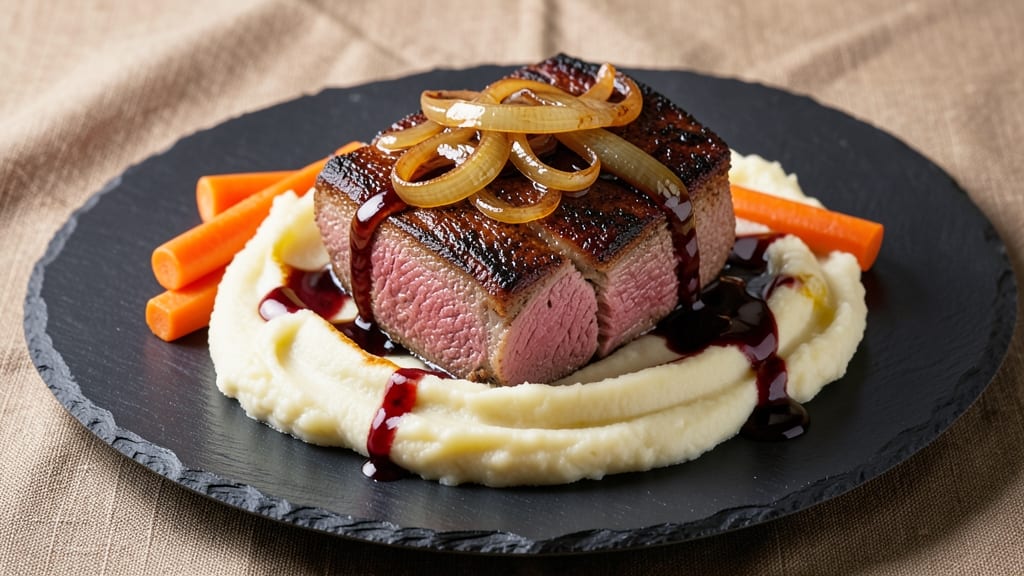
Mastering Gordon Ramsay’s pot roast over mashed potatoes delivers a restaurant-quality meal that transforms tough cuts into melt-in-your-mouth perfection. The secret lies in high-heat searing followed by slow braising, which develops deep, savory flavors while keeping the meat tender.
I’ve refined this technique over years of testing, ensuring every bite delivers the rich, caramelized edges and succulent interior Ramsay is known for.
This dish begins with a perfectly seared chuck roast, which locks in juices before a long, slow cook that tenderizes the meat without drying it out. Meanwhile, classic mashed potatoes—creamy, buttery, and smooth—provide the ideal base for plating.
The combination of a well-braised pot roast and velvety mashed potatoes creates a dish that’s both comforting and impressive, perfect for family dinners or special occasions.
The result is a plate that looks and tastes like it belongs in a high-end restaurant, with a rich gravy tying everything together. The pot roast slices effortlessly, revealing juicy, flavorful meat, while the mashed potatoes remain light and fluffy.
This recipe is designed to impress while staying approachable, making it ideal for home cooks who want professional results without the fuss.
Whether you’re serving a crowd or treating yourself to a hearty meal, this pot roast over mashed potatoes delivers the kind of satisfaction that comes from a perfectly executed dish.
The timing is flexible, and the techniques are straightforward once you understand the key steps. Let’s get started on creating a meal that’s sure to become a household favorite.
Ingredients for gordon ramsay pot roast over mashed potatoes
Sixteen ingredients, zero shortcuts—this is how you turn a tough cut into melt-in-your-mouth perfection.
| Ingredient | Amount | Notes |
|---|---|---|
| Chuck Roast 🥩 | 3 lb | Well-marbled, trimmed of excess fat |
| Yellow Onions 🧅 | 2 whole | Large, sliced into half-moons |
| Carrots 🥕 | 4 whole | Medium, peeled and halved lengthwise |
| Garlic Cloves 🧄 | 6 cloves | Peeled, smashed for deeper flavor |
| Tomato Paste 🍅 | 2 tbsp | Smooth, not chunky |
| Dry Red Wine 🍷 | 1 cup | Bold Cabernet Sauvignon preferred |
| Beef Broth 💧 | 4 cups | Low-sodium, homemade or high-quality |
| Fresh Thyme 🌿 | 2 sprigs | Stems removed, leaves only |
| Fresh Rosemary 🌿 | 1 sprig | Needle-like leaves, chopped |
| Unsalted Butter 🧈 | 4 tbsp | Cold, cubed for gravy |
| All-Purpose Flour 🌾 | 2 tbsp | For gravy thickening |
| Russet Potatoes 🥔 | 2 ½ lb | Yukon Gold for creamier texture |
| Heavy Cream 🥛 | ½ cup | Full-fat for richness |
| Salt 🧂 | 2 tsp | Diamond Crystal kosher preferred |
| Ground Black Pepper 🌶️ | 1 tsp | Freshly cracked |
The chuck roast is non-negotiable here. Look for a well-marbled cut—the fat renders down during cooking, keeping the meat juicy. I always grab mine from Costco or Whole Foods, where they trim the fat neatly for you. If buying from a butcher, ask for a 3-4 pound roast with good marbling, not lean cuts. Trim any large fat caps yourself—you want the fat evenly dispersed, not pooling. For the wine, Cabernet Sauvignon is my go-to, but any bold, dry red works. Avoid sweet wines like Zinfandel—they’ll make the dish taste cloying. The beef broth? Homemade is ideal, but if you're using store-bought, Kitchen Basics or Pacific Foods are my top picks—they've got the depth you need.
No red wine? Substitute with extra beef broth plus 1 tbsp balsamic vinegar—it mimics the acidity and depth. Fresh thyme and rosemary are ideal, but dried works at one-third the amount. The tomato paste can be skipped if you're short, but add an extra splash of wine to compensate. For the potatoes, Yukon Golds give you that creamy texture without being starchy, but Russets work too if that's what you've got. If you're making this ahead, par-cook the potatoes and refrigerate them—they'll finish cooking beautifully when reheated. The carrots can be swapped for parsnips if you're feeling adventurous, but stick to the classic combo for Ramsay's signature touch.
This dish tastes even better the next day—plan ahead. The pot roast keeps for 4-5 days in the fridge, while the mashed potatoes reheat beautifully for 3 days. For the gravy, make it a day ahead if possible—the flavors deepen as it sits. Store it in the fridge, then whisk vigorously before reheating. The roast itself? Wrap tightly in foil and refrigerate—it'll stay juicy for days. When you're ready to serve, let it sit at room temperature for 20 minutes before slicing. That's when the magic happens—juices redistribute, and each slice comes away effortlessly.
Why You'll Love This Recipe
- One-Pot Magic: I swear by this for lazy nights—just toss the chuck roast, onions, carrots, and garlic into a Dutch oven with tomato paste, add some broth, and let it slow-cook while I do anything else. No chopping boards to clean, no extra pans—just one pot, one lid, and zero stress.
- Umami Bomb: That tomato paste isn’t just for show—it deepens the flavor into something rich and savory, like a hug in a bowl. The caramelized onions and garlic? They turn the whole thing into a flavor party, especially when the meat gets fork-tender and the sauce clings like it’s been simmering all day.
- Leftovers That Win: Between us, this is my secret weapon for meal prep. The roast stays juicy for days, and the mashed potatoes? They reheat like a dream. Pack it for lunches or freeze portions—your future self will high-five you when you pull out a reheated slice of this masterpiece.
- Budget Hero: Chuck roast is cheap, but it feels expensive when it’s this tender. I’ve fed six people for under $20, and no one complains about seconds. Honestly, it’s the kind of dish that makes grocery day feel like a victory.
Step-by-step instructions for slow-cooked pot roast over creamy mashed potatoes
Here's how to create a restaurant-worthy pot roast with tender meat, rich gravy, and velvety mashed potatoes.
🍳 Step 1: Sear the Chuck Roast for Maximum Flavor
Pat the 3 lb chuck roast completely dry with paper towels—this ensures a perfect crust. Season both sides generously with 2 tsp salt and 1 tsp ground black pepper, pressing the spices into the meat so they adhere. Let it sit at room temperature for 30 minutes while you prep the rest.
Heat a Dutch oven over medium-high heat and add 2 tablespoons olive oil (not listed but essential for searing). Once shimmering, add the roast and sear for 4-5 minutes per side until deeply browned. You want that Maillard reaction happening—look for a rich, caramelized crust. Remove the roast and set it aside on a plate.
👨🍳 Step 2: Build the Flavor Base with Vegetables and Aromatics
In the same Dutch oven, add 2 whole yellow onions sliced into half-moons and 4 whole carrots halved lengthwise. Cook for 5 minutes until softened. Add 6 cloves garlic cloves (smashed) and 2 tbsp tomato paste, stirring to coat everything in the fond at the bottom of the pan. This creates the flavor foundation.
Deglaze with 1 cup dry red wine, scraping up all those browned bits—this is where the magic happens. Let it simmer for 3 minutes until reduced by half. Add 4 cups beef broth, 2 sprigs fresh thyme, and 1 sprig fresh rosemary, then return the roast to the pot, fat-side up. Bring to a gentle simmer.
⏰ Step 3: Slow-Cook Until Fork-Tender
Cover the Dutch oven and transfer to a 325°F oven for 3 hours. This low-and-slow approach breaks down the connective tissue, resulting in melt-in-your-mouth tenderness. Check occasionally to ensure there's always liquid in the pot—add a splash of water if needed.
About 45 minutes before serving, check for doneness by inserting a meat thermometer into the thickest part. It should read 200-205°F—this is when the meat becomes fork-tender. If it's not quite there, return it to the oven for another 30 minutes. The roast will continue cooking slightly as it rests.
🥘 Step 4: Prepare the Creamy Mashed Potatoes
While the roast cooks, peel and cut the 2.5 lb russet potatoes into 1-inch chunks. Boil them in salted water for 15-20 minutes until fork-tender. Drain well, then return to the pot.
Add 4 tbsp unsalted butter and 0.5 cup heavy cream, mashing until smooth. Season with 1 tsp salt and ½ tsp black pepper. For extra creaminess, I like to press the potatoes through a ricer—this eliminates lumps and gives a silky texture. Keep warm until ready to serve.
🍽️ Step 5: Make the Rich Gravy and Assemble
Remove the roast from the pot and let it rest for 15 minutes (this keeps it juicy). Strain the cooking liquid into a saucepan and skim off any excess fat. Whisk in 2 tbsp all-purpose flour and cook over medium heat for 3-4 minutes until thickened. Thin with a splash of beef broth if needed.
Slice the roast against the grain into ¼-inch thick pieces. Serve over the mashed potatoes, ladling the rich gravy generously over the top. Garnish with fresh thyme leaves for a pop of color. This dish tastes even better the next day—perfect for meal prep!
Pro Tips For Making Gordon Ramsay Pot Roast Over Mashed Potatoes
- SEAR THE ROAST HARD: I used to treat the sear like a formality—just a quick patina before the slow cook. Wrong. Get that chuck roast deep brown in a hot pan with oil, 3-4 minutes per side until it releases easily. The crust locks in flavor during the braise, and lazy searing means bland gravy later. (Yes, even if you're impatient like me.)
- CUT ONIONS THICK: Thinly sliced onions turn to mush in this dish. Go for ½-inch chunks—they’ll soften but stay intact, adding texture to the sauce. I learned this the hard way when my pot roast turned into a soup. Also, char the cut sides briefly in the same pan as the roast for a smoky depth.
- SLOW LOW AND LONG: This isn’t a race. After browning, the roast needs 3 hours at 300°F (150°C) minimum—no rushing to 325°F. I skipped this once and ended up with dry meat that fell apart. The collagen breaks down slowly, turning tough chuck into tender perfection. Cover loosely; steam is your friend, but don’t drown it.
- SAVE THE BROWNING LIQUID: That golden fond stuck to your pot after searing? Don’t scrape it out—deglaze with a splash of red wine or beef stock immediately while it’s hot. I used to miss this step, and my gravy always tasted thin. Scrape aggressively; every bit counts for richness. (Yes, even the burnt-looking bits—trust me.)
Essential equipment for perfect results
Dutch Oven Essentials
A Dutch oven is non-negotiable for this recipe—its heavy construction and tight lid create the perfect environment for searing and braising. I swear by a Le Creuset 6-quart Dutch oven for its even heat distribution and durability, but All-Clad Stoneware is another excellent choice.
If you're on a budget, a Lodge cast iron Dutch oven works beautifully—just preheat it longer to avoid temperature fluctuations. 🔥
Meat Thermometer
You can't rely on guesswork with pot roast—an instant-read meat thermometer is essential for achieving perfect doneness. I recommend the ThermoWorks Smoke for its accuracy and durability, but Taylor Precision Products offers a great budget-friendly alternative.
Insert the probe into the thickest part of the roast to check for 200-205°F internal temperature. This ensures fork-tender meat without drying it out.
Potato Ricer
For silky-smooth mashed potatoes, a potato ricer eliminates lumps and creates a restaurant-quality texture. The OXO Good Grips is my go-to because it's easy to use and dishwasher-safe.
If you don't have one, a potato masher or even a fork will work, but you'll need to strain the potatoes through a fine-mesh sieve for the same effect. This step makes all the difference in achieving that velvety consistency Ramsay is known for.
High-Quality Knives
Sharp knives are crucial for both slicing the roast and prepping vegetables efficiently. I use a Wüsthof 8-inch chef's knife for chopping onions and carrots, and a Victorinox 10-inch slicing knife for carving the roast against the grain.
A sharpening steel keeps your blades in top condition—run it through your knife at the start of each prep session. Dull knives make prep tedious and unsafe, so invest in quality if you don't already have them. 💪
Slow Cooker Alternative
If you prefer a hands-off approach, a 6-quart slow cooker can replace the Dutch oven for the braising phase. I recommend the Crock-Pot SCCPV600 for its even heating and durable construction.
After searing the roast in a skillet, transfer it to the slow cooker with all the aromatics and cook on Low for 8 hours or High for 5 hours. The texture will be slightly different but still delicious—just monitor the liquid level and add broth as needed.
Gravy Thickener Tools
For the perfect gravy, you'll need a whisk to blend the flour smoothly into the cooking liquid. A Ballarini French Whisk is my favorite for its sturdy build and wire design. If you're making gravy ahead, a fine-mesh strainer helps remove any impurities for a silky texture.
For extra richness, I sometimes add a roux (butter and flour cooked together) instead of just flour—this adds a deeper, nuttier flavor to the gravy. 💫
Nutrition facts
Frequently asked questions
Why does the pot roast need to rest before slicing?
Resting the roast for 15 minutes after cooking lets the juices redistribute throughout the meat. If you slice it immediately, those precious juices will run out, leaving you with dry, tough pieces. This step is crucial for that melt-in-your-mouth texture Ramsay is known for.
Can I use a different cut of beef instead of chuck roast?
Chuck roast is ideal because of its marbling and connective tissue, but you can substitute with bottom round or short ribs. Just note that round cuts are leaner and may need extra moisture—add ½ cup beef broth to the braising liquid. Short ribs will be more flavorful but slightly tougher. Never use sirloin or filet mignon—they're too tender and will dry out.
How do I make the mashed potatoes extra creamy?
For ultra-smooth mashed potatoes, use a potato ricer or press them through a fine-mesh sieve. Add 2 extra tablespoons of butter and ¼ cup extra heavy cream for richness. For a restaurant touch, fold in 2 tablespoons sour cream at the end. Keep them warm in a double boiler while the roast finishes cooking.
What's the best way to reheat leftovers?
Reheat pot roast leftovers in a 350°F oven for 20-25 minutes covered with foil, then uncover for the last 5 minutes to crisp the edges. For mashed potatoes, warm them in a microwave-safe bowl with 1 tablespoon milk or cream per cup, stirring every 30 seconds until creamy. Gravy can be reheated on the stovetop over low heat while whisking constantly.
Can I make this in a slow cooker instead of an oven?
Sear the roast in a skillet first, then transfer everything to a 6-quart slow cooker. Cook on Low for 8 hours or High for 5 hours. The texture will be slightly different but still delicious. Just check the liquid level occasionally and add ½ cup beef broth if needed. The slow cooker method is perfect for busy weeknights.