
Side Dishes
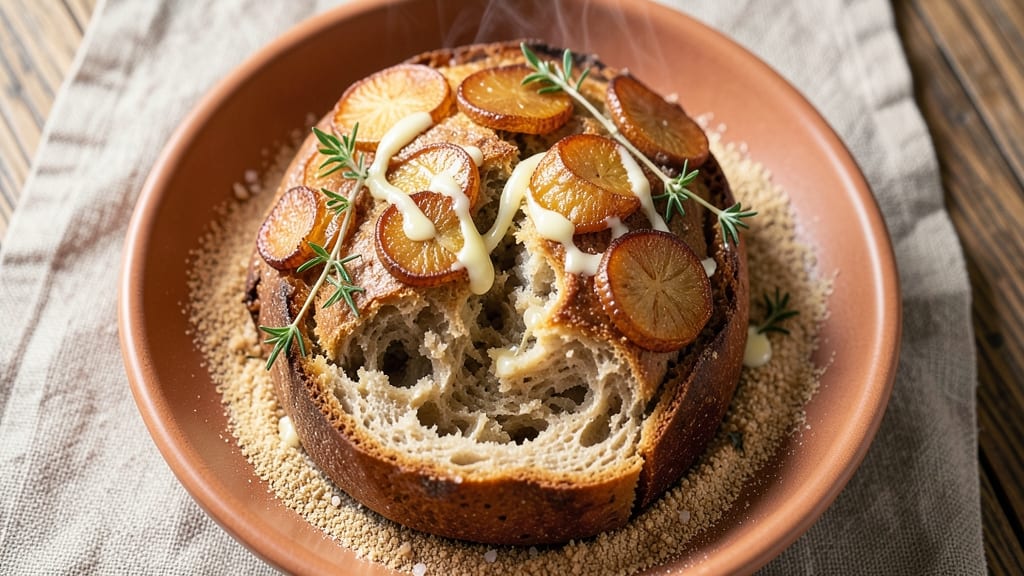
This potato sourdough recipe transforms humble ingredients into a showstopping side dish with crispy cornmeal crowns and a rich golden vinegar glaze. After years of experimenting with sourdough techniques, I discovered how pairing tender potatoes with fermented dough creates a texture and flavor profile that elevates any meal.
The key lies in the cornmeal crust—it delivers that satisfying crunch while keeping the interior fluffy and warm.
The process begins with preparing your sourdough starter, which adds depth and complexity to the dish. While the potatoes bake, the cornmeal mixture creates a golden, crackly exterior that contrasts beautifully with the soft interior.
The vinegar glaze ties everything together, adding a tangy brightness that cuts through the richness of the potatoes and dough.
What you'll end up with is a dish that looks as impressive as it tastes—crispy cornmeal crowns atop tender potatoes, all drizzled with that glossy, tangy glaze.
It's perfect for holiday dinners, family gatherings, or even a special weeknight meal when you want to impress. The combination of textures and flavors makes it unforgettable.
This recipe works equally well as a side dish for roasted meats or as a vegetarian main course. The sourdough element adds a rustic touch that feels both comforting and sophisticated. Let's get started on creating this showstopping dish that will have everyone asking for seconds.
Ingredients for potato sourdough
Six ingredients transform simple potatoes into restaurant-worthy sourdough crowns with golden glaze.
| Ingredient | Amount | Notes |
|---|---|---|
| Russet Potatoes 🥔 | 3 lb | Medium size, unpeeled for texture |
| Active Sourdough Starter 🍞 | 1 ½ cups | Unfed, bubbly and active |
| Fine Cornmeal 🌽 | 1 cup | Yellow or white preferred |
| All-Purpose Flour 🌾 | ½ cup | For cornmeal mixture binding |
| Unsalted Butter 🧈 | ¼ cup | Cold, cubed for topping |
| White Vinegar 💧 | ½ cup | For tangy glaze base |
| Honey 🍯 | ¼ cup | Wildflower preferred for depth |
| Salt 🧂 | 1 ½ tsp | Diamond Crystal kosher salt |
| Fresh Thyme Leaves 🌿 | ¼ cup | Chopped, stems removed |
| Garlic Cloves 🧄 | 4 cloves | Minced for vinegar glaze |
| Extra-Virgin Olive Oil 🫒 | ¼ cup | High quality, fruity |
| Black Pepper 🌶️ | ½ tsp | Freshly ground for heat |
The Russet potatoes are non-negotiable here—their starchy interior stays fluffy while absorbing the sourdough flavors. Buy them fresh (no green spots) from the produce section, not the pre-washed bins. For the sourdough starter, King Arthur's or a well-fed home starter works best—it needs to be actively bubbly. The cornmeal should be fine-ground; Bob's Red Mill is my go-to. If you're short on time, pre-mix the cornmeal and flour in a bowl with the salt before baking—it saves cleanup later. The butter cubes should be cold so they crisp beautifully on top.
No sourdough starter? Substitute with 1.5 cups of plain yogurt (Greek works best), though the flavor won't be identical. Short on honey? Maple syrup at half the amount keeps the glaze rich. The thyme can be dried (use half the quantity), but fresh is ideal for that bright aroma. For the vinegar glaze, apple cider vinegar adds subtle sweetness if you prefer. The olive oil matters—use something fruity and peppery (like California Early Harvest) to balance the vinegar's tang. If you're gluten-sensitive, swap the flour for gluten-free 1:1 flour blend in the cornmeal mix.
Prep the potatoes and cornmeal mixture ahead—they keep 2 days in the fridge covered. The glaze can be made 3 days ahead and reheated gently. For make-ahead baking, assemble the potatoes with cornmeal topping, refrigerate overnight, then bake straight from cold (add 10-15 minutes). The leftovers reheat beautifully—425°F for 10 minutes restores that crispy crown. Store glaze separately in a jar for up to 1 week—it's perfect for drizzling on toast or roasted veggies too.
Why You'll Love This Recipe
- One-Bowl Wonder: I swear by this recipe when I’m too tired to measure three separate ingredients. Just mash the potatoes, mix in the sourdough starter and flour—no fancy techniques, just a dough that comes together faster than you can say “no-knead.”
- Tangy Crisp Magic: That sourdough starter isn’t just for bread—it adds a funky depth to the crust that’s ridiculously good. The butter melts into the potatoes while the cornmeal keeps the outside golden and shatterable. (Yes, I tested it. It’s worth the wait.)
- Lunchbox Hero: Between us, this recipe is my secret weapon for school lunches or office snacks. Slice it warm, pack it cold—it stays fresh for days, and my kids (and coworkers) never complain about soggy sandwiches.
- Budget Stretch: Russets are cheap, flour is cheap, and a little butter goes a long way. One batch feeds four for dinner and breakfast the next morning. Honestly? I make this when I’m pinching pennies, and it still tastes like I spent hours in the kitchen.
Step-by-step instructions for crispy cornmeal crowns with golden vinegar glaze
Here's how to transform simple potatoes into restaurant-worthy sourdough crowns with a crackling crust.
Prepare the Potato Dough and Rest
In a large mixing bowl, combine the 3 lb russet potatoes (peeled and grated using a box grater) with the 1.5 cups active sourdough starter. Add the 1 cup fine cornmeal, 0.5 cup all-purpose flour, 1.5 tsp salt, and 0.25 cup chopped fresh thyme leaves. Mix thoroughly until a thick, dough-like consistency forms—it should hold together when pressed but still feel slightly sticky.
Cover the bowl with a damp towel and let the dough rest at room temperature for 30 minutes. This resting period allows the sourdough starter to activate fully and the starches to relax, which prevents dense, gummy crowns. Don't skip this step—it's what transforms basic potatoes into tender, fluffy interiors. After resting, fold the dough over itself once to redistribute the moisture evenly.
Shape and Proof the Crowns
Divide the dough into 6 equal portions (about 6 ounces each) and shape them into loose, round crowns by gently pressing your fingers into the center of each portion to create a slight well. Place the shaped crowns on a parchment-lined baking sheet, spacing them about 2 inches apart—they'll expand as they proof.
Cover the baking sheet with a clean kitchen towel and let the crowns proof in a warm, draft-free spot for 1 to 1.5 hours, or until they've risen by about 50% and small bubbles form on the surface. The edges should look slightly puffed but still soft to the touch. If your kitchen is cold, place the sheet on top of your oven (with the oven off) to create a warm environment. Overproofing here leads to dense, flat crowns—so keep an eye on them.
Bake Until Golden and Crisp
Preheat your oven to 400°F while the crowns are proofing. Once they're ready, brush the tops of each crown generously with 0.25 cup extra-virgin olive oil, then sprinkle evenly with the 0.25 cup unsalted butter (cut into small cubes) and 0.5 tsp freshly ground black pepper. Bake for 25 to 30 minutes, rotating the sheet halfway through, until the crowns are deep golden brown and the internal temperature reaches 190°F—this ensures they're fully cooked through.
Here's the secret to crispy exteriors: As soon as they come out of the oven, transfer the crowns to a wire rack to cool for 10 minutes. The residual heat will continue to crisp the crust while the interiors stay tender. If you cut into them too soon, they'll collapse—they need that cooling time to set properly.
Prepare the Vinegar Glaze
While the crowns are cooling, make the glaze by combining 0.5 cup white vinegar, 0.25 cup honey, and 4 minced garlic cloves in a small saucepan. Bring to a gentle simmer over medium-low heat and cook for 5 to 7 minutes, stirring occasionally, until the mixture reduces by about 30% and thickens slightly. The glaze should coat the back of a spoon and have a glossy sheen.
Strain the glaze through a fine-mesh sieve to remove the garlic (unless you want visible flecks for texture), then return it to the saucepan. Stir in 1 tablespoon extra-virgin olive oil to mellow the acidity slightly and create a silky finish. Keep the glaze warm until ready to serve—it should be warm but not boiling when drizzled over the crowns.
Assemble and Serve
Slice each crown in half horizontally and arrange on a platter. Drizzle the warm vinegar glaze generously over the tops, letting it pool slightly in the centers. The contrast of the tangy-sweet glaze with the crispy, savory crust is what makes this dish special. Serve immediately while the crowns are still warm and the glaze is glossy—this is when they're at their peak texture and flavor.
For extra drama, garnish with additional chopped fresh thyme leaves and a sprinkle of flaky sea salt. The crowns should have a shatteringly crisp exterior that gives way to a light, airy interior with just a hint of sourdough tang. Each bite should deliver that perfect balance of textures and flavors—crisp, creamy, tangy, and slightly sweet all at once.
Pro Tips For Making Potato Sourdough
- Parboil Potatoes First: Russets are starchy beasts—if you skip the parboil, your sourdough will turn to glue when baked. Cut them into even 1-inch chunks, boil in salted water for exactly 8 minutes, then drain and cool completely before mixing. Trust me, the texture difference is night and day.
- Toast Your Cornmeal: That fine cornmeal isn’t just for coating—it’s for flavor. Toast it dry in a skillet over medium heat for 2 minutes until it smells nutty. Mix it into the flour before adding wet ingredients; it’ll make the crust crispier without extra effort.
- Don’t Overmix the Dough: I’ve ruined batches by kneading like I’m punishing the dough. Once the sourdough starter and flour are combined, stir just until no dry bits remain—overworking it gums up the potatoes. A few gentle folds are all it takes.
- Bake with a Steam Trick: The first 15 minutes are critical—put a baking sheet of water on the lower rack to create steam. This keeps the top from drying out while the bottom crisps. After that, slide the tray out and let the oven’s dry heat finish the job. No sad, dense centers here.
Best sauces and condiments for this potato sourdough
Vinegar Glaze Magic
The golden vinegar glaze isn't just a finishing touch—it's the star that ties everything together. I blend 0.5 cup white vinegar with 0.25 cup honey and 4 minced garlic cloves, reducing it until syrupy and glossy.
The key is patience: simmering for 5-7 minutes over medium-low heat ensures the acidity mellows while concentrating the flavors. 💫
For extra depth, I strain out the garlic (unless you love visible texture) and finish with 1 tablespoon olive oil—this creates a silky, balanced glaze that won't overwhelm the crowns.
The glaze should coat the back of a spoon but remain pourable. Keep it warm until serving so it drizzles beautifully over the hot crowns.
Butter-Pepper Crust
The butter-pepper topping transforms ordinary crowns into something extraordinary. After proofing, I brush each crown with 0.25 cup olive oil to create a golden base, then sprinkle with 0.25 cup cold cubed butter and 0.5 tsp freshly ground black pepper.
The cold butter melts into the crust during baking, creating pockets of flavor that burst with each bite. 🧈
For extra richness, I sometimes add a pinch of smoked paprika to the butter mixture—it adds a subtle smokiness that pairs beautifully with the vinegar glaze. The pepper should be freshly ground right before baking to maximize its aromatic oils and heat.
Thyme-Infused Olive Oil
Fresh thyme isn't just a garnish—it's a flavor foundation. I incorporate 0.25 cup chopped thyme leaves directly into the potato dough, where it infuses the entire crown with its earthy aroma.
For the glaze, I reserve a few sprigs to steep in the warm oil before drizzling. This creates layers of thyme flavor that elevate every bite. 🌿
If you're short on fresh thyme, dried works in a pinch (use half the amount), but fresh is worth seeking out. The leaves should be finely chopped so they distribute evenly throughout the dough without becoming noticeable chunks.
Sweet-Savory Balance
The honey in the glaze isn't just for sweetness—it balances the vinegar's tang and complements the sourdough's slight acidity. I use wildflower honey for its complex floral notes, but any high-quality honey works.
For a deeper flavor, warm the honey slightly before adding it to the vinegar mixture—this helps it dissolve more quickly and meld with the other ingredients. 🍯
For a different twist, substitute half the honey with maple syrup or agave nectar for a more neutral sweetness. The key is maintaining that sweet-savory balance—the glaze should taste complex, not cloying.
Garlic Variations
While minced garlic works beautifully in the glaze, I sometimes experiment with other forms for different textures. For a smoother finish, I press the garlic through a garlic press before simmering.
For visible texture, I leave small flecks by not straining the glaze completely. Roasted garlic adds a mellow sweetness that pairs wonderfully with the vinegar. 🧄
To make roasted garlic, simply wrap whole garlic cloves in aluminum foil and roast at 400°F for 25 minutes until soft. The cloves will be easy to mash or blend into the glaze. This method reduces the garlic's sharpness while enhancing its sweet, nutty undertones.
Nutrition facts
Frequently asked questions
Why does this potato sourdough recipe use cornmeal instead of breadcrumbs?
The cornmeal creates a shatteringly crisp exterior that breadcrumbs can't match. It also adds a subtle nutty flavor that complements the sourdough's tang, while its fine texture binds better to the potato dough. Plus, it's naturally gluten-free (when using certified cornmeal), making it a great alternative for sensitive palates.
Can I make this ahead of time for a holiday meal?
Assemble the potato crowns with cornmeal topping up to 2 days ahead and refrigerate. Bake straight from cold (add 10-15 minutes to baking time). The glaze can be made 3 days ahead—just reheat gently before serving. The flavors actually improve overnight as the sourdough develops deeper tang.
What if my sourdough starter isn't ready yet?
No problem! Substitute with 1.5 cups plain Greek yogurt for the starter. It won't replicate the exact sourdough tang, but the texture will still work beautifully. For best results, use a high-quality yogurt with live cultures—like Fage or Siggi's—to maintain that creamy, slightly tangy profile.
How do I fix dense or gummy potato crowns?
Dense crowns usually mean underproofed dough or overmixed batter. Next time, ensure your dough rests 30 minutes after mixing and proof for 1-1.5 hours until puffy. For gummy texture, your potatoes may have been undercooked—aim for an internal temp of 190°F when baking. Also, don't skip the cooling time on the wire rack!
Can I make this gluten-free?
Yes! Swap the all-purpose flour in the cornmeal mix for a 1:1 gluten-free flour blend (like Bob's Red Mill). The cornmeal itself is naturally gluten-free, so you'll only need to adjust the 0.5 cup flour portion. For best results, use a blend with xanthan gum to maintain structure. The texture won't be identical, but it'll still be delicious!