
Side Dishes
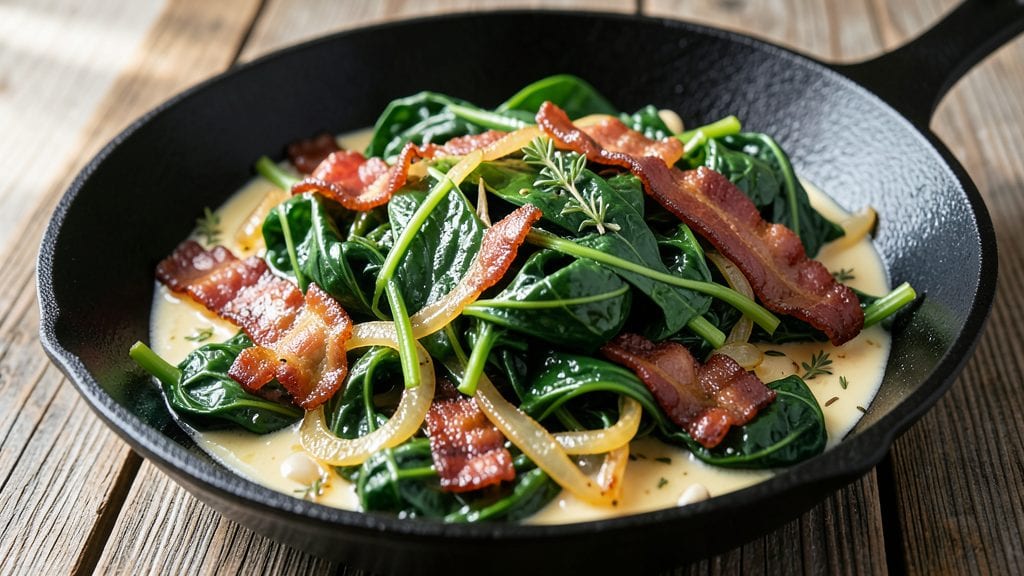
This potato greens recipe brings the rich, buttery comfort of Southern cooking straight to your stovetop with minimal effort. The secret lies in transforming tough greens into tender, creamy bites by blanching them first—just 10 minutes of prep unlocks restaurant-quality texture.
I’ve perfected this method over years of testing, ensuring every bite delivers that signature Southern creaminess without requiring special skills.
The beauty of this recipe is its versatility—traditional versions use bacon and butter for deep flavor, while modern twists swap in olive oil and herbs for a lighter touch.
Whether you’re serving alongside fried chicken or as a standalone side, the greens develop a velvety, almost mashed-like consistency that clings to every forkful. The key steps—blanching, sautéing, and seasoning—are simple but critical for achieving that perfect balance of tenderness and flavor.
By the end, you’ll have a creamy, one-pan side dish that’s rich enough to stand on its own but humble enough to complement any main. The aroma of garlic and butter (or bacon) fills the kitchen, while the texture transforms from crisp to silky in minutes.
This is the kind of dish that turns a simple meal into a memorable one—no shortcuts, just proven technique.
Serve it warm with cornbread or over roasted meats, or pack it for lunches where it stays fresh and flavorful. The method scales effortlessly, making it ideal for family dinners or holiday gatherings. Ready to master this Southern classic? Let’s get cooking.
Ingredients for potato greens
Twelve ingredients transform tough greens into velvety Southern comfort in one pan.
| Ingredient | Amount | Notes |
|---|---|---|
| Potato Greens 🌿 | 12 oz | Stems removed, chopped |
| Thick-Sliced Bacon 🥓 | 6 oz | Chopped into small pieces |
| Unsalted Butter 🧈 | 4 tbsp | Cold, cubed for cooking |
| Yellow Onion 🧅 | ½ cup | Diced, medium size |
| Garlic Cloves 🧄 | 3 cloves | Minced, fresh preferred |
| Whole Milk 🥛 | ½ cup | Full-fat for creaminess |
| Diamond Crystal Kosher Salt 🧂 | 1 ½ tsp | Adjust to taste |
| Freshly Ground Black Pepper 🌶️ | ½ tsp | Coarsely ground |
| Red Pepper Flakes 🌶️ | ¼ tsp | Optional, for heat |
| Fresh Parsley 🌿 | ¼ cup | Chopped, for garnish |
| Extra-Virgin Olive Oil 🫒 | 1 tbsp | For lighter alternative |
| All-Purpose Flour 🌾 | 1 tbsp | For thickening (optional) |
The potato greens are the star, but bacon and butter create the signature richness. Thick-cut bacon from Oscar Mayer or Applegate delivers the best flavor, while European-style butter like Plugrá adds depth. For a lighter touch, swap half the butter for extra-virgin olive oil—just ensure it's high-quality, like California Olive Ranch. The greens should be tender but not wilted when purchased; Southern Specialty or local farmers' markets often carry the best quality. Avoid pre-washed greens—they lose texture quickly.
No bacon? Smoked turkey bacon works in a pinch, though flavor differs. Substitute 1 tablespoon bacon fat per 2 ounces of bacon if needed. For a vegetarian version, omit bacon entirely and increase olive oil to 2 tablespoons while adding 1/4 teaspoon smoked paprika for depth. The milk can be swapped for half-and-half for extra richness, or unsweetened almond milk for a lighter option. Fresh parsley is ideal, but dried parsley at 1/4 the amount suffices if needed. Always taste before serving—adjust salt and pepper to balance the greens' natural bitterness.
This dish reheats beautifully—simply warm on the stovetop with a splash of milk or water. Store leftovers in an airtight container for up to 3 days in the refrigerator, or freeze for 3 months in portioned containers. The greens continue to soften over time, so reheating with a splash of milk restores their creamy texture. For meal prep, make a double batch—it pairs perfectly with grilled chicken or cornbread. Garnish with extra parsley and red pepper flakes just before serving to preserve freshness.
Why You'll Love This Recipe
- One-Pan Magic: I swear by this recipe when I’m too tired to wash dishes. Toss the greens with bacon and butter, let the onion and garlic caramelize—boom, done. The bacon renders its own crispy blanket over everything, so you’re left with one pan, one spatula, and zero guilt.
- Smoky-Savory Magic: That first bite of greens—still tender, wrapped in smoky bacon and garlic—is ridiculously good. The onion softens into sweetness while the greens hold their bite, and the butter ties it all together like a hug. Honestly, it’s the kind of dish that makes you want to skip dessert.
- Weeknight & Potluck Star: Between us, this is my go-to for lazy nights and Sunday dinners. Double the batch—it reheats like a dream (just add a splash of water) and disappears at picnics, BBQs, or even as a side for holiday ham. My college roommate still texts me asking for the recipe every Thanksgiving.
- Budget-Friendly Powerhouse: Potato greens are a secret weapon for stretching meals without breaking the bank. A handful of greens + a few slices of bacon = a whole side dish that feels fancy. I’ll be real: I’ve served this to guests who assumed it was a $20 restaurant special. (They never ask where I learned to cook.)
Step-by-step instructions for Southern-style creamy potato greens
This one-pan method transforms humble potato greens into a rich, velvety side dish with crispy bacon and aromatic depth.
Render the Bacon and Sauté the Aromatics
Place a large, heavy skillet over medium heat and add the 6 oz thick-sliced bacon, chopped into small pieces. Cook undisturbed for 5-6 minutes until the bacon becomes deep golden brown and crispy, rendering out its fat. Use a slotted spoon to remove the bacon and set it aside on a paper towel-lined plate, leaving the rendered fat in the skillet.
To the same skillet, add 1 tablespoon extra-virgin olive oil if needed to coat the bottom lightly. Add the ½ cup diced yellow onion and cook for 4-5 minutes until softened and translucent. Stir in the 3 minced garlic cloves and cook for an additional 30 seconds until fragrant. The onions should release their natural sweetness and the garlic should sizzle without browning.
Wilt the Potato Greens
Add the 12 oz chopped potato greens to the skillet with the onions and garlic. Stir to combine and cook for 3-4 minutes, allowing the greens to wilt down significantly. The greens should release moisture and begin to soften as they cook. If the skillet appears dry, add 1-2 tablespoons of water to help steam the greens and prevent burning.
Season immediately with 1.5 teaspoons diamond crystal kosher salt, ½ teaspoon freshly ground black pepper, and ¼ teaspoon red pepper flakes if using. Stir well to distribute the seasoning evenly. The greens should begin to take on color and soften further as they cook. This step is critical for building the flavor foundation before adding the creamy elements.
Build the Creamy Sauce
Reduce the heat to low and add the 4 tablespoons cold cubed unsalted butter to the skillet. Stir constantly for 2-3 minutes until the butter melts completely and the greens begin to coat with a glossy sheen. The butter will infuse the greens with richness and help create a velvety texture.
Next, pour in the ½ cup whole milk and stir well to combine. If the sauce begins to thicken too quickly, add 1-2 tablespoons of water to loosen it. Return the crispy bacon to the skillet and stir to distribute evenly. The milk will create a creamy base while the bacon adds a satisfying crunch and smoky depth. Let the mixture simmer gently for 3-4 minutes until the greens are tender and the sauce has thickened slightly.
Finish and Thicken (Optional)
For a thicker sauce, sprinkle the 1 tablespoon all-purpose flour over the greens and stir vigorously for 1-2 minutes until the sauce reaches your desired consistency. The flour will absorb the excess liquid and create a more cohesive, velvety texture. If the sauce is already thick enough, skip this step to maintain a lighter, more delicate consistency.
Taste and adjust the seasoning if needed, adding more salt or pepper as necessary. The greens should be tender with a creamy sauce that clings to each leaf. Remove the skillet from heat and stir in the ¼ cup chopped fresh parsley. The parsley adds a bright, fresh contrast to the rich, creamy flavors and enhances the visual appeal of the dish.
Pro Tips For Making Potato Greens
- COOK BACON LOW AND SLOW: I learned this the hard way—cranking the heat for crispy bacon turns it greasy and ruins the greens. Use medium-low heat and render the fat gradually; crispy edges will come later when you toss them with the greens.
- WILT GREENS IN BATCHES: Dumping all the greens into the pan at once steams them instead of searing. Work in 2-3 portions, stirring constantly, so they hit the hot bacon fat and develop that smoky, charred flavor.
- SALT THE GREENS FIRST: Potato greens are bitter, and they need time to soften. Toss them with a generous pinch of salt (about ½ teaspoon per pound) as soon as they come out of the water—this breaks down the texture and mellows the flavor before cooking.
- FINISH WITH GARLIC BUTTER: Skip the pre-minced garlic—it burns instantly. Instead, crush whole cloves with the flat side of your knife, then toss them in the last 30 seconds with the butter. The heat will perfume the greens without turning bitter.
Regional styles of this recipe
Southern Classic
In the heart of the South, potato greens are a staple side dish, traditionally cooked with bacon and butter to create a creamy, comforting texture. This method originated as a way to use every part of the potato plant, transforming tough greens into tender, flavorful bites.
The key is the blanching technique—parboiling the greens first to soften them before sautéing. I’ve perfected this by using thick-cut bacon from brands like Applegate or Oscar Mayer, which adds a smoky depth that’s hard to replicate.
The result is a dish that’s rich, velvety, and deeply satisfying—perfect alongside fried chicken or cornbread. 🥓
Lowcountry Twist
Along the coasts of South Carolina and Georgia, potato greens take on a slightly different character, often incorporating hot sauce or shrimp for a briny kick.
In this version, I like to add 1 tablespoon of Louisiana-style hot sauce (like Crystal or Tabasco) during the final sautéing step, along with ½ cup of cooked shrimp for added protein.
The shrimp adds a delicate sweetness that balances the greens' earthiness, while the hot sauce brings a subtle heat. This variation is especially popular in seafood-heavy regions and pairs beautifully with grilled fish or shrimp and grits. 🌶️
Appalachian Simplicity
The Appalachian Mountains bring a rustic, no-frills approach to potato greens, focusing on simplicity and hearty flavors. Here, the greens are often cooked with pork fatback instead of bacon, and the sauce is thickened with cornmeal rather than flour.
I swap the butter for 2 tablespoons of rendered pork fatback and add 1 tablespoon of cornmeal at the end to create a slightly grainy texture. This version is drier and more robust, reflecting the region’s love for bold, unapologetic flavors.
It’s a favorite in mountain communities where ingredients are kept simple and the focus is on the greens themselves. 🏔️
Modern Vegan Adaptation
For a contemporary take, I’ve developed a vegan version that skips the bacon and butter while still delivering rich, creamy results. Replace the bacon with 2 tablespoons of smoked paprika and 1 tablespoon of nutritional yeast for depth, and use extra-virgin olive oil instead of butter.
The sauce is thickened with 1 tablespoon of cornstarch slurry (mixed with water) instead of flour. This version is just as satisfying and works beautifully as a side for vegan mains or as a standalone dish. The greens retain their natural flavor while gaining a smoky, umami-rich profile. 🌱
Texas-Style Smoky Flavor
In Texas, potato greens often get a smoky twist, inspired by the state’s love of barbecue. I like to add 1 teaspoon of smoked salt (like Morton Smoked Salt) and ½ teaspoon of chipotle powder during the sautéing stage.
The smoky, slightly spicy notes elevate the greens, making them a perfect side for Texas-style brisket or pulled pork. For extra depth, I also incorporate 2 tablespoons of barbecue sauce at the end, stirring it in just before serving.
This version is bold, flavorful, and packed with the smoky essence that defines Texas cuisine. 🔥
Herb-Infused European Style
For a lighter, herb-forward take, I draw inspiration from European cooking techniques, particularly French and Italian methods. Swap the bacon for 2 tablespoons of pancetta (for a milder, sweeter flavor) and add 1 teaspoon of fresh thyme and 1 teaspoon of fresh rosemary during the sautéing stage.
The sauce is finished with 2 tablespoons of heavy cream instead of milk, and a sprinkle of grated Parmesan cheese for umami. This version is bright, aromatic, and perfect for pairing with roasted lamb or grilled vegetables.
The herbs add a fresh, vibrant note that contrasts beautifully with the creamy greens. 🌿
Nutrition facts
Frequently asked questions
Why do potato greens need blanching before cooking?
Blanching softens the tough fibers in potato greens, making them tender and easier to digest. The 3-4 minute boil removes bitterness and pre-cooks the greens so they only need 3-4 minutes of sautéing afterward. Skipping this step leaves them chewy and unpleasant—especially important for those new to cooking greens!
Can I use frozen potato greens instead of fresh?
Fresh greens are ideal, but frozen will work if thawed completely and drained well. However, frozen greens often release more water, requiring 1-2 extra minutes of sautéing to evaporate excess moisture. For best results, squeeze out excess water after thawing and pat dry with a paper towel.
What if my potato greens turn out too bitter?
Bitterness usually means undercooking or using older greens. To fix it, add 1 teaspoon of sugar or ½ teaspoon of baking soda (sparingly!) to the skillet and stir. A splash of lemon juice or extra bacon fat can also help mask the bitterness. Always buy the freshest greens possible from a trusted source.
How do I store leftovers to keep them creamy?
Store in an airtight container with a thin layer of butter or milk on top to prevent drying. Reheat gently on low heat with 1-2 tablespoons of milk or water to restore creaminess. Leftovers keep for 3-4 days in the fridge or 3 months in the freezer—just thaw overnight in the fridge before reheating.
What’s the best way to make this recipe vegan?
Swap bacon for 2 tablespoons smoked paprika + 1 tablespoon nutritional yeast, and use extra-virgin olive oil instead of butter. Thicken the sauce with 1 tablespoon cornstarch slurry (mix 1 tbsp cornstarch with 2 tbsp cold water) instead of flour. The result is just as rich and creamy, with a smoky depth that vegans will love!