
Side Dishes
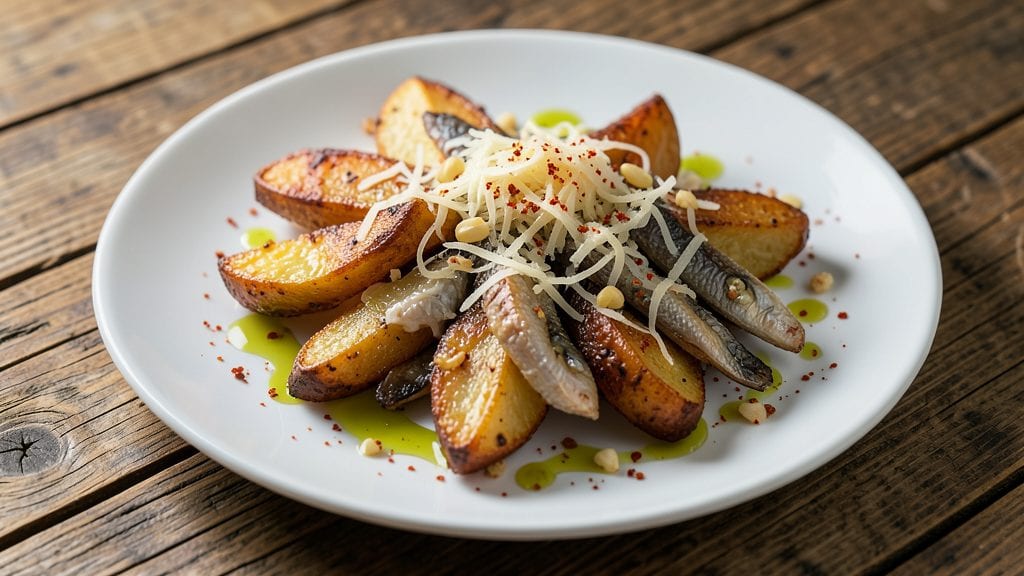
This potato and anchovy recipe transforms humble wedges into a bold, umami-rich dish that balances salty, savory, and crispy textures in every bite. The secret lies in the anchovies—dissolved into the oil for maximum flavor infusion—while a sprinkle of parmesan and chili flakes creates that perfect melty, spicy contrast.
I developed this after craving something beyond basic fries, and the result is a dish that feels equally at home on a Spanish tapas spread or as a hearty side for grilled meats.
The method is straightforward but precise: thinly sliced potatoes roast until golden and crispy, then finish with a quick sear in anchovy-infused oil. This ensures deep flavor penetration without sacrificing that satisfying crunch.
The anchovies add a briny, umami depth that elevates simple potatoes into something restaurant-worthy, while the melted cheese ties everything together with a creamy finish.
What you’ll end up with is a plate of crispy, caramelized wedges topped with bubbly cheese and a delicate anchovy glaze—each bite delivers a perfect balance of textures and flavors.
This dish is foolproof for weeknight dinners but impressive enough for guests, proving that anchovies can be a game-changer in home cooking.
Serve with a squeeze of lemon or a drizzle of olive oil to brighten the richness, and don’t skip the fresh parsley for a pop of color and freshness.
The versatility of this recipe means it works as a standalone dish, a tapas-style appetizer, or a side that steals the show alongside grilled fish or steak.
Ingredients for potato anchovy
Eight simple ingredients transform ordinary potatoes into restaurant-quality wedges with bold umami flavors.
| Ingredient | Amount | Notes |
|---|---|---|
| Russet Potatoes 🥔 | 2 lbs | Cut into 1-inch thick wedges |
| Extra-Virgin Olive Oil 🫒 | ½ cup | High quality for flavor infusion |
| Anchovy Fillets 🐟 | ¼ oz | In oil, finely chopped |
| Parmesan Cheese 🧀 | ½ cup | Freshly grated from block |
| Garlic Cloves 🧄 | 4 cloves | Minced for anchovy oil |
| Red Chili Flakes 🌶️ | 1 tsp | Adjust for heat preference |
| Fresh Parsley 🌿 | ¼ cup | Chopped for garnish |
| Lemon Juice 🍋 | 1 tbsp | Freshly squeezed |
| Salt 🧂 | 1 ½ tsp | Kosher or sea salt |
| Black Pepper 🌶️ | ½ tsp | Freshly ground preferred |
| Dried Oregano 🍃 | ½ tsp | For Mediterranean touch |
The potatoes are the foundation—Russet is ideal for crispiness, but Yukon Gold adds creaminess if you prefer. Whole Foods or local markets often carry both, but the regular grocery store Russets work perfectly. Cut them into even wedges (about 1-inch thick) for consistent cooking. For the anchovies, high-quality fillets in oil are essential—brands like Colavita or Goya are reliable choices. If you can't find fillets, anchovy paste works in a pinch, but the texture won't be as refined. The Parmesan should be freshly grated from a block—pre-grated cheese lacks the melt and flavor complexity.
No anchovies? Substitute with 1 tbsp fish sauce plus 1 tsp soy sauce for umami depth, though the flavor won't be identical. Short on garlic? Double the dried garlic powder, but fresh is always better. If you dislike chili flakes, swap for smoked paprika at the same amount. For the parsley, fresh is best, but dried at one-third the amount works if you're in a bind. The olive oil should be extra-virgin—California or Italian varieties add fruity notes that complement the dish beautifully. If you're using a cheaper oil, toast it briefly to enhance its flavor before using.
Store leftover wedges in an airtight container for up to 3 days, though they're best fresh. Reheat in a skillet for 2-3 minutes to restore crispiness. The anchovy-infused oil can be made ahead and stored in the fridge for up to 1 week, though the flavor deepens when used immediately. For meal prep, assemble the wedges without cheese and bake ahead—top with cheese and broil just before serving to keep it melty. This dish reheats beautifully, making it perfect for leftovers or meal planning.
Why You'll Love This Recipe
- Here’s what sold me: these potatoes reheat like a dream. Pack them warm for work or school, and they’ll still taste fresh hours later. (Yes, even on a Tuesday night when you forgot to meal prep.) The crispy edges hold up, and the garlic-anchovy oil keeps everything tasty.
- One-Pan Magic: I swear by this recipe when I’m too tired to scrub pots—just slice those Russets, toss them in olive oil with minced garlic and anchovies, and let the oven do the work. That salty umami punch from the anchovies? It turns simple potatoes into something ridiculously good with zero fuss.
- Umami Bomb: Between us, anchovies are my secret weapon for depth. A few crushed fillets in the oil while the potatoes roast? Instant savory punch that makes Parmesan shavings taste like a gourmet sprinkle. It’s the kind of flavor that lingers—dangerously addictive.
- Lunchbox Hero: Here’s what sold me: these potatoes reheat like a dream. Pack them warm for work or school, and they’ll still taste fresh hours later. (Yes, even on a Tuesday night when you forgot to meal prep.) The crispy edges hold up, and the garlic-anchovy oil keeps everything tasty.
Step-by-step instructions for umami-boosted crispy potato wedges
Here's how to achieve perfectly crispy wedges with a bold anchovy-infused flavor profile.
Prepare the Potatoes for Maximum Crispiness
Preheat your oven to 425°F while you prepare the potatoes. Cut the 2 lbs russet potatoes into 1-inch thick wedges, ensuring each piece has both skin and flesh. Spread them on a baking sheet in a single layer, making sure they don't overlap—this prevents steaming and guarantees even crisping.
Toss the wedges with ½ cup extra-virgin olive oil until they're evenly coated. This high-quality oil not only promotes crispiness but also carries the anchovy flavor beautifully. Spread them back out on the baking sheet, skin-side up. Let them sit uncovered at room temperature for 30 minutes—this drying step is crucial for achieving that satisfying crunch.
Create the Anchovy-Garlic Oil Base
While the potatoes dry, create the flavor foundation in a small skillet over medium-low heat. Add the 4 cloves minced garlic cloves and 0.25 oz finely chopped anchovy fillets in oil to the skillet. Cook for 2-3 minutes until the garlic becomes fragrant but doesn't brown—burnt garlic will overpower the delicate anchovy flavor.
Remove from heat and let cool slightly. Then stir in 1 tablespoon lemon juice, 1 teaspoon red chili flakes, 0.5 teaspoon dried oregano, 1.5 teaspoons salt, and 0.5 teaspoon black pepper. This creates a potent flavor oil that will infuse the potatoes with umami depth and a subtle heat. Keep this mixture warm while you finish prepping the potatoes.
Season and Roast the Potatoes
After the potatoes have dried for 30 minutes, transfer them to a large baking sheet lined with parchment paper. Sprinkle the warm anchovy-garlic oil evenly over the wedges, making sure each piece gets coated. Toss gently to distribute the oil, then spread them out again in a single layer.
Roast for 25-30 minutes, flipping halfway through, until the edges are deep golden brown and the potatoes are tender when pierced with a fork. You'll know they're done when the skin is crispy and the flesh is fluffy—this takes patience, but don't rush it. The high heat and proper drying ensure that crispy texture we're after.
Finish with Melty Parmesan
When the potatoes are nearly done, sprinkle ½ cup freshly grated parmesan cheese evenly over the top. The residual heat from the oven will melt the cheese into a creamy, golden blanket that complements the crispy edges. Return to the oven for 2-3 minutes until the cheese is bubbly and slightly browned.
Remove from the oven and immediately sprinkle with ¼ cup chopped fresh parsley for a bright contrast to the rich, umami flavors. Serve while still hot—these wedges are best enjoyed immediately when the cheese is melty and the potatoes are at their crispiest. The combination of crispy exterior, fluffy interior, and melty cheese creates a perfect balance of textures and flavors.
Pro Tips For Making Potato Anchovy
- PARBOIL POTATOES FIRST: Russets dry out fast when roasted, and that’s a flavor killer. Give them a 5-minute boil in salted water, then drain and rough up the skin with a fork—this keeps them tender inside while getting crispy outside. I learned this the hard way after serving rubbery potatoes to a crowd.
- CRUSH ANCHOVIES FINE: Whole anchovies? Skip it. Muddle them into a paste with the garlic and olive oil first—this dissolves their salt and umami into the oil, coating every potato evenly. My grandmother swore by this, and she was right: the flavor sticks better than sprinkling them on top.
- LOW AND SLOW CRISP: Start potatoes at 400°F (200°C) for 20 minutes, then drop to 350°F (175°C) until golden. High heat upfront burns the oil; low and slow finishes the job without turning the edges bitter. Sounds weird, but it works—your future self will thank you.
- GRATE PARMESAN LAST: Freshly grated Parmesan melts into a gooey mess if added early. Save it for the last 2 minutes of roasting, then toss it in while the potatoes are still hot. The residual heat makes it crispy on the edges—like a free upgrade to your dish. (Yes, even if you’re impatient like me.)
Troubleshooting great potato anchovy
Potatoes Staying Soft
If your wedges turn out soft instead of crispy, it’s likely due to uneven drying or insufficient heat. First, ensure you pat the wedges dry thoroughly after cutting—even a little moisture prevents crisping. Also, make sure your oven is fully preheated to 425°F before adding the potatoes.
If your oven runs hot or cold, use an oven thermometer to verify accuracy. For extra insurance, spread the wedges on a wire rack instead of a baking sheet to allow airflow on all sides. 🌡️
Anchovy Flavor Too Overpowering
The anchovies should add depth, not dominate. If the flavor is too strong, reduce the amount to 0.125 oz (half the original) and increase the garlic to 5 cloves to balance it.
Another trick is to whisk the anchovies into the olive oil first, then let it sit for 10 minutes before tossing the potatoes—this helps distribute the flavor more evenly. For a milder taste, use anchovy paste instead of fillets, but dissolve it in warm oil rather than cold.
Cheese Not Melting Properly
If the parmesan stays in chunks instead of melting, it’s likely because the oven wasn’t hot enough or the cheese wasn’t added at the right time.
Sprinkle the cheese only when the wedges are nearly done (2-3 minutes left in the oven) and return them to the highest rack for direct heat. For extra meltiness, mix the parmesan with 1 tablespoon heavy cream before sprinkling. Avoid pre-shredded cheese—its anti-caking agents prevent proper melting.
Oil Burning or Smoking
If the anchovy-infused oil starts smoking or burning, it’s usually because the heat is too high. Keep the skillet over medium-low heat and stir frequently to prevent hot spots. For extra safety, use a small, heavy-bottomed skillet like a Lodge cast iron to distribute heat evenly.
If the oil smells acrid, remove it from heat immediately and let it cool before using it on the potatoes—burnt oil will ruin the dish.
Potatoes Overlapping and Steaming
Overlapping wedges create steam, which softens the potatoes instead of crisping them. Arrange the wedges in a single layer with at least ½ inch of space between each piece. If your baking sheet is too small, work in batches—use a second sheet if needed.
For extra room, try a half-sheet pan, which gives more surface area. Avoid crowding, even if it means multiple trips to the oven.
Leftover Wedges Losing Crispiness
Reheating leftover wedges can turn them soggy, but a quick stovetop sear restores crispiness. Place the wedges in a cold skillet over medium heat with 1 tablespoon fresh olive oil. Cook for 2-3 minutes per side until golden and crispy again.
For oven reheating, broil on high for 3-4 minutes, watching closely to prevent burning. Store leftovers in a single layer on a wire rack in the fridge to maintain texture.
Nutrition facts
Frequently asked questions
Can I use canned anchovies instead of fillets in oil?
Canned anchovies work in a pinch, but fillets in oil create a smoother, more integrated flavor. If using canned, drain them well and dissolve in warm olive oil first. For 0.25 oz fillets, use 1 tbsp canned anchovies (about 2-3 fillets). The texture won't be identical, but the umami punch remains strong.
How do I make this dish vegetarian?
Replace the anchovies with 1 tbsp nutritional yeast (for umami) plus 1 tsp soy sauce or miso paste. For extra depth, add ½ tsp smoked paprika and 1 tsp lemon zest to mimic the anchovy's briny notes. The dish will still be rich but with a different flavor profile.
Can I bake these wedges in an air fryer?
Preheat to 400°F and cook in batches for 10-12 minutes, shaking halfway. Use ½ cup olive oil and follow the same drying step. The air fryer creates crispiness faster but requires closer monitoring to avoid burning. For best results, finish with cheese under the broiler for 1-2 minutes.
Why does the recipe call for drying the potatoes?
Drying removes surface moisture, which prevents steam from forming in the oven. This ensures a crispy exterior instead of soft, soggy wedges. Pat them thoroughly with a kitchen towel for 30 minutes before baking. Think of it like frying—moisture is the enemy of crispiness!
What’s the best way to serve these wedges?
These wedges shine as a tapas-style appetizer, but they’re hearty enough for a side or light main. Pair with grilled fish, steak, or a simple salad. For extra flair, drizzle with extra-virgin olive oil and a sprinkle of flaky sea salt before serving. A squeeze of lemon brightens the richness perfectly.