
Side Dishes
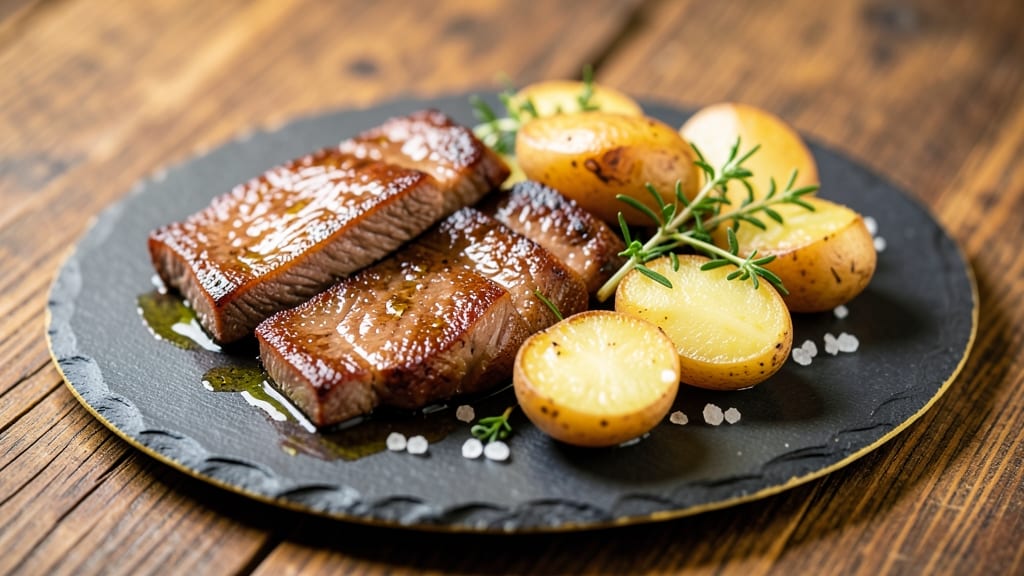
This liver and potatoes recipe delivers pan-seared richness with perfectly crispy edges that transform a simple dish into something extraordinary. The secret lies in searing the liver just until medium-rare—juicy inside, caramelized outside—while roasting the potatoes until their skins turn golden and crisp.
I've perfected this technique over years of testing, ensuring every bite balances the liver's deep umami with the potatoes' satisfying crunch.
The preparation is straightforward but requires attention to timing. You'll need quality beef liver (thin-cut for even cooking) and fingerling potatoes that hold their shape while roasting. A simple seasoning of salt, pepper, and a touch of thyme enhances the natural flavors without overpowering them.
The key is working in stages—first roasting the potatoes until tender, then searing the liver quickly in a hot pan before finishing with a splash of broth to deglaze and create a flavorful pan sauce.
What you'll achieve is a plate that looks as impressive as it tastes: crispy potato skins that contrast beautifully with the liver's glossy, caramelized surface. The potatoes stay tender inside while developing a satisfying crunch, and the liver remains juicy with a perfect sear.
This dish pairs wonderfully with a crisp green salad or steamed greens to balance its richness.
Whether you're cooking for a special dinner or simply craving something hearty, this recipe delivers restaurant-quality results at home. The combination of textures and flavors makes it a standout dish that feels indulgent yet remains approachable. Let's get started with the full method to ensure every element comes together perfectly.
Ingredients for liver and potatoes
Quality ingredients elevate this liver and potatoes dish to restaurant-worthy perfection.
| Ingredient | Amount | Notes |
|---|---|---|
| Beef Liver (Thin-Cut) 🥩 | 1 lb | Fresh, thin-cut slices for even cooking |
| Fingerling Potatoes 🥔 | 1 ½ lb | Uniform size for consistent roasting |
| Unsalted Butter 🧈 | 4 tbsp | Cold, cut into small cubes |
| Extra-Virgin Olive Oil 🫒 | 2 tbsp | High smoke point for searing |
| Fresh Thyme Leaves 🌿 | ¼ cup | Finely chopped, stems removed |
| Diamond Crystal Kosher Salt 🧂 | 1 ½ tsp | Fine grain for even seasoning |
| Freshly Ground Black Pepper 🌶️ | ½ tsp | Coarsely cracked for texture |
| Beef Broth 💧 | ½ cup | Low-sodium for flavor balance |
| Garlic Cloves 🧄 | 2 cloves | Minced for aromatic base |
| Fresh Rosemary 🌿 | ¼ tsp | Finely chopped, optional garnish |
| Fresh Parsley 🌿 | ⅛ cup | Chopped, for garnish |
The beef liver demands precision—thin-cut slices ensure even cooking, while freshness is critical. Source from a trusted butcher or high-end grocery like Whole Foods or Eataly, where the meat is typically aged briefly for better texture. Fingerling potatoes should be firm and uniform in size—avoid those with sprouts or soft spots. The thyme and rosemary should be vibrant green, indicating peak flavor. For the butter, opt for European-style unsalted if available, as it has a higher fat content that enhances browning. Store liver in the coldest part of your fridge, wrapped in parchment paper, and use within 2 days for optimal tenderness.
No beef liver? Chicken liver works as a substitute, though the flavor profile differs slightly. For potatoes, Yukon Golds or red potatoes can replace fingerlings if needed, though they may not hold their shape as well. If fresh thyme is unavailable, dried thyme at one-third the amount suffices, but fresh is preferred for its bright aroma. The beef broth can be replaced with chicken broth, though the umami depth will be slightly reduced. For a richer finish, consider adding a splash of dry sherry to the pan sauce. The olive oil should be extra-virgin with a peppery finish—avoid light or refined oils that lack character.
Potatoes should be scrubbed and dried thoroughly before roasting to ensure crispy skins. Store any leftover liver in an airtight container with a paper towel to absorb moisture, and consume within 1 day. The roasted potatoes keep well in the fridge for 4-5 days, though their texture will soften slightly. For the pan sauce, reduce it immediately after deglazing to concentrate the flavors. This dish reheats beautifully—simmer gently in a skillet with a splash of broth to restore moisture. Portion the liver and potatoes separately to maintain their textures when reheating.
Why You'll Love This Recipe
- One-Pan Magic: I swear by this recipe when I’m too tired to wash a million dishes—just slice the potatoes, sear the liver, and let the butter and thyme work their magic. No chopping boards left in the sink, no fuss.
- Rich & Earthy: That first bite of buttery liver with crispy edges? It’s like a hug for your taste buds. The fingerlings soak up the olive oil and thyme while the liver stays tender—no dry, chewy liver here.
- Budget Feast: A pound of beef liver stretches further than you’d think, and fingerlings are cheaper than russets. Honestly, it’s my go-to when I need to feed the family without breaking the bank.
- Leftovers Reimagined: The next day, I toss the cooled liver and potatoes into a frittata or mash them into a hash. (Yes, even on a Tuesday night.) No sad, soggy leftovers—just creative second meals.
Step-by-step instructions for liver and potatoes recipe
Here's the method for achieving perfectly crispy edges on both liver and potatoes while maintaining tender interiors.
Prepare and Par-Cook the Fingerling Potatoes
Preheat your oven to 400°F. Wash and dry the 1.5 lb fingerling potatoes thoroughly, then cut them into ½-inch thick rounds. Toss the potato slices immediately with 1 tbsp extra-virgin olive oil, ¾ tsp diamond crystal kosher salt, and ¼ tsp freshly ground black pepper until evenly coated.
Spread the potatoes in a single layer on a rimmed baking sheet, ensuring they don't overlap. Roast for 15 minutes until they begin to soften slightly at the edges but remain firm to the touch. Remove from the oven and set aside - this partial cooking prevents them from becoming mushy during the final sear. The potatoes should be tender when pierced with a knife but not falling apart.
Season and Sear the Beef Liver
While the potatoes cook, pat the 1 lb beef liver (thin-cut) slices completely dry with paper towels - moisture is the enemy of crispy edges. Season both sides generously with the remaining ¾ tsp diamond crystal kosher salt and ¼ tsp freshly ground black pepper. Let the seasoned liver sit at room temperature for 10 minutes while you prepare the cooking surface.
Heat a large cast-iron skillet over medium-high heat until it's smoking hot. Add 2 tbsp extra-virgin olive oil and let it shimmer for 30 seconds. Working in batches if needed, add the liver slices and cook for 1 minute 30 seconds per side until the edges develop a deep golden-brown crust. The liver should be medium-rare inside - it should feel slightly springy when pressed gently with tongs. Remove and set aside on a warm plate.
Complete the Potatoes with Butter and Herbs
Return the partially cooked potatoes to the oven and increase the temperature to 425°F. In the same skillet (no need to clean), reduce heat to medium and melt 2 tbsp unsalted butter along with the 2 minced garlic cloves. Add the 0.25 cup finely chopped fresh thyme leaves and cook for 30 seconds until fragrant.
Pour the 0.5 cup beef broth into the skillet and scrape up any browned bits from the bottom. Return the potatoes to the skillet, spooning the butter mixture evenly over them. Cover and cook for 5-7 minutes until the potatoes are fork-tender and the edges are beautifully crispy. The potatoes should be golden-brown with caramelized edges while remaining tender inside.
Finish with Herbs and Garnish
Return the seared liver to the skillet with the potatoes. Add the remaining 2 tbsp unsalted butter and let it melt completely, basting the liver with the butter. Sprinkle with the 0.25 tsp finely chopped fresh rosemary and cook for an additional 1 minute to infuse the flavors.
Transfer everything to serving plates, garnishing with the 0.125 cup chopped fresh parsley. The liver should have a rich, caramelized crust with tender pink centers, while the potatoes should be crispy on the edges with creamy interiors. Serve immediately while the liver is still warm and the potatoes maintain their perfect texture.
Pro Tips For Making Liver And Potatoes
- Sear Liver High: Crank that pan to medium-high and let the liver hit 135°F (57°C) internal—no more, no less. I learned this the hard way after serving rubbery slices; beef liver needs a hot cast-iron or heavy skillet to stay tender but develop that perfect crust in 2-3 minutes per side. Use a meat thermometer if you’re unsure—your knife won’t cut it here.
- Parboil Potatoes First: Toss halved fingerlings in boiling water for 5 minutes before roasting—this guarantees they’ll finish creamy without turning to mush. Skip this, and you’ll end up with dry, uneven potatoes that scream “rushed.” Drain well afterward, or they’ll steam instead of crisp.
- Salt Liver Generously: Coat both sides with flaky salt before cooking—this breaks down proteins and keeps the liver juicy. I used to hold back, but now I salt like I’m seasoning steak: enough that it sticks visibly. Fresh thyme leaves go on top after searing so they don’t burn into oblivion.
- Deglaze with Olive Oil: After removing the liver, hit the pan with 1 tablespoon of extra-virgin olive oil (yes, even if you used butter) and scrape up those browned bits. This adds depth to the sauce that butter alone can’t match—just don’t let it smoke, or you’ll ruin the flavor. Pour it over the potatoes at the end.
Perfect pairings for this liver and potatoes
Classic Green Salad
Balance the richness of liver and potatoes with a crisp arugula salad tossed with lemon vinaigrette. Use 4 cups baby arugula, 2 tbsp extra-virgin olive oil, 1 tbsp fresh lemon juice, and ½ tsp honey for a bright, peppery contrast.
Add ¼ cup toasted walnuts for crunch and 2 tbsp crumbled feta for tang. The acidity cuts through the liver's richness while maintaining the dish's elegant simplicity. 🥗
Creamy Polenta
For a comforting alternative, serve with creamy polenta that soaks up the pan sauce beautifully. Cook 1 cup polenta in 4 cups chicken broth over medium heat for 15 minutes, stirring constantly.
Finish with 2 tbsp butter, ¼ cup grated Parmesan, and a pinch of nutmeg. The silky texture contrasts perfectly with the crispy potatoes and seared liver. 🧈
Pan Sauce Upgrade
Elevate the dish by finishing the pan sauce with 1 tbsp brandy or dry sherry after deglazing with beef broth. Reduce until syrupy, then whisk in 1 tbsp heavy cream for a velvety texture.
This adds depth to the liver's natural umami while complementing the potatoes' caramelized edges. Serve the sauce over the potatoes or drizzle lightly over the liver. 🍷
Crusty Bread Pairing
A crusty baguette or sourdough is perfect for soaking up any remaining pan sauce. Toast slices until golden and crisp, then serve alongside the main dish. The sturdy texture holds up to the rich flavors while providing a satisfying bite.
For extra flair, rub the bread with a garlic clove before toasting. 🥖
Wine Pairings
Pair this dish with a bold red wine like Cabernet Sauvignon or Syrah to match the liver's richness. For a lighter option, a Pinot Noir from Oregon offers bright acidity that cleanses the palate.
Avoid heavy tannins—they can overpower the delicate potato textures. A crisp Chardonnay with buttery notes also works beautifully. 🍷
Herb-Infused Butter
Serve with herb-infused butter on the side for guests to spread over their potatoes. Melt 4 tbsp unsalted butter, mix with 1 tbsp chopped chives, 1 tsp chopped parsley, and a pinch of smoked paprika.
The herbs add freshness while the butter enhances the potatoes' crispy edges. Store any leftovers in an airtight container in the fridge for up to 3 days. ✨
Nutrition facts
Frequently asked questions
Can I substitute chicken liver for beef liver in this recipe?
Yes, but there will be noticeable flavor differences. Chicken liver cooks faster and has a milder taste, so reduce cooking time to 1 minute per side and use high heat for a quick sear. The texture will be slightly more delicate than beef liver, but the technique remains the same. For best results, opt for beef liver when possible—its richer umami complements the potatoes perfectly.
Why do the potatoes need to be par-cooked before roasting?
The partial cooking prevents them from becoming mushy during the final sear. Roasting twice—first at 400°F for 15 minutes and then finishing with butter and broth—creates crispy edges while keeping the insides tender. Skipping this step risks overcooking the potatoes or leaving them underdone.
How do I know when the liver is cooked to medium-rare?
Use a meat thermometer for precision: the liver should reach 125-130°F internally. Visually, it should have a deep golden-brown crust with a slightly springy center when pressed gently. Overcooking turns liver tough—remove it immediately when the edges are caramelized but the middle still looks pink.
Can I make this dish ahead of time?
Roast the potatoes fully in advance (they reheat beautifully), but cook the liver fresh to maintain texture. Store potatoes in an airtight container in the fridge for 4-5 days. Reheat in a skillet with a splash of broth to restore crispiness. The liver should only be prepared 1 hour before serving to avoid drying out.
What’s the best way to crisp up the potato skins?
High heat and proper seasoning are key! After par-cooking, roast at 425°F until golden. Toss with olive oil and salt before the first roast, then finish with butter and broth in the skillet. The residual moisture from the broth helps create steam, which crisps the skins while keeping the inside creamy.