Soups & Stews
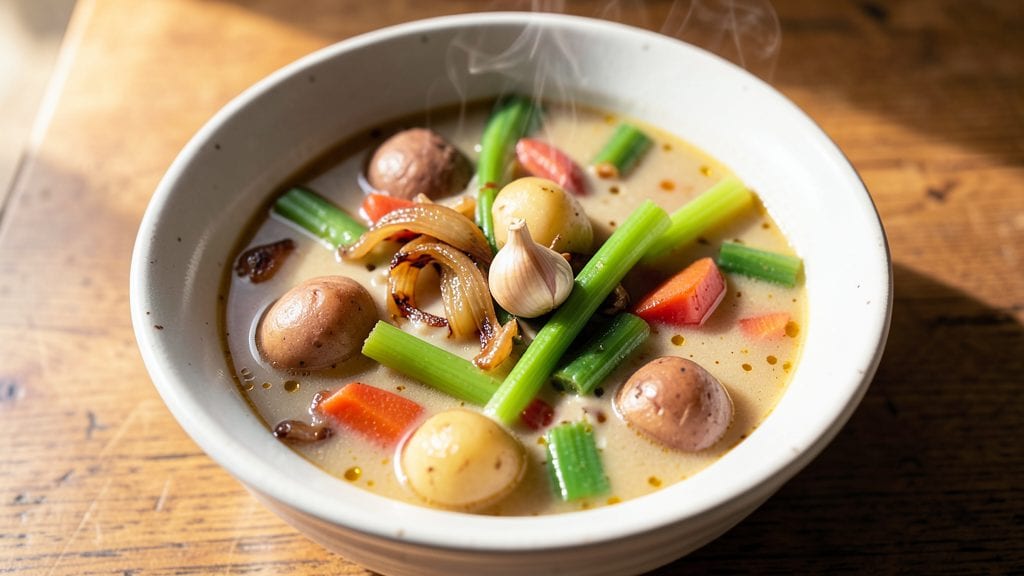
Grandma’s potato soup recipe transforms simple ingredients into a velvety, comforting masterpiece that tastes like home. 💛 The secret lies in slow-simmering potatoes until they melt into the broth, creating a texture that’s impossibly smooth yet hearty.
I’ve perfected this version over years of family gatherings, where it’s always the first dish to disappear.
What makes this recipe special is its balance of rustic tradition and modern convenience. You’ll start with sautéed onions and garlic for a fragrant base, then build layers of flavor with celery, carrots, and herbs before adding potatoes and broth.
The slow simmer—at least 45 minutes—develops deep, caramelized notes that store-bought versions can’t match.
By the time you’re done, you’ll have a soup that’s rich yet light, with tender potatoes that break down just enough to thicken the broth naturally.
The aroma alone will have everyone gathering around the table, and the first spoonful delivers that perfect blend of savory, creamy, and slightly sweet. This is the kind of soup that warms both the body and the soul.
Serve it with a sprinkle of fresh parsley, a dollop of sour cream, and crusty bread for dipping. It’s the ultimate weeknight comfort meal that feels like a hug in a bowl—exactly how grandma made it, but with a few modern shortcuts to save you time. Let’s get cooking!
Ingredients for grandma's potato soup
Simple roots and pantry staples create this soul-warming masterpiece—just like grandma used to make.
| Ingredient | Amount | Notes |
|---|---|---|
| Yellow Onions 🧅 | 1 ½ lb | Diced, for aromatic base |
| Garlic Cloves 🧄 | 6 cloves | Minced, for deep flavor |
| Celery Stalks 🥬 | 4 whole | Diced, for classic trio |
| Carrots 🥕 | 1 ½ lb | Peeled, sliced into rounds |
| Russet Potatoes 🥔 | 3 lb | Peeled, cubed evenly |
| Chicken Broth 💧 | 6 cups | Low-sodium preferred |
| Heavy Cream 🥛 | 1 cup | Full-fat for richness |
| Fresh Parsley 🌿 | ¼ cup | Chopped, for garnish |
| Dried Thyme 🌿 | 1 tsp | Or 1 tbsp fresh thyme |
| Bay Leaves 🌿 | 2 whole | For subtle depth |
| Salt 🧂 | 2 tsp | Kosher or sea salt |
| Black Pepper 🌶️ | ½ tsp | Freshly ground preferred |
| Sour Cream 🥛 | ½ cup | For serving, optional |
| Butter 🧈 | 4 tbsp | Unsalted, for sautéing |
The veggie trio—onions, celery, carrots—is non-negotiable for that classic soup flavor. Fresh is best, but frozen works in a pinch (thaw and drain well). I always grab the organic bunch from Trader Joe's—they're pre-washed and last longer. The potatoes? Russets are key—they break down beautifully during simmering. If you can't find them, Yukon Golds work too, but they'll stay slightly firmer. For the broth, homemade is ideal, but Swanson or Pacific Foods low-sodium are solid shortcuts. The butter should be cold when you start—this helps build flavor as it melts into the veggies.
No thyme? Dried oregano at half the amount works in a bind, but fresh thyme makes all the difference. Running low on bay leaves? One whole leaf equals about 1/4 tsp dried. The heavy cream can be swapped for half-and-half or coconut milk for a lighter version—just know the texture will be slightly thinner. For a vegan option, use cashew cream or coconut cream. Sour cream isn't in the soup itself (that's a modern touch), but it's perfect for topping. If you're short on time, pre-chop all veggies ahead—they keep well in the fridge for 3 days.
This soup tastes even better the next day—4-5 days in the fridge with the cream stirred in just before serving. For freezing, omit the cream and sour cream—add them fresh when reheating. Portion into containers with a layer of broth on top to prevent skin from forming. The aroma alone will fill your kitchen with comfort. Leftovers reheat beautifully—just warm on the stove over medium-low heat, stirring occasionally. Two minutes of simmering is all it takes to bring back that velvety texture.
Why You'll Love This Recipe
- Pantry-Friendly Staples: I swear by this recipe because it uses what’s already in my cupboard—no fancy shopping needed. Onions, carrots, celery, and potatoes? That’s my veggie trifecta for soup season, and the garlic? Oh, it’s the secret weapon that turns simple into ridiculously good.
- Creamy Yet Rustic: The secret’s in the Russets—thick, fluffy chunks that soak up broth while staying tender. No blender required (though I’ll admit, I do give mine a quick whirl for that ultra-smooth finish). The result? A bowl that’s velvety but still hearty, like a hug in soup form.
- Leftover Goldmine: This soup only gets better the next day. I make a double batch on Sundays because it reheats like a dream—no splitting or soggy edges. Honestly, the second-day flavor is where it shines, especially with a sprinkle of fresh parsley and a crack of black pepper.
- Weeknight Workhorse: Between us, this is my go-to when I’m exhausted but still need to feed the family. Toss everything in one pot, simmer, and boom—dinner’s ready. Even my picky teenager asks for seconds, and that’s saying something. (Yes, even on a Tuesday night.)
Step-by-step instructions for grandma's potato soup
Here's how to build that soul-warming, velvety soup your grandma made famous.
🍳 Step 1: Sauté the Classic Trio Until Golden
Melt the 4 tbsp butter in a large Dutch oven over medium heat. Add the 1.5 lb diced yellow onions, 4 diced celery stalks, and 1.5 lb sliced carrots. Cook for 8-10 minutes, stirring occasionally, until the vegetables soften and the onions turn a beautiful golden brown—this builds deep flavor.
Here's the thing—don't rush this step. The longer you cook these vegetables, the more their natural sugars caramelize, creating that rich foundation for your soup. If you notice the onions sticking, just add a splash of water and scrape up those flavorful browned bits from the bottom of the pot.
👨🍳 Step 2: Add Aromatics and Potatoes
Push the vegetables to one side of the pot and add 2 tbsp more butter to the empty space. Toss in the 6 minced garlic cloves and cook for 30 seconds until fragrant—you'll smell that wonderful garlic aroma fill your kitchen. Then add the 3 lb cubed russet potatoes and stir to coat them in the buttery vegetable mixture.
Add the 6 cups chicken broth, 1 tsp dried thyme, 2 whole bay leaves, 2 tsp salt, and 0.5 tsp black pepper. Bring everything to a gentle boil, then reduce heat to low-medium so it's just simmering. Cover and let it cook for 25-30 minutes until the potatoes are fork-tender.
⏰ Step 3: Simmer Until Potatoes Are Perfectly Tender
After the initial 25 minutes, check the potatoes by piercing the largest piece with a fork—it should slide in easily with just a little resistance. If they're not quite there, give it another 5 minutes of simmering. This is where patience pays off—you want those potatoes to fall apart completely when you spoon them.
I know it seems like too much time, but trust me, the longer you simmer, the more the flavors meld together. The soup should have a thick, velvety consistency by the end. If it's too thick for your liking, you can always add a little water later to adjust the texture.
🥘 Step 4: Finish with Cream and Garnish
Remove the 2 bay leaves from the soup. Stir in the 1 cup heavy cream and let it warm through for 2-3 minutes—just until it's heated through but not boiling. The cream will make the soup luxuriously smooth and rich. Taste and adjust seasoning if needed, adding more salt or pepper as necessary.
Ladle the soup into bowls and top each serving with 1 tablespoon chopped fresh parsley and a dollop of 0.5 cup sour cream. The sour cream adds a nice contrast to the richness of the soup, and the parsley gives it a fresh pop of color. Serve immediately while hot—this soup is best enjoyed fresh from the pot!
Pro Tips For Making Grandma'S Potato Soup
- Sweat the Veggies First: Don’t rush the onion, celery, and carrot cook—take 8-10 minutes on medium heat until the onions turn translucent and the celery softens. I learned this the hard way when my soup tasted raw and bitter; patience here makes the flavor base rich and sweet.
- Cut Potatoes Uniformly: Dice the Russets into ½-inch cubes so they cook evenly. Big chunks stay tough, small ones turn to mush—aim for consistency. (Yes, even if you’re impatient like me, resist the urge to eyeball it.)
- Salt the Potatoes Before Boiling: Toss the diced potatoes in a pinch of salt before adding them to the broth. It seasons the starches inside, giving the soup deeper flavor. My grandmother swore by this, and she was right: it’s that small detail that makes homemade taste superior.
- Blend in Stages: Don’t puree everything at once—blend half the soup first, then mix it back in. This keeps the texture velvety without turning it gluey. (Your future self will thank you when you’re not scraping the blender for 10 minutes.)
Essential equipment for grandma's potato soup
Dutch Oven Essentials
Your Dutch oven is the star of this recipe—it’s the only pot that can handle the 45-minute simmer while keeping flavors concentrated. I swear by a 5-quart Lodge cast iron Dutch oven because it distributes heat evenly and retains it beautifully.
If you don’t have one, a heavy-bottomed stainless steel pot (like All-Clad) works too, but it won’t hold heat as well. Just make sure it’s large enough to accommodate all your ingredients without overcrowding. 🔥
Immersion Blender
For that ultra-smooth texture without lumps, an immersion blender is a game-changer. I use the Cuisinart SmartStick because it’s powerful enough to puree potatoes directly in the pot. If you prefer a chunkier texture, skip blending entirely—just mash the potatoes with a potato masher after simmering.
For a completely smooth soup, blend about half the soup first, then stir it back in to maintain some rustic character.
Measuring Tools
Precision matters in soup, especially when balancing salt, cream, and broth. Invest in a stainless steel measuring cup set (like OXO Good Grips) for accurate liquid measurements, and a digital kitchen scale (like Escali Primo) for weighing potatoes and onions—it’s the only way to ensure consistency.
A fine-mesh strainer is also handy for draining any excess liquid if you need to thicken the soup later. Trust me, these small tools make a big difference in the final result. ⚡
Wooden Spoon
A long-handled wooden spoon is non-negotiable for stirring this soup—it won’t scratch your Dutch oven and won’t conduct heat like metal. I prefer a maple or hickory spoon because they’re sturdy and gentle on the pot.
Avoid plastic spoons; they melt when exposed to high heat and can release harmful chemicals. While stirring, use the spoon to scrape up any browned bits from the bottom of the pot—those are packed with flavor! 💪
Ladle for Serving
Serve this soup with a stainless steel ladle (like the Ozeri Touch) to portion it evenly. The deep wells help scoop up the creamy broth and potatoes without spilling.
For a restaurant-style presentation, I like to add a small garnish spoon to sprinkle parsley or drizzle extra cream on top. A ladle with a comfort grip is especially helpful if you’re serving a crowd—your hands will thank you after ladling six bowls! 🥄
Optional: Slow Cooker
For a hands-off approach, a 6-quart slow cooker (like Crock-Pot) lets you walk away while the soup simmers. Set it to low for 6-8 hours or high for 3-4 hours, then stir in the cream at the end.
The texture will be slightly thinner, but it’s perfect for meal prep. Just remember: never skip the initial sauté**—those caramelized veggies are the soul of the soup! 💫
Nutrition facts
Frequently asked questions
Can I make this potato soup without heavy cream?
For a lighter version, substitute 1 cup half-and-half or coconut milk—just know the texture will be slightly thinner. If you want extra richness without dairy, try 1/4 cup cashew cream blended with 3/4 cup broth—it adds a velvety quality while keeping it vegan-friendly.
How do I fix soup that's too thick or too thin?
For thick soup, stir in 1/4 cup warm broth at a time until it reaches your desired consistency. For thin soup, simmer uncovered for 5-10 minutes to evaporate excess liquid, or mash some potatoes against the pot sides to thicken naturally. Pro tip: If you overcorrect, a splash of cream can help balance the texture.
What's the secret to making this soup taste like grandma's?
The magic is in the slow simmer and browned vegetables—caramelized onions and garlic create deep, complex flavors. Don’t skip the 45-minute simmer time—it develops the soup’s velvety texture and rich taste. Also, always taste and adjust salt as you go; homemade broth often needs more seasoning than store-bought.
Can I prep this soup ahead of time?
Yes! Prep all veggies and store them in the fridge for 3 days before cooking. For leftovers, refrigerate for up to 5 days (without cream) or freeze for 3 months. Reheat gently on the stove, stirring in cream fresh when serving. The flavor actually improves after the first night!
What's the best way to serve this soup?
Pair it with crusty sourdough bread or grilled cheese sandwiches for dipping. For extra flair, top with crispy fried onions or a swirl of chive oil. A sprinkle of black pepper and fresh parsley** right before serving adds a bright finish. This soup is perfect for chilly evenings or as a cozy meal-prep staple!