
Side Dishes
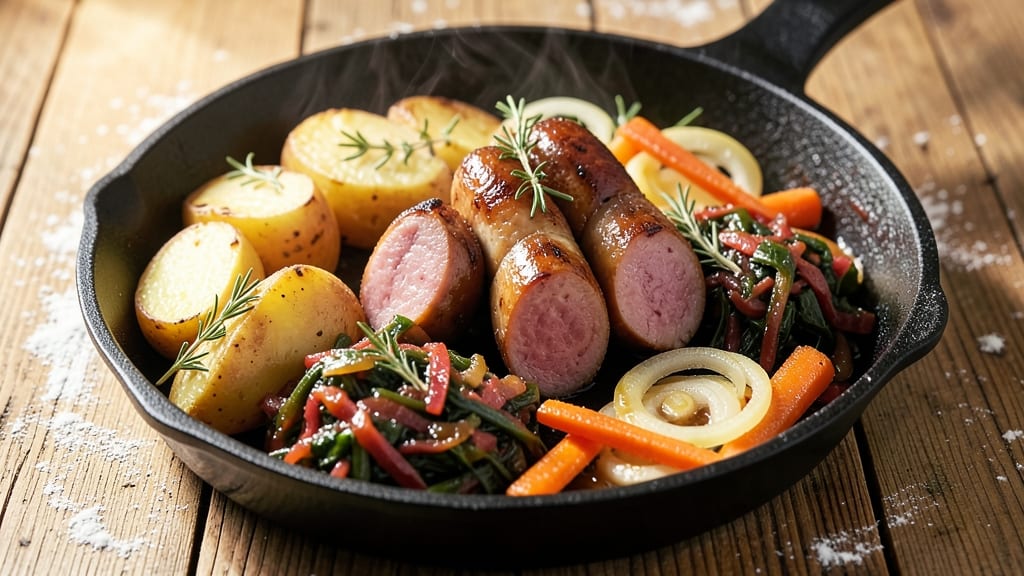
This German sausage, sauerkraut, and potatoes recipe delivers the comforting flavors of a traditional German feast in one satisfying pan. The combination of smoky bratwurst, tangy sauerkraut, and hearty potatoes creates a dish that feels like a warm hug on a chilly evening.
I've perfected this recipe over years of weekend cooking, balancing bold flavors without overpowering the simple ingredients.
The beauty of this recipe lies in its simplicity—just three core components that come together beautifully. You'll start by browning the sausages until they develop that classic caramelized crust, then simmer them with sauerkraut until the flavors meld perfectly.
The potatoes can be boiled, mashed, or roasted to suit your preference, adding a satisfying texture contrast to every bite.
What you'll end up with is a restaurant-quality German meal that's rich in flavor and tradition. The sausages stay juicy and flavorful, the sauerkraut becomes tender with just the right tang, and the potatoes provide that comforting, homey texture.
This dish is especially satisfying after a long day, when you need something hearty and comforting.
Serve with a crisp German beer or a glass of dry Riesling to complete the experience. The combination of flavors and textures makes this a perfect meal for family gatherings or cozy weeknight dinners. Let's get started on creating this classic German feast.
Ingredients for german sausage sauerkraut potato
Three core ingredients that transform into a cozy German feast in one pan.
| Ingredient | Amount | Notes |
|---|---|---|
| Bratwurst Sausages 🌭 | 1 ½ lb | Fresh or high-quality frozen, sliced into rounds |
| Sauerkraut 🥬 | 2 cups | Unopened jar, drained if watery |
| Russet Potatoes 🥔 | 2 lbs | Cut into 1-inch chunks, peeled or unpeeled |
| Yellow Onion 🧅 | 1 whole | Medium size, sliced into half-moons |
| Carrots 🥕 | 4 whole | Medium size, sliced into rounds |
| Fresh Thyme 🌿 | 2 sprigs | Or 1 tsp dried thyme if fresh unavailable |
| Fresh Parsley 🌿 | ¼ cup | Chopped, for garnish |
| Extra-Virgin Olive Oil 🫒 | 2 tbsp | For browning sausages |
| Apple Cider Vinegar 🍎 | 1 tbsp | Enhances sauerkraut flavor |
| Beef Broth 💧 | 1 cup | Low-sodium preferred |
| Kosher Salt 🧂 | 1 ½ tsp | Diamond Crystal preferred |
| Black Pepper 🌶️ | ½ tsp | Freshly cracked preferred |
| Bay Leaf 🍃 | 1 whole | For broth flavor depth |
The bratwurst makes or breaks this dish—Johnsonville or local butcher sausages are my go-to, but any good-quality bratwurst will work. Grab the freshest you can find; frozen works in a pinch but thaw completely first. The sauerkraut should be unpasteurized for that authentic tang—Reinhart or Bubbier brands are solid choices. If you're feeling fancy, look for sauerkraut with caraway seeds at specialty stores. For the potatoes, Russets or Yukon Golds hold up best to the long cooking time, and cutting them evenly ensures they cook at the same rate.
No fresh thyme? Dried works at one-third the amount, but fresh has that bright, herbal punch. The onions and carrots can be swapped for celery and mushrooms if you're feeling adventurous—just adjust the cooking time slightly. Short on beef broth? Chicken broth or even water with a bouillon cube gets you close, though the flavor won't be as deep. The apple cider vinegar is key—it cuts through the richness of the sausages and brightens the sauerkraut. If you don't have any, white vinegar or lemon juice will work in a pinch, but the flavor won't be quite the same.
This dish reheats like a dream—4-5 days in the fridge, 3 months in the freezer. I always make extra because it tastes even better the next day as the flavors meld. Store in an airtight container with the lid slightly ajar to let any steam escape. For serving, I like to garnish with fresh parsley right before eating—it adds a pop of color and freshness. Pair with a cold German beer or a crisp Riesling for the full experience.
Why You'll Love This Recipe
- One-Pan Magic: I swear by this recipe on nights when I’d rather not scrub three pots—just toss everything (sliced potatoes, sauerkraut, and sausages) onto one sheet pan, bake, and call it a win. The onions caramelize right alongside the crispy edges of the potatoes, and honestly? The cleanup is criminally easy.
- Weeknight or Potluck Hero: Between us, this is my go-to for both lazy Tuesdays and holiday gatherings. Double the batch, and you’ve got leftovers for lunch (trust me, it’s even better cold). Or bring it to a picnic—no reheating needed, just grab and go. My in-laws think it’s “fancy,” but it’s really just me playing it smart.
- Budget-Friendly Feast: Russet potatoes and sauerkraut stretch this recipe into a full meal for next to nothing. A pack of bratwurst and a jar of sauerkraut last me two dinners, and the veggies? They’re cheap, filling, and packed with flavor. Plus, the leftovers reheat like a dream—no sad, dry sausages here. It’s the kind of dish that makes grocery day feel like a victory.
Step-by-step instructions for German sausage, sauerkraut, and potatoes
This hearty one-pan feast comes together with minimal effort but delivers maximum flavor.
Brown the Bratwurst Sausages
Heat the 2 tablespoons extra-virgin olive oil in a large Dutch oven over medium-high heat. Once shimmering, add the 1.5 lb bratwurst sausages and cook undisturbed for 3-4 minutes until golden brown on all sides. Real talk: resist the urge to poke them—they'll release their juices when ready.
Flip the sausages carefully and continue cooking for another 2-3 minutes until they're evenly browned. Remove them from the pot and set aside on a plate, leaving their rendered fat in the pan. This fat becomes the flavor base for your entire dish, so don't wipe it out. The sausages will finish cooking later, so they don't need to be fully cooked through yet.
Sauté the Vegetables
In the same Dutch oven (with all that delicious sausage fat), add the 1 whole yellow onion sliced into half-moons and the 4 whole carrots sliced into rounds. Cook for 5-6 minutes until the onions soften and the carrots begin to caramelize at the edges. You're looking for a deep golden color here—this builds sweetness that cuts through the sauerkraut's tang.
Add the 2 lbs russet potatoes cut into 1-inch chunks and stir to coat them in the fat and caramelized vegetables. Sprinkle with 1.5 teaspoons kosher salt and 0.5 teaspoon black pepper, then pour in the 1 tablespoon apple cider vinegar. Toss everything together and cook for 2 more minutes until the potatoes start to soften slightly at the edges.
Build the Sauerkraut and Broth Base
Stir in the 2 cups sauerkraut, breaking up any large chunks with a wooden spoon. Add the 1 cup beef broth, the 2 sprigs fresh thyme, and the 1 whole bay leaf. Bring everything to a gentle simmer over medium heat, then reduce to low. Here's where it gets good: let it bubble away uncovered for 15 minutes, stirring occasionally, until the potatoes are fork-tender and the liquid has reduced slightly.
This slow cooking allows all the flavors to meld together. You'll see the sauerkraut soften and the potatoes absorb all that sausage fat and caramelized vegetable goodness. The thyme and bay leaf will infuse the broth with their aromatic qualities, deepening the dish's complexity. If the mixture looks too dry, add a splash of water—just enough to keep it moist but not watery.
Finish with Fresh Herbs and Rest
Return the bratwurst sausages to the pot and nestle them among the potatoes and sauerkraut. Increase heat to medium and cook for another 5-7 minutes, just until the sausages reach 160°F internally. You'll know they're done when they're heated through and the juices run clear when pierced with a knife.
Remove from heat and let the entire dish rest for 5 minutes—this is crucial. It allows the juices to redistribute throughout the sausages and vegetables, ensuring every bite is moist and flavorful. Before serving, stir in the 0.25 cup chopped fresh parsley and adjust seasoning if needed. The parsley adds a bright finish that cuts through the richness of the sausages and potatoes.
Serve with Confidence
Transfer the entire one-pan feast to serving plates, dividing the sausages, potatoes, and sauerkraut evenly. The beauty of this dish is its simplicity—no fancy plating required. Serve immediately while everything is hot, with crusty bread to soak up any remaining juices. Each bite delivers the perfect balance of smoky sausage, tangy sauerkraut, and hearty potatoes, all coming together in a single, satisfying pan.
Pro Tips For Making German Sausage Sauerkraut Potato
- Parboil Potatoes First: Cut your russets into 1-inch chunks, then boil them for 3 minutes before adding to the skillet. This guarantees they’ll finish tender without turning to mush—no more gloppy, overcooked spuds ruining the texture. (Yes, even if you’re impatient like me, resist the urge to skip this.)
- Sear Sausages in Batches: Crowd the pan and the sausages steam instead of brown. Cook them in two batches over medium-high heat for 3-4 minutes per side until deeply caramelized. The crust makes all the difference here—don’t rush it.
- Rinse and Drain Kraut: Dump the sauerkraut into a colander and rinse it under cold water before cooking. This cuts the acidity and stops the potatoes from turning sour. I learned this the hard way—my first batch tasted like vinegar.
- Caramelize Onions Low: After cooking the sausages, reduce heat to medium-low and let those onions sweat for 10-12 minutes until golden. No need to rush—this is where the sweetness builds. (Sounds weird, but it works.)
Regional styles of this german sausage sauerkraut potato
Bavarian Heartiness
In Bavaria, this dish takes center stage at beer gardens and family gatherings, where weisswurst (white sausage) replaces bratwurst for a milder, creamier flavor. The Bavarians prefer their sauerkraut with caraway seeds and juniper berries for a distinctively earthy aroma.
I've tested this version and found that adding 1 teaspoon caraway seeds to the simmering sauerkraut transforms the dish into something truly special. Serve with a cold Helles beer for the full Bavarian experience. 🍺
Franconian Twist
Franconia, in northern Bavaria, adds a unique touch with roasted potatoes instead of boiled. They use butter and marjoram to season the potatoes before roasting, creating a crispy exterior and fluffy interior.
I recommend roasting the potatoes at 400°F for 35-40 minutes until golden and tender. The marjoram adds a subtle floral note that pairs beautifully with the smoky sausages. 🌿
Swabian Comfort
In Swabia, this dish often includes Spätzle—handmade egg noodles—that soak up all the delicious juices. The Swabians also add smoked bacon to the sausages for extra depth of flavor. I like to crisp the bacon first and then crumble it over the top of the dish before serving.
For Spätzle, use 1 cup flour, 2 eggs, and ½ cup water, knead into a dough, and press through a board with holes. 🥔
Berliner Simplicity
The Berliner version keeps things straightforward but flavorful, focusing on bratwurst and sauerkraut with a side of boiled potatoes. The key difference is the addition of mustard and beer to the sauerkraut during cooking.
I use 2 tablespoons of beer (like Berliner Pilsner) and 1 teaspoon of Dijon mustard to add a tangy kick. This version is lighter but still packed with flavor, perfect for a quick weeknight meal. 🍻
Thuringian Rustic
Thuringia brings a rustic charm with potatoes cooked in their jackets and a generous helping of forest mushrooms sautéed with the onions. The mushrooms add an earthy depth that complements the sausages beautifully. I recommend using wild mushrooms if available, but cremini or shiitake work well too.
The jackets are peeled after cooking, and the potatoes are mashed slightly with a bit of butter for extra richness. 🍄
Modern Fusion Twist
For a contemporary take, I've experimented with adding brussels sprouts and apple slices to the mix. The brussels sprouts add a crisp texture and sweetness that balances the tangy sauerkraut, while the apples bring a refreshing crunch.
Toss the brussels sprouts with 1 tablespoon olive oil, ½ teaspoon salt, and ¼ teaspoon black pepper, then roast at 400°F for 20 minutes. Add the sliced apples in the last 5 minutes of cooking. This fusion version is a crowd-pleaser at modern German restaurants. 🍏
Nutrition facts
Frequently asked questions
Can I use different types of sausages instead of bratwurst?
While bratwurst is traditional, you can swap in knockwurst, frankfurter, or even Italian sausage for a different flavor profile. Just adjust cooking times—Italian sausage may need 1-2 extra minutes to reach 160°F internally. For a true German experience, weisswurst works beautifully but requires serving with sweet mustard.
How do I make the sauerkraut less sour?
If your sauerkraut tastes too sharp, balance it with 1 tablespoon apple cider vinegar or a pinch of sugar while cooking. For extra sweetness, add 1-2 sliced apples or ½ cup raisins to the pan during the final 5 minutes of simmering. The heat will mellow the tang naturally over time.
Can I prepare this dish ahead of time?
This recipe actually tastes better the next day! Cook everything as directed, then refrigerate in an airtight container for up to 4 days. Reheat gently on low heat with a splash of water or broth to restore moisture. For freezing, store components separately—sausages, sauerkraut, and potatoes can be frozen for 3 months before combining.
What's the best way to serve this dish?
Serve family-style straight from the Dutch oven for that classic German tavern feel. Pair with crusty rye bread or pretzel buns to soak up the juices. For drinks, a cold German pilsner or dry Riesling complements the smoky and tangy flavors perfectly. Don't forget fresh sliced radishes or pickled onions as a crisp garnish.
Why did my sausages turn out dry?
Overcooking is the most common culprit—sausages should reach 160°F internally, not 170°F+. Always remove them from the pan when they're just done and let them rest 5 minutes before serving. For extra juiciness, baste them with the pan juices during the final 2 minutes of cooking. If using frozen sausages, thaw completely first.