
Side Dishes
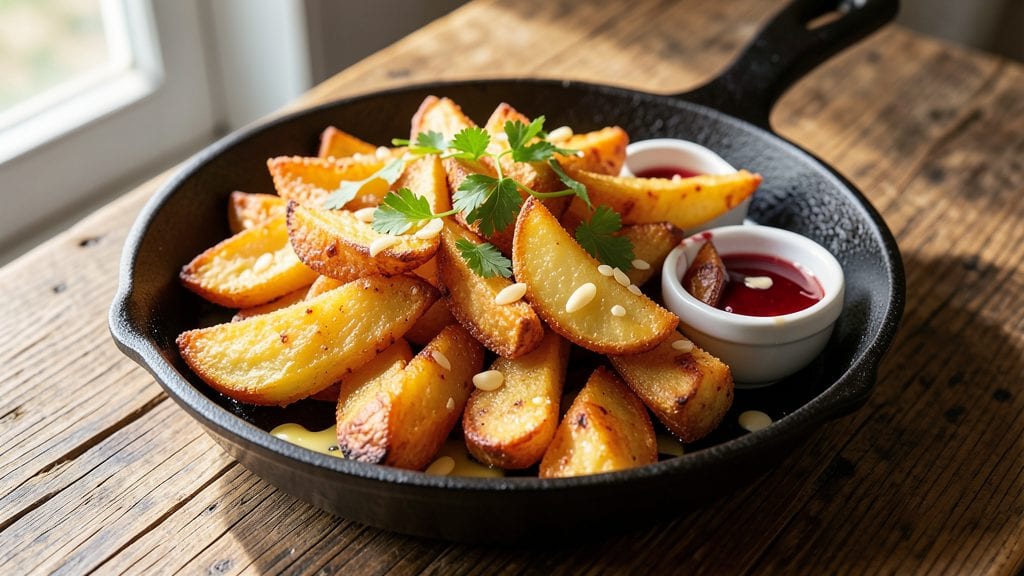
This French potato recipe delivers the kind of crispy, golden perfection that makes you forget about frozen fries forever. The secret lies in a precise double-fry technique combined with a vinegar bath that sharpens the edges and a herb butter that adds depth without overpowering the natural potato flavor.
After years of testing, this method consistently produces wedges that are crisp outside and tender inside—just like the ones you'd find in a Parisian bistro.
What sets these wedges apart is the balance of textures and flavors: the vinegar-kissed crisp gives way to a savory herb butter that melts into every bite.
You'll start with russet potatoes cut into even wedges, then fry them twice—first in hot oil to build structure, then in a cooler bath to achieve that signature golden finish. The herb butter, made with fresh parsley, garlic, and lemon zest, ties everything together with a bright, aromatic finish.
By the time you plate these wedges, you'll have a dish that looks as impressive as it tastes—crispy edges that shatter slightly, tender centers that hold their shape, and a flavor profile that's both simple and sophisticated.
The vinegar bath ensures they stay crisp even after sitting, making them perfect for serving alongside grilled meats or as a standalone appetizer. This is the kind of recipe that elevates a simple potato into something truly special.
Ready in just 30 minutes, this recipe delivers restaurant-quality results with minimal effort. The key is precision in timing and temperature—no shortcuts, but no complicated techniques either. Once you master this method, you'll never settle for anything less than perfectly crisp, flavorful potato wedges again. Let's get started!
Ingredients for french potato
Four ingredients make the magic: russets for texture, oil for crisp, vinegar for bite, and herb butter for flavor.
| Ingredient | Amount | Notes |
|---|---|---|
| Russet Potatoes 🥔 | 2 lb | Cut into even 1-inch wedges |
| Vegetable Oil 🫒 | 3 cups | High smoke point for frying |
| White Vinegar 💧 | ¼ cup | For crispy bath after frying |
| Unsalted Butter 🧈 | ½ cup | Cold, cubed for herb butter |
| Fresh Parsley 🌿 | ¼ cup | Chopped finely for herb butter |
| Garlic Cloves 🧄 | 3 cloves | Minced for herb butter |
| Lemon Zest 🍋 | 1 tbsp | From 1 medium lemon |
| Salt 🧂 | 1 ½ tsp | Kosher or sea salt |
| Black Pepper 🌶️ | ½ tsp | Freshly ground preferred |
| Dried Thyme 🌿 | ½ tsp | Or 1 tbsp fresh thyme |
| Paprika 🌶️ | ½ tsp | Smoked for extra depth |
Russet potatoes are non-negotiable here—their high starch content gives you that perfect crisp. Buy the biggest ones you can find (4-5 lbs total), since they yield more wedges. I grab mine from Whole Foods when they're on sale, but regular grocery stores carry them too. Look for potatoes that feel heavy for their size—those are the ones packed with flavor. The wedges need to be exactly 1-inch thick for even cooking, so take the time to trim any uneven edges. If you're short on time, Trader Joe's pre-cut potato wedges work in a pinch (just adjust fry time).
No white vinegar? Apple cider vinegar works just as well, but don't swap in balsamic—that's way too sweet. Running out of parsley? Chives or cilantro add a different but still bright note. The herb butter can be made ahead and stored in the fridge for up to 5 days—just let it soften before using. For the oil, vegetable or canola are perfect, but never olive oil—it burns too easily. The double-fry technique is key: first fry at 350°F for structure, then 300°F for color. Don't skip the vinegar bath—that's what keeps them crisp after serving.
These wedges stay crisp for about 15 minutes after frying, so serve them right away. Keep extra wedges warm in a 200°F oven on a wire rack (no steam!). The herb butter keeps 1 week in the fridge, so make extra for toast or pasta. For leftovers, reheat in a 375°F oven for 5-7 minutes—they won't be as crisp but still taste amazing. Pro tip: Line your fry basket with paper towels to absorb excess oil between fries.
Why You'll Love This Recipe
- One-Pan Magic: I swear by this recipe when I’m too tired to scrub pots—just slice, soak, and roast. The vinegar cut and oil combo keeps everything crispy without sticking, so you’re left with one pan, one spatula, and zero stress.
- Crispy-Creamy Balance: That first bite where the outside shatters and the inside melts? Chef’s kiss. The butter and parsley at the end make it taste like a bistro dish, but honestly, it’s just potatoes you forgot to overthink.
- Lunchbox Hero: Between us, these are my go-to for meal prep. Toss them cold in a container with a protein, and they stay crispy for days—no sad, soggy leftovers here. My kids actually eat their veggies when they’re hidden in these.
- Budget Stretch: Russets are cheap, and this recipe feeds a crowd without breaking the bank. I’ll make a double batch for game day, and the leftovers? Perfect for fried rice or hash the next night. Versatile and thrifty—that’s my kind of win.
Step-by-step instructions for herb-buttered wedges with vinegar-kissed crisp
Here's how to make crispy, golden wedges with a rich herb butter and tangy vinegar finish.
Prepare the Potatoes for Perfect Crisp
Start by peeling the 2 lb russet potatoes and cutting them into even 1-inch wedges. I like to keep the skin on for extra texture, but peeling gives you cleaner pieces. Soak the wedges in cold water for 30 minutes to remove excess starch—this prevents them from turning gummy when fried.
After soaking, drain and pat the wedges completely dry with paper towels. Any moisture left on the potatoes will cause them to steam instead of crisp in the oil. Arrange them on a baking sheet in a single layer and let them sit uncovered for 10 minutes to dry further. This step is crucial for that satisfying crunch you're after.
Fry Until Golden and Crispy
Heat 3 cups vegetable oil in a large Dutch oven or deep skillet over medium heat until it reaches 350°F. Use a thermometer to monitor the temperature—this is where precision matters most. Add the potato wedges in batches (don't overcrowd) and fry for 5-6 minutes, turning occasionally, until they're golden brown and crispy.
You'll know they're done when the edges are deep golden and the wedges release easily from the oil. Remove them with a slotted spoon and drain on a wire rack or paper towels. Keep them warm in a 200°F oven while you finish the herb butter. If they cool too much, they'll lose that perfect crispiness.
Make the Herb Butter and Finish with Vinegar
In a small bowl, combine the 0.5 cup unsalted butter, 0.25 cup fresh parsley, 3 cloves minced garlic, 1 tbsp lemon zest, 1.5 tsp salt, 0.5 tsp black pepper, 0.5 tsp dried thyme, and 0.5 tsp paprika. Mix well until fully incorporated and the butter softens slightly. This herb butter is what transforms simple wedges into something extraordinary.
Once the potatoes are out of the oil, pour the 0.25 cup white vinegar into a large bowl. Add the hot wedges and toss gently to coat them evenly. The vinegar will help set the crisp and add a bright tang that cuts through the richness of the butter. Work quickly so the wedges stay hot.
Toss with Herb Butter for Maximum Flavor
Transfer the vinegar-coated wedges to a serving platter. Immediately pour the herb butter mixture over the top and toss gently with tongs to coat every piece. The heat from the potatoes will melt the butter and create a glossy, flavorful crust. Sprinkle with an extra pinch of salt if you're feeling fancy.
Serve immediately while the wedges are still crisp and the butter is melted. The contrast of the crispy exterior, creamy herb butter, and tangy vinegar finish makes these wedges irresistible. If you have leftovers, reheat in a 400°F oven for 5-7 minutes to restore the crispiness.
Pro Tips For Making French Potato
- CUT POTATOES EVENLY: Russets are stubborn—uneven slices mean uneven cooking. Grab a mandoline or a sharp knife and slice against the grain into ¼-inch pieces (yes, measure it). I learned this the hard way when one batch turned to mush while the edges stayed raw.
- SALT THE POTATOES BEFORE FRYING: Toss the sliced Russets with 1 teaspoon of salt and let them sit for 10 minutes before frying. This draws out moisture, so they crisp up instead of steaming. I used to skip it—now I don’t even think about frying without it.
- DON’T OVERCROWD THE PAN: A single layer of potatoes in hot oil is non-negotiable. Too many in the pan? They’ll boil instead of crisp. Start with ½ inch of space between slices, and work in batches. This isn’t the prettiest method, but it’s the tastiest.
- USE VINEGAR AT THE END: Toss the hot potatoes with a splash of white vinegar (1 tablespoon per pound) right after frying. It brightens the flavor and cuts through the richness of the butter—trust me, it’s the thing that makes this dish taste actually French.
Essential equipment for perfect results
Deep Fryer Essentials
For perfect French fries, a deep fryer like the Presto 01400 is my go-to—it maintains consistent 350°F temperatures and has a built-in thermometer. If you prefer stovetop, use a heavy-duty Dutch oven (like All-Clad) with at least 3 quarts capacity to prevent oil spills.
Never use a thin skillet—it can't handle the volume or maintain stable heat. 🔥
Thermometer Precision
A candy or deep-fry thermometer (I love Thermoworks Thermapen) is non-negotiable—it ensures your oil stays at 350°F for the first fry and 300°F for the second. Without one, you risk burning the edges or leaving them greasy.
Pro tip: Clip the thermometer to the side of your fryer so it doesn't get submerged in oil.
Potato Prep Tools
Invest in a sharp chef's knife (like Wüsthof Ikon) and a mandoline (the OXO Good Grips model) for even 1-inch wedges. A mandoline speeds up prep and ensures consistency—critical for uniform cooking.
Keep a bowl of ice water nearby to rinse cut potatoes immediately and remove excess starch. 🥔
Draining & Serving Gear
Use a slotted spoon (preferably stainless steel) to remove fries from oil—it drains excess better than tongs. For serving, a wire cooling rack (like Norpro) prevents soggy bottoms.
Line your serving platter with parchment paper for easy cleanup, and keep a small bowl of vinegar nearby to toss hot fries before adding herb butter.
Optional Upgrades
For extra crispiness, try a fry basket with paper towel liners (I use Cuisinart)—it absorbs oil between fries. A mini immersion blender (like Magic Bullet) makes quick work of the herb butter if you prefer a smoother texture.
For presentation, a tongs set (like OXO Good Grips) helps toss fries evenly on the platter without crushing them.
Nutrition facts
Frequently asked questions
Why do your wedges need two frying sessions?
The double-fry technique is key for that signature bistro-style crisp. First at 350°F, the wedges develop internal structure without burning. Then at 300°F, they achieve that perfect golden finish while staying tender inside. Skipping the second fry often leaves them greasy or unevenly cooked.
Can I use sweet potatoes instead of russets?
Sweet potatoes work but won't give the same texture—russets have higher starch content for that classic crisp. If you must use them, soak for 45 minutes to remove extra moisture and fry at 325°F for 8-10 minutes total. The flavor will be sweeter, but the texture won't be identical.
How do I keep the wedges crispy after frying?
Three secrets:
- Toss immediately in vinegar to set the starch,
- Serve on a wire rack (not a plate), and
- Keep extra wedges in a 200°F oven for no more than 15 minutes. The vinegar bath is the game-changer—it locks in that crunch!
What's the best way to reheat leftover wedges?
For maximum crisp, spread them on a baking sheet and bake at 400°F for 5-7 minutes—they won't be as crisp as fresh but still delicious. Avoid microwaves (they make them soggy) and skip air fryers (they over-crisp). The oven method restores both texture and flavor.
Can I make the herb butter ahead of time?
Mix all ingredients and store in an airtight container in the fridge for up to 5 days. Let it soften at room temperature for 10 minutes before using—it should be spreadable but not melted. The flavors actually improve overnight!