
Side Dishes
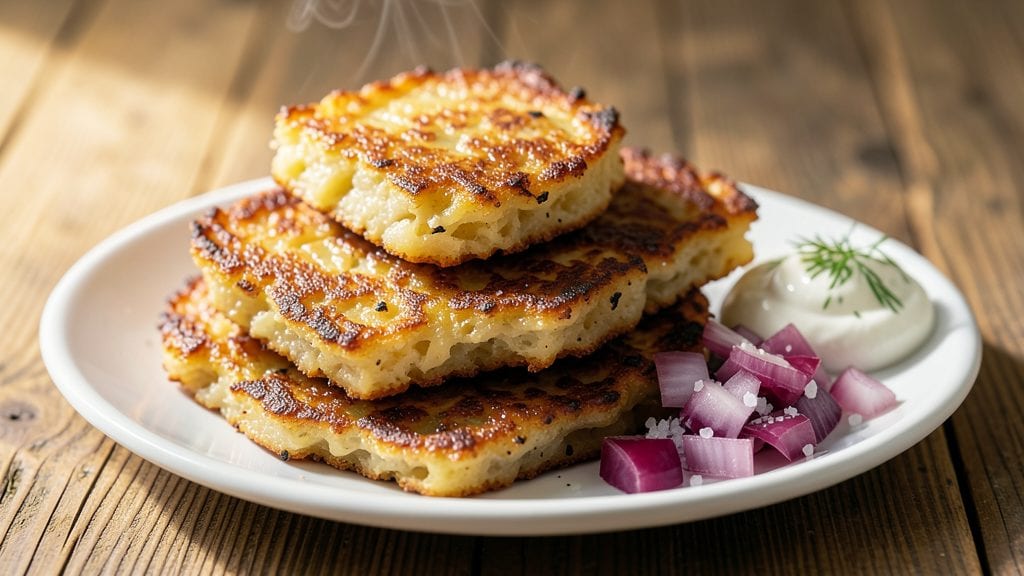
This authentic potato latke recipe delivers the crispy, golden edges and fluffy centers that define Hanukkah tradition—just like my bubbe used to make. The secret lies in grating potatoes precisely and balancing cornmeal with matzo meal for that signature texture, while a touch of onion adds depth without overpowering.
Every bite should crackle with crunch while revealing tender, warm potato inside—this is how latkes are meant to be.
What sets these apart from generic potato pancakes is the cultural precision: using matzo meal instead of flour, frying in schmaltz (or neutral oil) for authentic flavor, and serving with classic toppings like sweetened applesauce or tangy sour cream.
The recipe also includes a foolproof method for achieving crispiness without burning, ensuring your latkes turn out perfect even on your first try.
By the time you're done, you'll have a stack of golden latkes that shatter at the edges yet stay fluffy inside—a testament to Jewish culinary tradition.
The aroma of frying potatoes fills the kitchen, transporting you straight to a Hanukkah table, while the crispy exterior gives way to warm, comforting potato with every bite. This is comfort food at its finest.
Serve immediately with your favorite toppings—whether it's traditional applesauce, creamy sour cream, or vegan alternatives like cashew cream. The key is keeping them piping hot so they stay crispy until the last bite. Let's get started on making these authentic, crispy latkes that taste like home.
Ingredients for authentic potato latke
Nine simple ingredients transform into crispy, golden latkes with fluffy centers—just like bubbe used to make.
| Ingredient | Amount | Notes |
|---|---|---|
| Russet Potatoes 🥔 | 2 lbs | Peeled, freshly grated (not pre-shredded) |
| Yellow Onion 🧅 | 1 medium | Grated, seeds removed |
| Cornmeal 🌾 | ½ cup | Fine or medium grind |
| Matzo Meal 🍞 | ¼ cup | Finely ground matzo |
| Large Eggs 🥚 | 2 whole | Room temperature |
| Salt 🧂 | 1 tsp | Kosher or sea salt |
| Ground Black Pepper 🌶️ | ¼ tsp | Freshly ground preferred |
| Schmaltz or Vegetable Oil 🫒 | 2 cups | Schmaltz for authentic flavor |
| Fresh Parsley 🌿 | 2 tbsp | Chopped, for garnish |
The potatoes are everything here—Russet is non-negotiable for that fluffy interior. Grab a box of Idaho potatoes if you're unsure, and use a box grater with medium holes. The onion adds sweetness, but remove the seeds so it doesn't get bitter. For matzo meal, Manischewitz is the classic brand, but any fine matzo crumbs work. I always double-check the schmaltz—if it's cloudy, it's gone bad. Trader Joe's sells it in the kosher section if you can't find it elsewhere.
No schmaltz? Vegetable oil or canola oil works perfectly fine—just don't use olive oil, it burns too easily. The matzo meal can be swapped for all-purpose flour at half the amount, but you'll lose that authentic texture. Freshly grated potatoes make all the difference—pre-shredded turns mushy. If you're short on parsley, dried dill at one-third the amount gives a similar vibe. The cornmeal is key for crispiness, so don't skip it—fine grind works best.
Latkes are best served immediately, but you can hold them in a 200°F oven for up to 30 minutes if needed. Store leftovers in the fridge for 3-4 days, reheating in a skillet for that crispy texture. Freeze extras on a tray first, then transfer to a bag for up to 2 months. The secret to reheating? High heat in a dry skillet—no oil needed.
Why You'll Love This Recipe
- No Grating Required: I swear by my food processor for this one—chop the potatoes into chunks, pulse, and boom, ready to mix. No wrist strain, no tiny bits flying everywhere. (My kids love helping, and they’re terrible at grating.)
- Crispy-Creamy Magic: That golden crust from the cornmeal and matzo meal? Chef’s kiss. The onions caramelize just enough to add sweetness, while the egg binds it all into a perfect crunch-meets-tender bite. Honestly, the first time I made these, I ate one straight from the pan.
- Hanukkah Hero: These are the star at my holiday table—no fuss, no stress, just pure crowd-pleaser energy. But here’s the thing: they’re just as good for a lazy Sunday brunch or a late-night snack. (Yes, even on a Tuesday night.)
- Budget-Friendly Staples: Russets and onions are cheap, and a little cornmeal goes a long way. I make a double batch, freeze half, and pull them out whenever I need a quick, satisfying bite. No takeout, no regrets—just warm, crispy latkes for days.
Step-by-step instructions for authentic potato latkes
Here's the method I've perfected for latkes with that perfect crispy exterior and fluffy interior.
Grate the Potatoes and Onion
Peel the 2 lbs russet potatoes and grate them using a box grater or food processor fitted with a grating disc. I like to use a fine grating disc for even texture. Place the grated potatoes in a clean kitchen towel and squeeze out as much moisture as possible—this is crucial for crispy latkes. The drier the potato mixture, the crisper your latkes will be.
Next, grate the 1 medium yellow onion, removing the seeds first. Combine the grated onion with the potatoes in a large mixing bowl. I always use freshly grated potatoes and onion because pre-shredded varieties contain too much moisture and won't yield the same crispy results. Let the mixture sit for 10 minutes while you prepare the rest of the ingredients—this allows any remaining moisture to evaporate.
Mix the Batter
In the same bowl, add the 0.5 cup cornmeal, 0.25 cup matzo meal, 2 whole large eggs (at room temperature), 1 tsp salt, and 0.25 tsp ground black pepper. Using a wooden spoon or rubber spatula, gently fold everything together until just combined. Don't overmix—the batter should have a slightly lumpy texture. The cornmeal and matzo meal work together to create that signature crispy crunch while keeping the interior fluffy.
Here's the thing—don't worry if the mixture looks too wet. As you let it rest, the starches will absorb moisture and the batter will firm up. If it's still too wet after mixing, add 1-2 tablespoons more of the cornmeal or matzo meal mixture until it reaches a consistency where it holds together when pressed gently but doesn't stick to your hands.
Heat the Oil
Fill a deep skillet or Dutch oven about halfway with the 2 cups schmaltz or vegetable oil. Heat over medium heat until the oil reaches 350°F on a deep-fry thermometer. If you don't have a thermometer, test the oil by dropping in a small piece of potato batter—it's ready when it sizzles and rises to the surface immediately. Too-hot oil will burn the outside before the inside cooks, while too-cool oil will make greasy latkes.
I always use schmaltz for authentic flavor, but vegetable oil works perfectly if you're not using traditional ingredients. The key is maintaining a consistent oil temperature throughout cooking. If you notice the temperature dropping, let the oil return to 350°F before adding more batter. This ensures even cooking and that perfect crispy texture.
Fry the Latkes
Using a large spoon or ice cream scoop, drop about ¼ cup of batter into the hot oil. Fry in batches, leaving space between each piece so they don't stick together. Cook for 3-4 minutes per side, turning carefully with a slotted spatula, until golden brown and crispy. You'll know they're done when the edges are deep golden and the center feels warm when you press gently with your finger.
Don't overcrowd the pan—this lowers the oil temperature and makes the latkes greasy. I like to work in batches of 3-4 latkes at a time. As you fry, transfer the cooked latkes to a paper towel-lined plate to drain excess oil. Keep them warm in a 200°F oven while you fry the remaining batter.
Serve with Traditional Garnish
Once all latkes are fried, transfer them to a serving platter. Sprinkle generously with the 2 tbsp chopped fresh parsley right before serving. The parsley adds a pop of color and freshness that balances the richness of the fried potatoes. Serve immediately while hot and crispy—latkes lose their texture quickly once they cool.
For the full experience, offer classic toppings like applesauce, sour cream, or a sprinkle of sugar. I like to serve mine with a dollop of sour cream and a dusting of powdered sugar. The contrast between the crispy outside and fluffy inside, combined with the rich oil flavor, makes these latkes irresistible. Enjoy them right away while they're at their peak!
Pro Tips For Making Authentic Potato Latke
- GRATE LIKE A PRO: Use the large holes of a box grater—not the small ones—so your latkes stay chunky and crispy, not gluey. I learned this the hard way after making a batch that turned into pancake soup.
- SALT THE POTATOES FIRST: Toss grated potatoes and onion with 1 teaspoon salt right away. This draws out excess water, so your latkes won’t steam into sad, soggy patties when frying.
- DON’T OVERMIX THE BATTER: Stir just until the egg and matzo meal bind—no more. Overworking it turns latkes dense. My grandmother swore by this, and she was right: a few lumps are better than a brick.
- USE A THERMOMETER: Heat oil to 350°F (175°C) and keep it there. Too hot? They’ll burn outside before cooking through. Too cool? They’ll absorb oil like a sponge. A thermometer takes the guesswork out.
Regional styles of this dish
Ashkenazi Tradition
The Ashkenazi Jewish style is the most iconic version of latkes, deeply tied to Hanukkah celebrations. This method uses matzo meal (not flour) and relies on schmaltz for that rich, traditional flavor. The batter includes cornmeal for extra crispiness, while freshly grated potatoes and onions create the signature texture.
I always make sure to use Manischewitz matzo meal—it's the brand my family has used for generations. 🥔
Sephardic Twist
Sephardic Jews, particularly those from Spain or North Africa, often make latkes with a Mediterranean flair. Their version might include grated zucchini or eggplant mixed into the potato batter, along with fresh herbs like parsley and cilantro.
The oil choice often shifts to olive oil, and the dish might be served with a side of spicy harissa or roasted red peppers instead of traditional toppings. This variation keeps the crispy exterior but adds a lighter, more herbaceous flavor profile.
Modern Vegan Adaptation
For a plant-based version, swap the eggs for flax eggs (2 tbsp ground flaxseed + 6 tbsp water) and use vegetable oil or coconut oil instead of schmaltz. I’ve found that adding 1 tbsp nutritional yeast to the batter enhances the umami flavor, making up for the absence of egg.
Top with vegan sour cream or cashew cream and a sprinkle of smoked paprika for a smoky twist. This version is just as crispy and satisfying!
Polish Latkes
In Poland, latkes often take on a heartier, more rustic form. The batter might include grated sauerkraut or finely chopped cabbage mixed into the potatoes, giving them a tangy, fermented kick. The dish is sometimes served with a side of pickled vegetables or a creamy mushroom sauce.
I’ve experimented with adding 1 tbsp caraway seeds to the batter for a subtle, earthy note that pairs beautifully with the crispy exterior. This version feels more like a hearty side dish than a snack.
Israeli Street Food
In Israel, latkes are often served as a quick street food snack, especially during Hanukkah. The batter is sometimes mixed with grated carrots or beets for added color and sweetness, and the latkes are fried in sunflower oil for a neutral flavor.
They’re often served with a side of spicy tahini sauce or chopped cucumber and tomato. For a fun twist, I’ve seen vendors add a sprinkle of sesame seeds or crushed peanuts on top before serving. This version is lighter but still packed with flavor!
Nutrition facts
Frequently asked questions about perfecting potato latkes
Why do my latkes turn out greasy instead of crispy?
Greasy latkes usually happen when the oil isn't hot enough (350°F) or the batter is too wet. Squeeze out all excess moisture from grated potatoes and let the batter rest 10 minutes before frying. Use a thermometer to monitor oil temperature—if it drops below 350°F, wait for it to recover before adding more batter.
Can I make latkes ahead of time?
Freshly fried latkes are best, but you can prep the batter up to 24 hours ahead and store it in the fridge. For leftovers, keep them in an airtight container for 3-4 days or freeze for 2 months. Reheat in a dry skillet over medium-high heat for 2-3 minutes per side to restore crispiness.
What's the difference between matzo meal and flour?
Matzo meal is the traditional choice for authentic latkes—it creates a lighter, crispier texture than flour. The coarse texture helps absorb moisture while adding that signature crunch. For a substitute, use ½ cup flour but expect slightly denser latkes. The matzo meal also adds a subtle nutty flavor that pairs perfectly with schmaltz.
How do I get the best toppings for latkes?
Classic toppings include sweetened applesauce, tangy sour cream, or a sprinkle of sugar. For a modern twist, try vegan cashew cream with smoked paprika. Pro tip: Warm the applesauce slightly before serving—it pairs better with hot latkes. The parsley garnish adds freshness, but dried dill works in a pinch.
Can I use sweet potatoes instead of russets?
Sweet potatoes will change the flavor dramatically—they're naturally sweeter and denser. Stick with russets for authentic latkes, but if you must use sweet potatoes, reduce the sugar in toppings and add ½ tsp cinnamon to the batter. The texture will be more moist, not crispy.